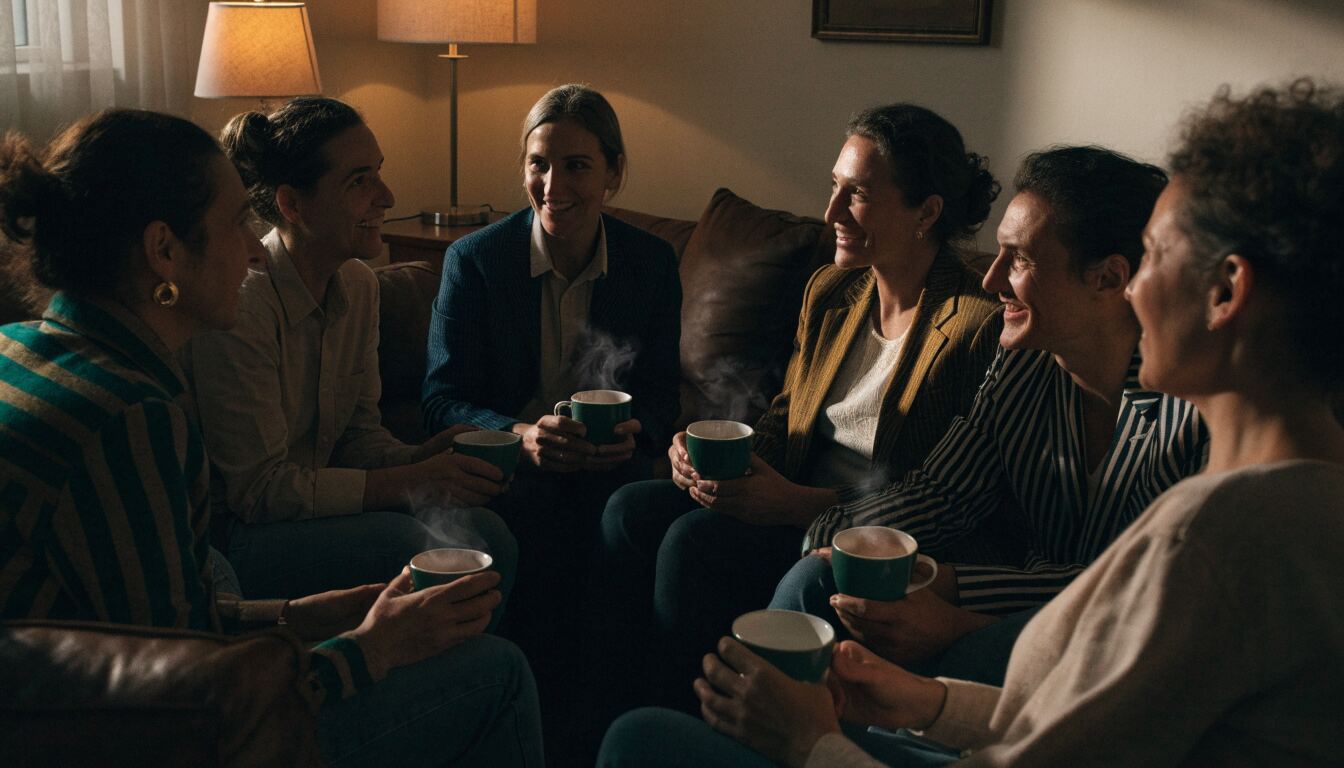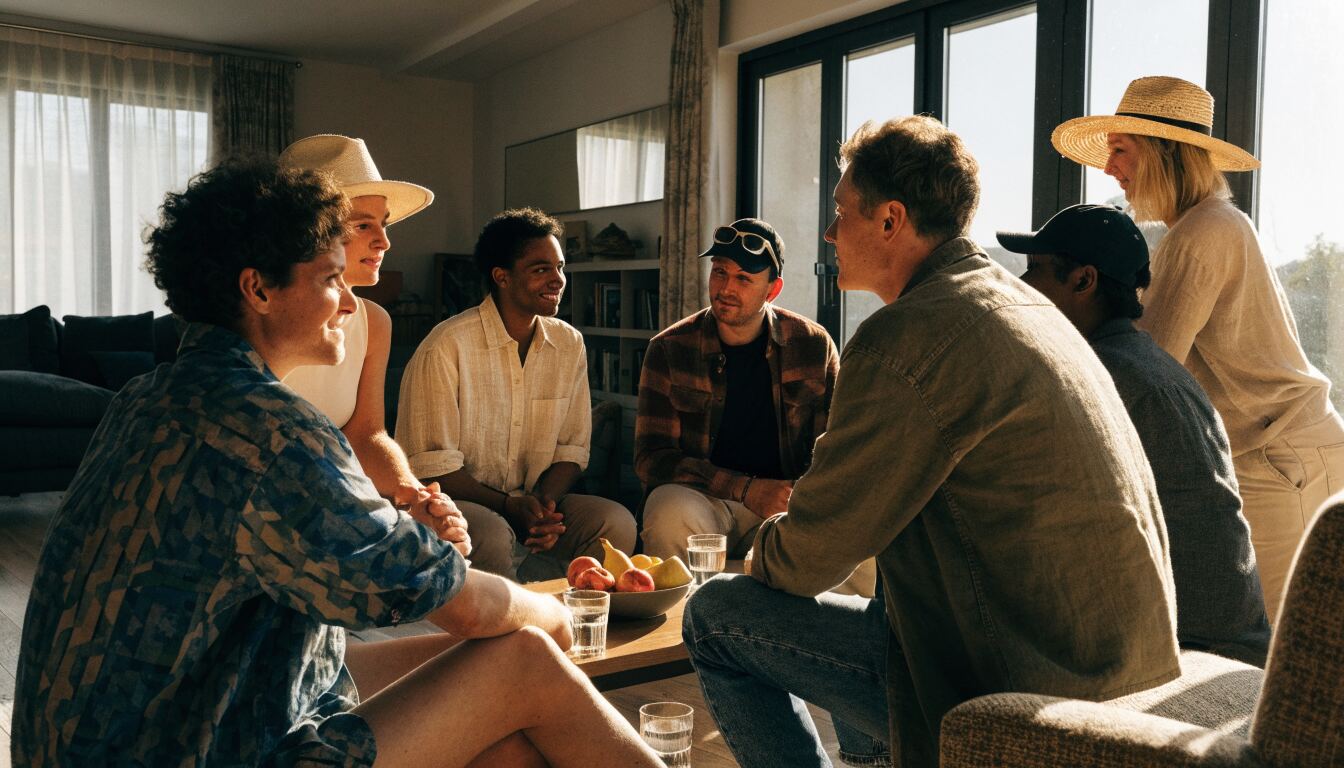
Diving Into the World of Shared Intimacy
Embarking on an exploration of group sexual experiences, whether it's swinging or other arrangements, is a journey that goes far beyond the physical. It touches on our mental landscapes, emotional needs, and the intricate ways we connect with others. As we travel through different societies, we see how local traditions and social frameworks paint these activities in vastly different lights. This isn't a simple topic, and there's much to peel back, so let's begin to understand what drives people within these diverse communities.
Decoding the Layers of Group Sexual Encounters
When people picture group sex, the visual spectacle often takes center stage, but the internal world of sensations and emotions is just as critical. It's not merely about the act itself; it's about the complete, immersive experience. For some individuals, the presence of multiple partners can intensify pleasure to an extraordinary degree, crafting a unique peak of excitement. Others might find the collective energy in the space—the shared escalation of desire—to be the most thrilling component. There's a broad spectrum at play here. A person might discover that having various partners allows them to shift their focus between different sensations or individuals, resulting in a more textured and perhaps extended climax. The core often revolves around mutual pleasure and discovery, rather than a single, isolated goal.
Unpacking the Practical Side of Multi-Partner Events
Let's have a straightforward look at events involving one person being the focal point for several others. These aren't spontaneous, casual meetups. They involve a very specific dynamic that can feel incredibly powerful. The appearance of chaos belies a strong need for organization and planning. Think of it as a carefully choreographed performance where everyone needs to know their part. Clear, upfront communication is the absolute foundation. Within these spaces, a kind of universal etiquette often develops, a set of understood behaviors that help the experience flow smoothly and remain gratifying for all participants. This might involve unspoken agreements about taking turns, being attentive to everyone's comfort, and ensuring no one feels overlooked, even amid the intensity. The level of coordination required is significant and far more structured than an outsider might assume.
What Draws People to Participate?
The question of motivation is complex and deeply personal. For many, the allure lies in the excitement of transgressing social norms, the adrenaline rush of stepping outside conventional boundaries. For others, it's a profound, albeit unconventional, search for connection. The feeling of being desired by multiple individuals can serve as a powerful validation of one's attractiveness, a significant boost to self-esteem. Then there's the dynamic of yielding and commanding, where individuals might find pleasure in releasing control or actively taking charge. This taps into a wide array of psychological drivers, from a craving for new sensations to an intense desire for intimacy that breaks the mold. It's captivating to see how the same scenario can appeal to people for entirely different reasons, highlighting the rich diversity of human desire and sexuality.
How the World Views Sexual Exploration
When you examine swinging across the globe, it becomes clear there's no universal template. Various regions have developed their own unique interpretations and levels of acceptance. In certain European locales, such as Germany or the Netherlands, a more open and casual attitude prevails. Dedicated clubs and organized events are more visible, and conversations around the topic can be surprisingly relaxed. It's woven into the broader social fabric for some. Travel to other areas, however, and you'll find a much more discreet scene, something practiced privately with little public acknowledgment. The norms within the global community can shift dramatically based on local legislation, religious influences, and the general cultural comfort with non-monogamous lifestyles. What's considered a normal Friday night in one country can be a deeply hidden secret in another.
Different Lenses on Multi-Partner Encounters
Events where one person engages with many at once are perceived through a particularly varied lens. Within certain subcultures, they are celebrated as a pinnacle of sexual liberation and adventurous exploration, a method for pushing personal limits and experiencing potent group dynamics. Participants might be drawn to the pure thrill, the sensation of being the center of universal desire, or the exploration of control and surrender. Yet, in the broader public eye, and even within some established kink communities, these same events can be met with caution. They can be seen as potentially problematic or risky if not managed with meticulous care and explicit, ongoing consent. Deeply rooted societal beliefs about intimacy, partnership, and personal autonomy heavily color these perceptions. It's a subject that frequently stirs powerful, and not always favorable, emotions.
The Cultural Blueprint of Our Fantasies
Our innermost sexual fantasies are not random electrical firings in the brain. They are significantly molded by the cultural environment that surrounds us. What we absorb from films, literature, and even overheard dialogues provides the raw material for our turn-ons. For example, a cultural narrative that heavily promotes romantic monogamy might cultivate fantasies centered on deep, exclusive intimacy with one partner. Conversely, societies with a more permissive attitude toward sexual expression or alternative relationship structures can inspire fantasies involving multiple partners or complex power exchanges. It's as if our surroundings supply the architectural plans for our inner erotic world. These fantasies can sometimes serve as a map to understanding past experiences or unfulfilled longings, though navigating them requires thoughtful introspection.
Finding Your Footing in Alternative Communities
Stepping into a kink or non-monogamous community can feel like entering a new country with its own language and customs. The initial experience can be a little disorienting. It’s about more than the physical practices; it's about the people, the dedicated spaces, and the social contracts that ensure safety and enjoyment for everyone involved. Think of it as joining any specialized club—there's a learning process, and understanding the fundamentals makes all the difference.
Navigating the Social Code at Gatherings
Play parties often serve as a person's first direct encounter with a group setting. These events can vary from informal house gatherings to highly organized affairs with specific themes. The golden rule, which cannot be overstated, is that consent is the supreme authority. It's not a trendy slogan; it's the entire foundation upon which these spaces are built. Most well-run events will have explicit guidelines, and it's every attendee's duty to read and abide by them. This typically includes:
- Honoring every limit: A direct refusal or even a moment of hesitation means stop immediately. An enthusiastic yes is the only form of consent.
- Maintaining personal cleanliness: This is a practical form of respect. Venues often provide showers, and arriving fresh is a basic expectation.
- Upholding confidentiality: What happens in the space is not to be shared outside. Gossip or sharing details about other attendees without their direct permission is a serious breach of trust.
- Utilizing safety signals: Having a clear word or gesture to pause or stop a scene is vital, particularly in a busy environment. Everyone must know and instantly respect these signals.
Some events may feature a dress code or a specific focus, while others are more free-form. Checking the event's description beforehand is always a wise move. The collective aim is to create an environment where individuals feel safe to explore their curiosities without fear of judgment or harm.
How to Begin Your Journey
Discovering these communities and events isn't always as simple as a web search, though online platforms are a fantastic starting point. Dedicated social networks exist to help people connect and find local happenings. Local, sex-positive educational shops or community centers may also host workshops or have physical boards with event information. The key is to start slow, do your research, and perhaps attend a newcomer's night or a social gathering where no play is expected, allowing you to simply meet people and absorb the atmosphere.
Mastering Consent and Dialogue in Groups
When more than two people are involved, communication becomes exponentially more critical. It’s not a single permission slip granted at the start; it’s a continuous, active process of checking in. In a group scenario, this can be more layered. You might have a primary partner you're engaging with, but you also need to maintain clear communication with anyone else who joins the dynamic. Here’s what effective communication entails:
- Pre-scene negotiation: Before any activity begins, especially in a planned scenario, discuss all limits, desires, and expectations with every person involved. This is the moment to establish boundaries and safety words.
- Ongoing check-ins during activity: Use verbal or non-verbal cues to connect with your partners. A simple question like "Is this still good?" or a pre-arranged hand squeeze can be a powerful tool.
- Prioritizing aftercare: This often-neglected step is crucial. After an intense experience, take time to reconnect with your partners. This could be quiet conversation, cuddling, getting a glass of water, or simply sitting together in silence. It helps the mind and body process the event and reinforces a sense of care and safety.
Grasping these core principles transforms the experience from a potentially chaotic event into a structured, respectful, and deeply rewarding exploration.
The Dance of Control and Surrender
In many forms of sexual expression, especially within group contexts or kink, the interplay of power is a central theme. It’s about far more than a physical position. It’s the dynamic tension, the voluntary exchange of authority. For some, the idea of holding the reins, directing the action, and orchestrating a scene is intensely arousing. This is the facet of dominance. They might thrive on the sensation of being in command, the responsibility of guiding others, and the creative satisfaction of crafting an experience. On the opposite side lies the deep appeal of submission. This involves a person willingly and consciously handing over control, placing a profound amount of trust in their partner or partners to steer the encounter. It can be a powerful act of vulnerability and trust, offering a mental release from the constant need to make decisions in daily life. The excitement often comes from the act of letting go and allowing oneself to be guided.
Power Exchange Beyond the Bedroom
This dynamic isn't confined to formal BDSM scenes; it subtly plays out in many relationships, even those without explicit labels. It’s about how partners negotiate the push and pull of leadership in different areas of their shared life, including intimacy. Sometimes it’s a clearly defined D/s (Dominance/submission) structure with established roles. Other times, it’s a fluid dance, with partners swapping roles or negotiating power for specific situations. Consider who usually initiates physical closeness, who dictates the tempo, or who feels comfortable making direct requests. These are all subtle forms of power exchange. In a group setting, this becomes a fascinating, multi-layered negotiation. You might have a scenario where one individual is clearly directing the group's flow, or where people are negotiating their specific roles within the larger dynamic. It’s a complex dance of influence and continuous consent, where personal boundaries are constantly being explored and must be rigorously respected.
The Intimacy of Relinquishing and Taking Control
At its heart, this interplay is about exploring different facets of our identity and desires. For the person in the guiding role, it can be a source of deep responsibility, a boost of confidence, and the satisfaction of facilitating another's pleasure. For the person yielding, it's often a profound exercise in trust, a form of liberation found in releasing the burden of control. This dynamic can be exceptionally intimate, demanding exceptional communication and trust from everyone involved. It has nothing to do with coercion; it is a consensual and intentional exploration of vulnerability and strength. When navigated with care, it can lead to intense pleasure and a deeper connection, whether the setting is a private one-on-one moment or a larger, more complex group scenario.
A Vast Landscape of Kinks and Fetishes
Kink is not a monolithic concept; it’s an expansive universe of unique desires and practices that diverge from standard sexual scripts. Imagine a vast selection of tastes and textures—there's a specific appeal for everyone, and people often have very refined preferences. Some are deeply engaged with the world of BDSM, an acronym covering bondage, discipline, dominance, submission, sadism, and masochism. Others are drawn to immersive role-play scenarios, such as elaborate boss-and-assistant or medical-themed scenes between adults. Still, others might find their kink centered on specific materials, like the feel of latex, leather, or silk, or a fascination with particular body parts. It’s all about what uniquely ignites a person’s erotic imagination.
Tracing the Roots of Kinky Practices
Where did these diverse interests originate? They aren't modern inventions. Many practices have long historical threads, sometimes tied to ancient social rituals, artistic expressions, or early psychological theories. For instance, the human fascination with restraint, such as rope bondage, has been documented in various art forms and cultural ceremonies across centuries. Similarly, role-play often taps into timeless archetypes and primal human dynamics. Understanding this historical context can provide a richer picture of why certain kinks hold power over the human psyche and how they've transformed over time. It reveals that the spectrum of human sexuality has always been remarkably varied and complex.
Embarking on a Personal Journey of Desire
Ultimately, the exploration of fetishes is a deeply personal quest to understand what truly resonates with your core self. It's a journey into your own unique desires, which might involve specific objects, types of clothing, imagined scenarios, or even particular sensory experiences. Someone might have a powerful attraction to a specific texture, like smooth latex, or perhaps a particular sound or scent is a major trigger for arousal. The central pillar of this journey is self-acceptance and a spirit of non-judgmental curiosity. It’s about understanding your own unique erotic wiring and discovering safe, consensual ways to express it. This path can lead to a more authentic and fulfilling intimate life, whether explored alone or with trusted partners.
Building an Ethical Foundation in Non-Monogamy
When the conversation turns to swinging, polyamory, or any form of consensual non-monogamy, the focus must pivot to ethics. It’s not just about the pursuit of pleasure in the moment; it’s about the quality of care we extend to each other and the potential emotional consequences of our choices. This is where the discussion gains depth, especially when you consider the vastly different cultural perspectives on these relationship structures around the world.
Working Through Jealousy in a Connected Space
Jealousy is a fundamental human emotion, and pretending it has no place in non-monogamous dynamics is a recipe for disaster. In a swinging or polyamorous context, this feeling can emerge for countless reasons. Maybe one partner feels emotionally disconnected, or they begin to compare themselves unfavorably to another person. The goal isn't to build a fortress against jealousy, but to have a well-rehearsed plan for addressing it when it inevitably surfaces.
- Acknowledge the feeling directly: Don't suppress it. Open a dialogue about it with your partner.
- Investigate the source: Is the jealousy rooted in insecurity, a fear of loss, a sense of unfairness, or something else entirely?
- Collaborate on solutions: Work as a team with your partner(s) to find strategies that address the root cause.
- Establish clear agreements: What types of connections, levels of emotional intimacy, or specific acts feel safe, and what is currently off the table?
The Essential Role of Limits and Aftercare
Boundaries are the structural supports of any healthy relationship, and their importance is magnified when multiple people are involved. These limits encompass not just physical acts, but also emotional availability, the use of time, and communication styles. Aftercare is an equally vital component. It’s the deliberate period after an intimate encounter, particularly an emotionally or physically intense one, where partners intentionally reconnect. This process helps to process the shared experience, soothe any vulnerabilities, and reaffirm the primary connection. Without these two elements, even a fully consensual group experience can lead to emotional disconnection and damaged trust.
Structures for Ethical Non-Monogamy (ENM)
Ethical non-monogamy is a broad and inclusive term covering a range of relationship styles. It spans from swinging, where a couple explores physical connections with others, to polyamory, which allows for multiple simultaneous, loving relationships. The unifying thread is that all individuals involved are fully informed and have given their enthusiastic consent. However, the specific architecture of these relationships can differ wildly. A hierarchical polyamorous structure, where one partnership is prioritized, is very different from a non-hierarchical or "kitchen table" polyamory style, where all partners are comfortable interacting. What functions beautifully for one network of people might be completely unworkable for another. It requires a deep dive into personal values, relentless honesty, and a willingness to adapt the structure as the people within it grow and change. Understanding that different societies have their own unique norms around relationships is also vital for anyone engaging with these dynamics across cultures.
Common Questions About Group Encounters
How Does Swinging Differ from a Gangbang?
The core distinction lies in the setup. Swinging typically involves couples exchanging partners, creating a mutual swap dynamic. In contrast, a gangbang centers on one individual engaging with several partners simultaneously, with the focus directed toward that single person. You can think of swinging as a reciprocal exchange, whereas a gangbang is a more concentrated group experience.
Prioritizing Safety in Shared Intimate Settings
Maintaining well-being is crucial during any collective intimate activity. Consistent use of barriers like condoms and dental dams helps reduce the risk of sexually transmitted infections. Beyond physical precautions, emotional safety matters equally. Before any encounter, have an open dialogue about personal limits and ensure everyone actively agrees to the planned activities. This preparation builds a foundation of trust and comfort for all participants.
What Drives Interest in Group Dynamics?
Motivations vary widely among individuals. Some are drawn to the heightened stimulation of multiple partners, while others appreciate the communal aspect of sharing pleasure. For many, it's an opportunity to safely explore long-held desires or experience novel relational patterns. The appeal often stems from a mix of curiosity, a craving for variety, and the chance to forge unique connections in a consensual environment.
Locating Compatible Partners and Communities
Connecting with interested individuals often starts online. Dedicated platforms and mobile apps cater specifically to various lifestyle preferences, offering a way to find others with similar outlooks. Offline, private social clubs, themed gatherings, and invitation-only events provide spaces for meeting in person. The key is seeking out established communities where shared values and respectful interaction are the norm.
Understanding the Role of Clear Agreement
Agreement in group scenarios goes beyond a simple lack of refusal. It requires an enthusiastic, informed, and voluntary "yes" from every person for each specific act. This permission is not a one-time checkbox; it's a continuous process. Anyone involved has the full right to withdraw their agreement at any moment, for any reason, and that decision must be honored instantly and without pressure.
Navigating the Unwritten (and Written) Guidelines
Structured environments often have explicit protocols to safeguard enjoyment and security. Common expectations include honoring stated boundaries without exception, practicing safer sex consistently, and following established social etiquette, such as asking before joining an activity. These guidelines function as a shared code of conduct, designed to foster a relaxed and positive atmosphere where everyone can focus on mutual fun.
Final Thoughts on Shared Exploration
Engaging with others in these ways is a deeply personal journey that thrives on clarity, respect, and communication. By understanding the different formats, from couple swaps to focused group scenarios, and by prioritizing safety and ongoing consent, individuals can navigate these experiences in a way that is both thrilling and secure. The foundation of any positive group encounter is not just the excitement of the moment, but the careful and considerate preparation that comes before it.