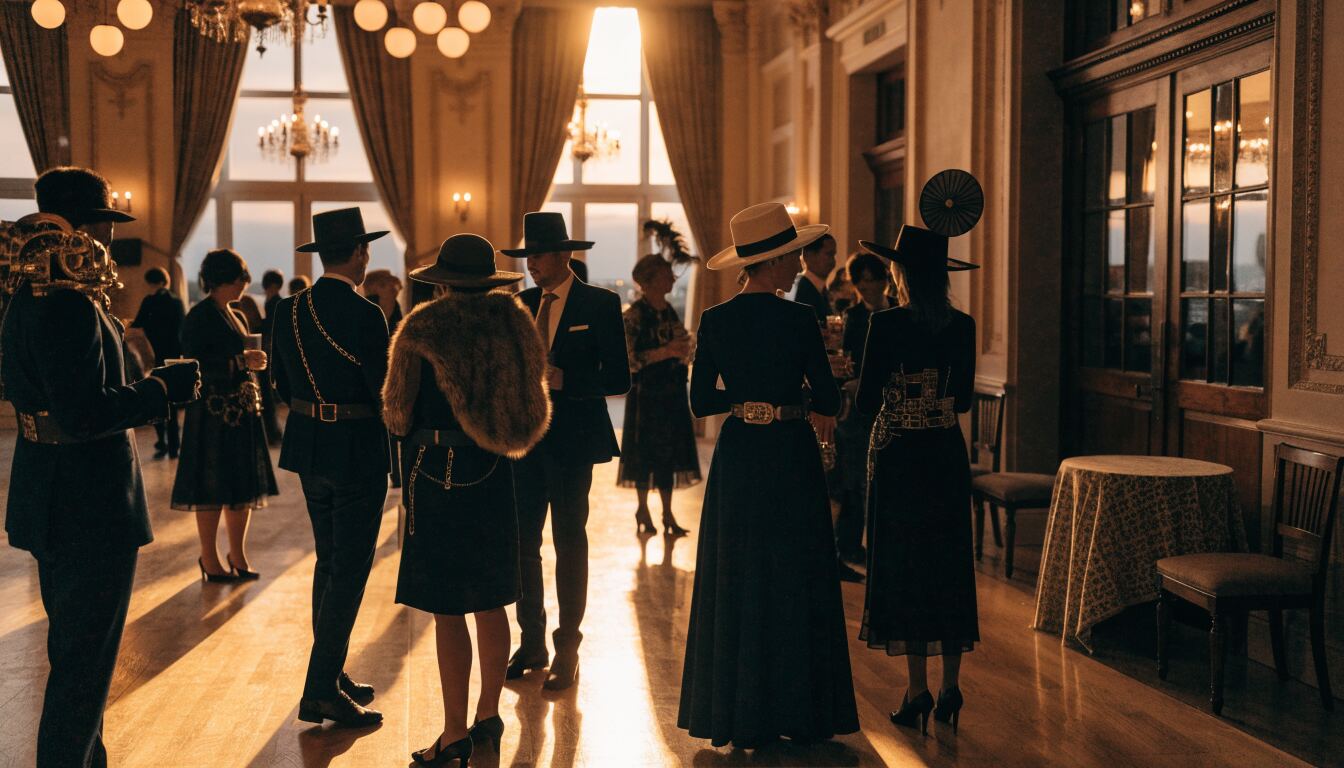
An Evening Designed for Connection and Discretion
For couples seeking a night that blends mystery, structured socializing, and a carefully managed atmosphere, a particular upcoming event offers a compelling option. Scheduled for a Saturday evening in early 2026, this gathering is crafted as a ticketed, adults-only experience where the journey begins even before you walk through the door. The organizers have built the entire concept around privacy and intentionality, from the moment you purchase tickets to the final minutes of the night.
This deep dive covers everything a pair might want to know before committing. We'll explore the pricing structure, what the entry protocols signal about the evening's tone, and the clear safety and consent framework that governs the space. Beyond logistics, you'll find a practical planning roadmap—from discussing personal boundaries beforehand to managing arrival details once the venue is revealed. The goal is to help you decide if this particular themed night aligns with your shared comfort zone and what kind of experience you're hoping to have together.
Key Details at a Glance
Understanding the foundational logistics helps set the stage. The evening is slated for a Saturday in mid-January 2026, running from early evening until just before midnight. The host is a known Denver-area promoter of adult-oriented social nights, and this particular event is one installment in a broader calendar of themed gatherings.
A standout feature is the location policy: the precise venue is not publicly listed. Instead, confirmed guests receive the address via email after their purchase is complete, along with a map for navigation. This method, often called a "gated location" approach, is a deliberate choice to foster an environment of privacy and controlled access, which many attendees find reassuring when exploring lifestyle-friendly spaces.
Ticket categories are clearly defined and segmented. A pass for an individual woman is the most accessible price point. A couples' ticket, which mandates that both individuals check in together, is priced as a single unit. A pass for a single man is offered at a higher rate. All listed prices include additional processing charges, so the figure you see at checkout is the complete cost. The organizer also provides direct contact information, such as an email and phone number, allowing potential guests to seek clarification before making a commitment. The event page further outlines a formal liability agreement and a no-refund policy, with a space for promotional codes, hinting that discounts might be available during certain periods.
Who Organizes These Evenings?
The group behind this happening is a Denver-based promoter that uses an online ticketing platform to manage a series of adult-only, themed parties. Their public profile reveals multiple listings across different dates and creative concepts, indicating an ongoing operation rather than a one-off affair. This consistency is reassuring; it suggests a level of experience in handling the logistics, security, and ambiance of such events.
For this specific night, the event page names the organizer clearly and provides stable contact details. This transparency is a valuable trust signal—you know exactly who is hosting and have a direct line for any pre-event questions. It's also worth clarifying a point of potential confusion: an entirely separate company with a similar name operates in the luxury event planning space, handling things like weddings and corporate galas. That upscale planning business has no connection to this adult nightlife promoter, so keeping the two distinct during any online research is helpful.
Looking at the organizer's history, they have experimented with different formats. Beyond single-evening themed parties with undisclosed locations, they have also orchestrated hotel takeover-style events at named downtown venues, sometimes in partnership with other lifestyle groups. This range of experience shows a versatility that might appeal to couples; it means the organizer understands both the intimacy of a hidden venue and the scale of a larger, openly located takeover, and can tailor the rules and atmosphere accordingly.
Is This the Right Setting for You as a Couple?
This particular gathering is structured in a way that naturally appeals to pairs looking for a defined, intentional night out. The ticketing system itself tells a story: by creating separate lanes for single women, couples, and single men, and by insisting that couples arrive jointly, the event is clearly engineered to cultivate a specific social balance. It's not an open-door club night where anyone can wander in; the design encourages attendance by committed duos and manages the overall attendee mix.
The emphasis on discretion is another major draw for couples. The fact that the address is only disclosed via email after purchase means the crowd is limited to ticket holders who have agreed to the terms. This filters out casual, unvetted drop-ins and creates a container of shared understanding before the party even starts. For those who value their privacy or are taking their first steps into lifestyle-curious environments, this setup can significantly lower the entry barrier.
The thematic nature of the night is also a hook. Instead of a generic club experience, the host is known for crafting distinct concepts, each with its own title and implied atmosphere. This suggests that the environment, perhaps the décor, music, and overall vibe, will be curated to match the theme, turning the evening into a more immersive social experience. Furthermore, knowing that the same organizer runs different types of events—from these intimate, themed nights to larger hotel functions—allows couples to view this as a potential entry point. They can start with a shorter, controlled evening and later explore a more expansive format if they enjoy the community and approach.
Decoding the Ticket Structure and Entry Protocols
The entry system is one of the most informative aspects of the event's design, and understanding it fully can prevent friction on the night of. The three-tiered pricing model is explicit: a pass for a single woman, a joint pass for a couple, and a pass for a single man. The final checkout price includes the base cost plus a non-negotiable processing fee, so the total amount is transparent from the start.
The specific instruction on the couples' pass—"Must Arrive As A Couple"—is a critical piece of logistical guidance. This isn't a flexible suggestion; it's a core condition of entry for that ticket type. In practice, this means planning your journey to arrive at the venue together, walking up to the check-in point as a unit, and presenting your joint ticket. For first-timers, this rule actually simplifies the experience. It eliminates any ambiguity about whether one partner can secure a spot while the other arrives later, forcing a shared, coordinated start to the evening. Once you have the address, syncing up your transportation, whether it's a ride-share or driving together, becomes a key part of your preparation.
The location-disclosure process directly impacts your planning timeline. Because the exact spot is revealed only after purchase, your logistics unfold in two phases. Phase one is the decision-making phaes: you evaluate the date, time, cost, and rules. If all that feels right, you purchase. Phase two is the tactical phaes: you receive the confirmation email, note the address, and then finalize your route, parking strategy, and arrival time. This two-step method rewards couples who plan ahead but also stay flexible enough to adapt once the final detail is known. It's a good idea to avoid booking non-refundable ride-share schedules until the location email lands in your inbox.
The checkout page also features a field for a discount code, a sign that the host may run special offers tied to early purchases or specific themes. Given the presence of a strict refund policy and a liability waiver that you must agree to, it's wise to review all terms carefully during purchase. The phrasing you see at that moment is the binding version for your ticket, so treat it as the final word on cancellations, transfers, and behavioral expectations.
Navigating the Venue and Location Experience
The deliberate secrecy around the venue address is a feature, not a bug, of the experience. The public listing only confirms the city, leaving the specific spot a mystery until you're financially committed. For many couples, this is part of the allure—a shared secret that enhances the sense of adventure. However, it also requires a shift in how you typically plan a night out.
Instead of researching a known bar or club in advance, you'll be stepping into a space sight unseen. The best approach is to embrace the two-stage planning model mentioned earlier. Your initial decision should hinge solely on the event's framework: the time window, the price, and the strict couples-arrival rule. Once you've bought in, the confirmation email becomes your guidebook. At that point, you can quickly research the neighborhood, identify the closest parking garage or a reliable pick-up/drop-off point for a ride-share, and calculate travel time. This prevents last-minute scrambling and helps maintain the calm, discreet arrival the event is designed for.
It's also helpful to know that the organizer doesn't exclusively use secret locations. They have a track record of hosting events at openly named venues, like a well-known downtown hotel. This context is useful because it shows the hidden-address choice for this specific night is intentional, likely to match the theme's desire for mystique and privacy. Once you have the address, a few practical steps can solidify your comfort: confirm the door's location to avoid wandering, check if your ticket mentions any preferred arrival window, and have your ID and ticket email easily accessible to make the check-in process smooth and swift.
The Foundation of Safety, Consent, and Respect
The event's governing documents, which you agree to during purchase, lay out a zero-tolerance framework for behavior. These aren't casual guidelines; they are firmly worded conditions of attendance. The core principles are straightforward: all conduct must be legal, and every interaction must be consensual. The language makes it clear that any breach of these standards is grounds for immediate removal from the premises, with no refund issued.
A health acknowledgment is also part of the agreement. By attending, guests affirm they are in sound health and free from transmissible conditions. This sets a community-wide expectation of personal responsibility, which is a common and valued practice in well-run adult social spaces. It signals that the well-being of the collective is a shared priority, and it gives couples a baseline assurance about the standards upheld by the hosts.
Enforcement is not left to chance. The event explicitly states that security staff will be on site to monitor compliance with the agreement. Their role is to observe and interveene if they witness illegal actions, non-consensual behavior, or health policy violations. The authority to eject without a refund is a strong detterent. Additionally, the policy notes a willingness to collaborate with law enforcement if a situation escalates to that point. This isn't meant to be intimidating to respectful guests; rather, it reinforces that the hosts take the safety framework deadly seriously.
The legal language further includes an indemnification clause, where guests agree to absolve the organizers, venue, and staff from liability stemming from their own illegal or non-consensual acts, and it reserves the right for the venue to pursue legal recourse if someone's actions cause harm. With the final-sale policy in place, couples should read these terms not as fine print but as the social contract of the evening. Your comfort with these rules should be a pre-requisite for buying a ticket.
A Sequential Walkthrough of the Evening
Knowing what to expect from the moment you arrive can transform nervous anticipation into excited readiness. The night is structured around a fixed time block, with doors opening in the early evening and the event concluding just before midnight. The check-in process is the first real touchpoint, and it sets the tone. You'll approach the entrance with your partner, present your joint ticket, and show your IDs. Because the location was shared privately, the door staff will be expecting a list of confirmed names, making the process feel exclusive and orderly.
Once inside, the experience is less about a rigid, published itinerary and more about a themed social atmosphere. The organizer doesn't pre-release a detailed run of events, so the best mindset is one of exploration. Think of the first portion of the night as a settling-in period. You might find a quiet corner to acclimate, observe the flow of the room, and silently reconfirm your shared intentions and boundaries. The environment is designed to be adult and social, but the degree to which you engage is entirely up to you. Pacing yourselves is key; there's no need to force interactions. Simply being present together in the space is the initial goal.
The consent and security policies you read about are an invisible but firm scaffold throughout the night. The presence of security isn't meant to feel oppressive but to act as a safeguard, ensuring the respectful atmosphere remains intact. For couples, this means you can relax knowing there is a mechanism in place to handle any rare out-of-line behavior, allowing you to focus on your own experience. A respectful, consensual approach isn't just good etiquette here—it's the explicit standard for being allowed to remain in the space.
Post-Purchase Questions to Resolve
Once your ticket is secured and the location email arrives, a handful of practical unknowns often remain. Addressing these quickly can remove any lingering anxiey and help you pack and prepare appropriately. First, look for any mention of a dress code or themed attire. The event's title hints at a specific aesthetic, and adhering to it can enhance the immersive feeling. If the email doesn't specify, a quick, polite inquiry to the organizer's contact address can clear this up.
A crucial question for many is the policy on phones and cameras. Given the premium placed on privacy, it's highly likely that recording is restricted or banned. Confirming this is essential—you'll want to know whether you should plan to keep your phone stowed away or if there are designated areas for use. Relatedly, understand the venue's amenity setup. Is it a bring-your-own-beverage scenario, or will there be a cash bar? Are complimentary water stations or snacks provided? Knowing this helps you plan for hydration and sustenance over the four-hour window.
Other logistical points to verify include any last-entry time. If the doors close at a certain point, you'll need to target your arrival accordingly. Also, clarify the re-entry policy. Can you step outside for fresh air and come back in, or is it a one-way entry? Finally, check if the specific venue has any house rules on top of the organizer's general waiver, such as restrictions on smoking or specific areas that are off-limits. Having clear answers to these questions turns a mysterious venue into a manageable, comfortable space.
A Couple's Roadmap for a Stress-Free Evening
Preparation for an event like this is as much about emotional alignment as it is about logistics. Before you even leave the house, have a short, honest conversation about what you both want from the night. This doesn't need to be a heavy, formal sit-down. It can be a casual chat where you set a baseline intention, like, "Let's mainly focus on meeting new people and enjoying the theme, and we can decide later if we want to do anything else." This shared understanding acts as your compass.
Establish a simple, non-verbal signal for checking in with each other during the party. A gentle squeeze of the hand, a specific glance, or a code word can communicate volumes—whether it's "I'm feeling a bit overwhelmed" or "I'm really connecting with these folks." This tool is invaluable in a sensory-rich environment. Also, agree on an exit strategy. Knowing you can leave at any time, for any reason, with no guilt attached, is paradoxically freeing. It removes the pressure to force an experience that isn't working and allows you to lean into the parts you enjoy.
On the logistical side, once you have the address, do a dry run of your journey. Check traffic patterns at that hour, identify the nearest parking structure and whether it requires cash or an app, and pre-load the map on your phone. Put your ticket confirmation and IDs in an easily accessible but secure spot. If the dress code is dark and elegant, lay out your outfits the night before to minimize pre-event rushing. The more automatic your arrival is, the more present you can be with each other from the moment you step inside.
Making the Most of the Social Landscape
The crowd at a ticketed, themed event tends to be self-selecting. Everyone has gone through the same process of purchasing a ticket and agreeing to the rules, which creates a baseline of shared intent. As a couple, you can use the early part of the evening to read the room together. Find a spot with a good vantage point and simply observe the social dynamics. Who is mingling? Where are the conversation clusters forming? This isn't about being wallflowers; it's about being intentional.
When you're ready to engage, remember that in such spaces, a friendly, no-pressure approach is universally appreciated. A simple compliment on someone's adherence to the theme or a question about if they've attended other events by the same organizer can be an easy opener. Keep your early conversations light and social, with no hidden agenda. This builds comfort and trust. For many couples, the most rewarding outcome of the night is simply a collection of interesting, respectful conversations in a uniquely curated atmosphere. Anything beyond that is a bonus, not a benchmark for success.
Handling Unexpected Moments with Grace
Even with flawless preparation, a night out can present surprises. Perhaps the energy of the room is different than you anticipated, or one of you starts to feel socially drained earlier than expected. The key is to fall back on your pre-established partnership tools. Use your check-in signal. Step to a quieter area or outside if re-entry is allowed. There is zero shame in recalibrating.
If you encounter behavior that feels off or crosses a boundary, remember the framework the event has provided. You can firmly and politely disengage from any conversation. For anything more serious, you have the knowledge that security is present and tasked with upholding the consent and conduct policies. You are not responsible for policing others, but you do have the right to a comfortable experience. Trusting the event's infrastructure and leaning on your partner's support are your primary resources. Often, a simple, unified shift to another part of the venue is all that's needed to reset the tone of your evening.
Integrating the Experience Afterward
The night doesn't end when you walk out the door. The journey back home can be a tender, important time for connection. Whether you're buzzing with excitement or processing more complex feelings, the ride-share or car ride is a good moment to gently unpack the experience. Start with open-ended questions like, "What was your favorite moment?" or "Was there anything that surprised you?"
In the following days, continue the conversation at a natural pace. Attending a themed adult social event as a couple can be a bonding experience that strengthens your communication, regardless of what physically transpired. You might discover new shared interests or reaffirm your boundaries. The ultimate measure of the night's success is not an external checklist but the quality of connection you feel with each other afterward. By approaching the entire process—from ticket purchase to post-event talk—with intention and teamwork, you transform a mysterious evening into a meaningful chapter in your shared story.