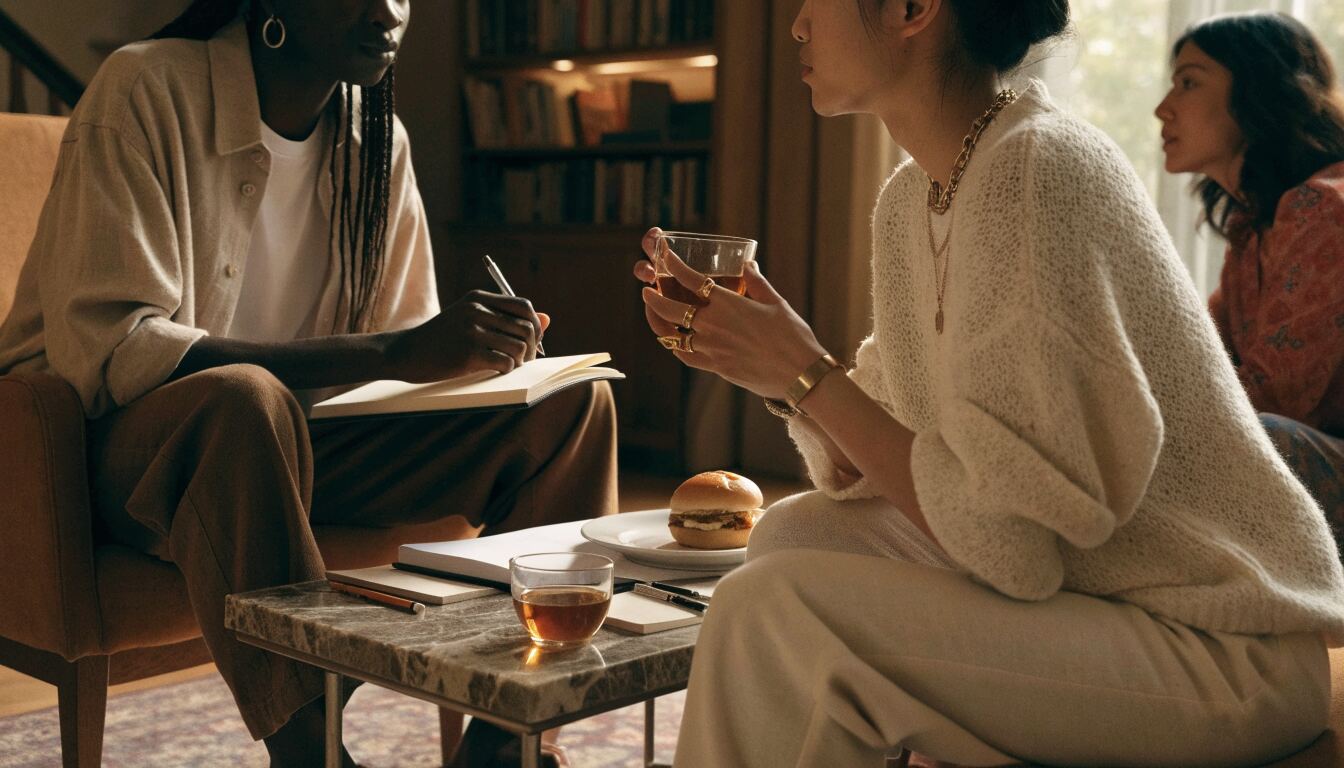
Setting the Scene: Two Paths to Connection
Within the vast and varied landscape of non-monogamous relationships, certain terms get tossed around frequently, sometimes losing their true meaning along the way. Two such concepts are the 'huntress' and the 'unicorn hunter.' While both involve seeking new partners for intimate or romantic experiences, the philosophy, execution, and emotional landscape of each could hardly be more different. Grasping these distinctions isn't just academic; it's fundamental to navigating the community with respect, clarity, and a genuine chance at finding fulfilling connections. Whether you're a couple opening up for the first time or an individual curious about joining others, understanding these dynamics helps you articulate your desires and recognize what you're walking into. This exploration breaks down the core characteristics, the driving intentions, and the real-world implications of each approach, offering a clear lens through which to view the often-confusing world of partner seeking.
Unpacking the Traditional Unicorn Hunter Mindset
The classic image of a unicorn hunter is deeply embedded in swinger and polyamorous lore. It typically involves an established couple, most often a man and a woman who are in a primary relationship, setting out on a quest for a third person. This sought-after individual is almost always a bisexual woman, though preferences can vary. The couple's goal usually centers on arranging a threesome or forming a closed triad where they remain the foundational unit. The entire search is framed around the couple's pre-existing bond, with the third person expected to complement and enhance what they already share, rather than co-create a brand-new dynamic from scratch.
The Mechanics of the Search
How do couples actually go about this quest? The methods are often highly intentional and sometimes transactional. They might place detailed advertisements on lifestyle-specific websites, carefully curate profiles on dating apps, or network at clubs and events. The language in these ads can be revealing, frequently specifying a long list of desired traits: a certain age range, body type, specific sexual interests, and crucially, a willingness to be attracted to both partners equally. A particularly contentious expectation is that of exclusivity—the couple may want the new woman to be romantically and sexually involved only with them, essentially closing the relationship on her side while they remain a secure pair. This request alone is a significant source of debate, as it inherently creates a hierarchy where the original couple's security is protected, but the newcomer's autonomy is restricted.
Why the 'Unicorn' Label Sticks
The term itself is a metaphor loaded with meaning. A unicorn is a mythical beast, stunningly beautiful and incredibly rare. By calling someone a unicorn, the implication is that finding a person who matches such a specific and demanding set of criteria is almost impossible. The woman in this scenario is seen as a rare prize to be captured. The label also hints at the often-unrealistic expectations placed upon her. She is supposed to seamlessly fit into the couple's life, manage her emotions perfectly, not threaten the primary bond, and fulfill a fantasy. This framing objectifies her from the start, defining her by her utility to the couple rather than as a complete person with her own complex needs, history, and aspirations. It's a perspective that can feel dehumanizing, even if the couple's intentions are not malicious.
Criticisms and Problematic Patterns
Within broader ethical non-monogamy and LGBTQ+ circles, unicorn hunting is frequently met with sharp criticism. The core ethical concern revolves around the fetishization of bisexual women. The fantasy often reduces a woman's bisexuality to a performance for the couple's pleasure, ignoring the reality that her attraction to multiple genders is a core part of her identity, not a party trick. This dynamic can treat the third person as an experiment or a spice to add to a heterosexual relationship, rather than respecting her as an equal partner. The power imbalance is another major sticking point. Since the couple has a shared history, established rules, and a deep emotional bond, they hold most of the power. The new person enters on their terms, often without the safety net of an equal vote in how the relationship evolves. Common expectations that underscore this imbalance include:
- The Couple's Primacy: Their needs, schedule, and emotional comfort are often prioritized above all else, with the third expected to adapt accordingly.
- Overlooked Individuality: The third person's own desires, boundaries, and goals for the relationship can be ignored or assumed to magically align with the couple's plan.
- A Pre-Fab Structure: The relationship container is built by the couple, and the new person is invited in with the understanding that the fundamental architecture won't change to accommodate her.
For such an arrangement to be anything close to ethical, it demands an extraordinary level of self-awareness from the couple and a deep, genuine commitment to dismantling couple's privilege. Without this, the experience is often depleting and painful for the so-called unicorn, who may end up feeling used and discarded when she inevitably fails to live up to an impossible fantasy.
Defining the Huntress Model: A Different Kind of Pursuit
Moving away from the loaded framework of unicorn hunting, the concept of the 'huntress' represents a fundamental shift in posture. This isn't about a couple hunting prey, but rather about an individual—or a member of a couple—stepping forward with agency and clarity. The term sheds the predatory connotation and embraces a spirit of confident, self-aware exploration. A huntress knows what she desires and is not shy about seeking it out, but her method is rooted in mutual discovery rather than the fulfillment of a rigid, pre-written script. She is the protagonist of her own journey, not a supporting character in someone else's fantasy.
Agency as the Driving Force
The heart of the huntress dynamic is personal empowerment. This person is often taking the lead, but not in a way that controls others. Her leadership is expressed through clear communication of her own wants and limits. Instead of a couple looking for a third to complete a specific scenario, a huntress might be a single woman interested in engaging with couples, or one partner in a relationship who is spearheading the search for new, shared experiences. The key distinction is that she is not trying to find a missing puzzle piece. She is open to seeing what kind of unique, beautiful picture can be created when two or more people come together with equal enthusiasm. The focus is on creating a new, co-authored experience rather than slotting someone into a pre-defined role.
Centering Mutual Enthusiasm and Respect
In this model, the benchmark for success is not whether a person fits a checklist, but whether a genuine, reciprocal spark exists. The huntress approach places a premium on shared excitement. A connection is worth pursuing only when all parties feel a palpable sense of desire and respect flowing in every direction. This means actively checking in to ensure that no one feels like a means to an end. The goal is to build a connection where everyone feels seen, valued, and like an equal stakeholder. This emphasis on mutual desire naturally leads to more balanced dynamics, as the foundation is built on what everyone actively wants, not just what one couple is willing to offer. It transforms the encounter from a potential transaction into a collaborative adventure.
Drawing a Clear Line Between the Two
To truly understand the huntress model, it's helpful to contrast it directly with unicorn hunting. The difference is not just in terminology but in the entire philosophical approach. Unicorn hunting is characterized by a couple's quest to find a rare individual who will conform to their established world. The huntress model is characterized by an openness to authentic connection that might lead anywhere. The power dynamic is the most telling indicator: one is inherently hierarchical, while the other strives for egalitarianism. One treats a person as a component, the other treats them as a co-creator. This distinction is a cornerstone of understanding modern swinger terminology and navigating the scene with emotional intelligence. A quick comparison highlights these core divergences:
- Unicorn Hunting: An established couple seeks a third (often a bi woman) to join their existing dynamic. The couple defines the terms and holds primary power.
- Huntress Approach: An individual (or one partner) takes the lead in seeking connections based on mutual interest. The focus is on open communication and building something equitable together.
- Core Goal: Unicorn hunting aims to complete a specific, pre-defined fantasy. The huntress approach aims to discover and build new, mutually satisfying relationships.
How Intent Shapes the Search for a Partner
When you strip away the labels and look at actual behavior, the way people search for a third person reveals their deepest intentions. The entire process—from writing a profile to the first conversation and beyond—is a mirror reflecting whether someone is operating from a unicorn hunting mentality or a more empowered, huntress-aligned philosophy. It's not just about what you're looking for, but the spirit in which you are looking.
The Blueprint of Power and Intention
Unicorn hunting begins with a blueprint. A couple, typically heterosexual, has a detailed vision of the bisexual woman they want. This vision is born from their shared fantasy, and the search is a mission to find a living person who matches it. From the very first interaction, a power imbalance is baked into the structure. The couple possesses the security of an established relationship, a shared home, and often a long history. They present a united front, and the newcomer steps into their world as a guest. This can create an unspoken pressure for the new person to conform, to be easygoing, and to suppress her own needs for the sake of not rocking the boat. She is expected to be attracted to both of them equally, often from the get-go, which is an immense and unnatural pressure. The couple's fantasy acts as a mold, and the third person is evaluated on how perfectly she can fit into it.
Conversely, a huntress-informed search discards the mold entirely. The intention is not to fill a vacancy but to meet a person. A single woman who embodies the huntress spirit and is open to couples will approach the situation with a clear sense of her own boundaries. She is looking for a couple whose energy she enjoys, where she feels a genuine pull toward both individuals, and where she is treated as a prized equal, not a novelty. If a couple is operating with a huntress mindset, they are looking for a connection that enhances everyone's life. They are prepared for the relationship to take an unexpected shape and are willing to negotiate a structure that works for all three people, not just the original two. The emphasis is on compatibility of values, communication styles, and desires, not just physical attraction.
The Weight of Expectations on the New Person
The practical and emotional expectations placed on the third person are where the differences become painfully or beautifully clear. In the classic unicorn hunting scenario, the expectations are often a minefield. She might be expected to be sexually available to both partners, but only in a group context. Forming a deeper, individual bond with one partner might be seen as a threat. Her role is clearly secondary; she may be excluded from important decisions, family events, or public acknowledgment of the relationship. The rules are handed to her, and her primary job is to not make things complicated for the couple. This can lead to a profound sense of isolation and expendability, where she feels more like a service provider than a girlfriend or partner.
In the huntress model, expectations are transformed into collaborative agreements. The process starts with a conversation where everyone puts their cards on the table. A single woman might say, "I'm looking for a couple I can see regularly, where I have the freedom to be affectionate with both of you individually and together, and where my emotional well-being is considered." A couple with a huntress mindset would respond by sharing their own hopes and fears, and together, they would craft a dynamic that honors everyone's voice. The focus is on discovering what each person needs to feel safe, valued, and fulfilled. This might mean the relationship evolves into a full triad, or it might remain a more casual but deeply respectful friendship with benefits. The structure serves the people, not the other way around. A quick look at how these expectations differ in practice:
- Unicorn Hunting: Seeks a specific 'type,' demands equal attraction to both partners, may enforce exclusivity, and assigns a secondary, often disposable role.
- Huntress/Empowered Seeking: Prioritizes authentic connection, honors individual autonomy, facilitates open boundary negotiation, and aims for an equitable partnership where everyone has a voice.
How the Community Views These Different Roles
Reputation matters in the interconnected social web of the swinging and non-monogamous world. The approach you take to finding partners doesn't just affect your private relationships; it shapes how you are perceived by the wider community. The language used to describe 'unicorn hunting' versus a more empowered, huntress-style approach carries very different social currency. Being aware of these perceptions can save you from making costly social missteps.
The Stigma Around Unicorn Hunting
To put it bluntly, 'unicorn hunter' is often used as a derogatory term. It's a label that carries significant baggage and can lead to a couple being ostracized from certain circles, events, or online groups. The primary reason for this negative reputation is the ethical concern over treating a human being as a fantasy fulfillment object. Many experienced community members have either been burned by a unicorn hunting couple themselves or have consoled friends who were. They've seen the pattern: a couple love-bombs a new woman, enjoys the thrill, and then unceremoniously discards her once she expresses a need of her own or the initial excitement fades. This behavior is seen as predatory, entitled, and emotionally immature. The couple is viewed as prioritizing their fantasy over another person's humanity, leading to a widespread perception that unicorn hunting is fundamentally incompatible with ethical non-monogamy. People who use this approach may find themselves blocked from groups or talked about as a couple to avoid.
The More Positive Reception of Empowered Seeking
On the other hand, individuals and couples who embody the huntress ethos—approaching partner-seeking with transparency, respect, and a focus on mutual benefit—tend to build a strong, positive reputation. When you are known as someone who communicates clearly, respects boundaries without being reminded, and treats all partners as equals, you become a sought-after connection. The community operates on trust and word-of-mouth referrals. A couple known for creating safe, respectful, and incredibly fun experiences for a third person will find that they don't have to hunt at all; people will be drawn to them. This approach aligns seamlessly with the core principles of ethical non-monogamy: informed consent, ongoing communication, and a commitment to the well-being of everyone involved. It signals that you are a safe bet, an emotionally mature player who adds value to people's lives rather than extracting it.
Exploring Relationship Structures and Their Demands
The practical shape a relationship takes is deeply influenced by the seeking style that initiated it. A dynamic formed through unicorn hunting often has a rigid, fragile structure, whereas one formed through a more open, huntress-style exploration tends to be flexible and resilient. Understanding the common structures and their inherent expectations can help you define what you truly want.
Comparing Unicorn Polyamory and Organic Triads
When a couple successfully finds their 'unicorn,' the resulting relationship is often a specific type of triad. In this unicorn polyamory setup, the original couple remains the primary pivot. The new woman is involved with both of them, but the bond between the original two is explicitly protected and prioritized. This hierarchy is the defining feature. It can be a stable structure if that's what everyone genuinely wants, but it often becomes a source of pain because the third person's secondary status is institutionalized. She may have separate date nights with each partner, but she is rarely a co-equal decision-maker in the relationship's big-picture trajectory.
An organic triad, which is more likely to emerge from a huntress approach, forms differently. It might start with a single woman dating one member of a couple, and a connection with the other partner develops naturally over time. Or, three people might meet and all feel a simultaneous spark. The key is that no pre-existing hierarchy is enforced. The relationship is built from the ground up by three individuals, each with an equal vote. This doesn't mean things are always perfectly equal at every moment, but the principle of equality is the guiding star. The structure is allowed to evolve based on the feelings and needs of all three, rather than being a container built by two to hold a third.
The Fluid Nature of the Huntress Model
The huntress approach is inherently anti-rigidity. It thrives on potential. A person operating from this mindset is not attached to a single, specific outcome. She might be open to a one-night experience, an ongoing friends-with-benefits situation, or a full-blown romantic triad, and she's willing to let the connection itself dictate the right path. This flexibility is its greatest strength. It removes the immense pressure of trying to force a square peg into a round hole. If a connection with a couple is intensely physical but not emotionally deep, a huntress can enjoy it for what it is without feeling like it's a failed relationship. If a deep emotional bond forms, she has the agency to explore that, too. This model is about navigating what is, rather than lamenting what isn't, which makes it a far more joyful and less stressful way to explore non-monogamy.
Collaborative Rules vs. Imposed Boundaries
Any healthy relationship needs agreements, but the way those agreements are created is what distinguishes the two models. In unicorn hunting, rules are often pre-set by the couple as a condition of entry. These might be rules like "you can't sleep with one of us alone," "we all must play together every time," or "this relationship won't be public." The third person's only choice is to accept or reject the entire package. This can feel coercive, as she is agreeing to a system she had no part in designing and that may not serve her needs at all.
The huntress approach transforms this process into a collaborative negotiation. It starts with each person knowing their own personal boundaries—things they need to feel safe and respected. Then, through open and vulnerable conversation, the parties create shared agreements. A couple might say, "Our boundary is that we need to reconnect with each other after a group experience." An individual might say,
Common Questions About Roles in the Lifestyle
As we continue exploring the dynamics between different approaches to finding partners, it helps to address some of the most frequent questions people have. These clarify how intentions shape experiences and why certain terms carry weight in the community.
What Does 'Unicorn Hunting' Really Mean?
Picture a couple, perhaps a man and woman in a committed relationship, actively searching for someone else to join them. Typically, they have a specific vision: a bisexual woman who will be attracted to both of them. The term 'unicorn hunting' emerged because matching this precise fantasy feels as elusive as tracking down a legendary creature. The focus often stays on what the couple wants, rather than on the independent desires of the person they hope to bring in.
How the Huntress Mindset Shifts the Balance
A huntress-inspired approach flips the script by emphasizing shared agency. Instead of a pair laying out fixed requirements, the goal becomes discovering a natural, mutual connection. Everyone involved gets to voice their needs and expectations, so the arrangement evolves from collective enthusiasm rather than one-sided rules. This style treats the third person as a full participant, not just a guest in someone else's relationship.
Why Unicorn Hunting Draws Criticism
Skepticism toward unicorn hunting stems from its uneven power structure. The couple usually defines the boundaries, while the so-called unicorn is expected to adapt without much say. This can leave the third person feeling like an accessory to the couple's fantasy, which undermines genuine emotional safety and respect. Healthy non-traditional bonds thrive on fairness, not on treating anyone as interchangeable or secondary.
Contrasting Expectations at a Glance
The differences in anticipation are stark. Traditional unicorn hunters tend to enter with a checklist: the new partner must find both members equally attractive and seamlessly blend into the existing dynamic. By contrast, the huntress model welcomes flexibility. It prioritizes authentic chemistry over rigid roles, allowing the relationship to take shape organically based on how all three individuals interact and grow together.
Can a 'Unicorn' Ever Hold Equal Power?
In classic unicorn hunting scenarios, true equality is difficult to achieve because the original couple holds most of the decision-making power. A more balanced method, aligned with huntress values, intentionally builds space for co-creating guidelines. This means sitting down together to discuss comfort zones, limits, and hopes, ensuring every voice carries equal weight from the very beginning.
Finding Partners With Integrity
For couples wanting to connect ethically, transparency is the foundation. Use platforms designed for open-minded dating, but lead with honesty about your intentions. Prioritize clear dialogue and mutual enthusiasm over simply filling a predetermined spot. When everyone feels heard and genuinely excited, the connection stands on much stronger ground.
Embracing a More Inclusive Path
Ultimately, the distinction between these styles isn't about labeling one as wrong and the other as right—it's about recognizing how mindset shapes real human experiences. When couples shift from seeking a fantasy figure to building a relationship where all parties co-create the journey, they open the door to deeper trust and satisfaction. The key lies in valuing each person's autonomy, staying flexible, and remembering that the best connections grow from shared delight, not from imposed expectations.