Unpacking the Tapestry of Unconventional Desires
When we talk about the wide spectrum of human longing, it's easy to get stuck on single labels or acts. But the reality is far richer and more layered. We're looking at a whole universe of feelings and expressions that shape how people connect, resist conformity, and build community. This exploration isn't about isolating one practice; it's about seeing the bigger picture—the historical moments, the philosophical debates, and the everyday choices that weave together a complex world of erotic diversity. By examining different threads, from early acts of public defiance to the intimate reclaiming of personal agency, we can start to appreciate how pushing boundaries becomes a form of living art.
Understanding this context means recognizing that desire itself can be a catalyst for change. It's not just a private matter but a force that reshapes social landscapes. When people embrace what makes them unique, they often find themselves challenging the very structures that try to contain them. This journey takes us through stories of spontaneous uprisings, the creation of mutual support networks, and the philosophical underpinnings that argue for a life beyond imposed limits. It's a conversation about how we move from feeling confined to actively crafting new realities, one intense connection at a time.
Tracing the Roots of Collective Pushback
Long before certain landmark events became synonymous with the fight for equality, there were quieter, fiercer moments of refusal. These weren't always organized marches with clear leaders; often, they were spontaneous outbursts from people who had simply had enough. Looking back at these instances helps us see that the impulse to resist oppression is deeply woven into the fabric of marginalized communities. It's a history built on everyday courage, where the simple act of standing up in a donut shop or a cafeteria could send shockwaves through a system designed to keep people invisible and compliant.
A Late-Night Eruption in Los Angeles
Consider a scene from 1959 in Los Angeles, at a place called Cooper's Donuts. This wasn't a political headquarters; it was a casual hangout, especially for younger queer folks and drag performers. The local police had a habit of harassing the patrons, but one night, the atmosphere shifted. Instead of enduring the intimidation in silence, people fought back. They threw whatever was at hand, raised their voices, and created a scene that couldn't be ignored. This wasn't a polite request for tolerance—it was a raw, unvarnished declaration that they would no longer be pushed around. It demonstrated that even under heavy social stigma, the spirit of resistance could ignite in an instant, turning a mundane spot into a flashpoint for dignity.
The Ripple Effect of a San Francisco Riot
Fast-forward a few years to 1966, and we find a similar but even more impactful event at Compton's Cafeteria in San Francisco. This riot, which predates more famous uprisings, involved a cross-section of the community that was often most targeted: transgender individuals, drag queens, homeless youth, and sex workers. When police attempted their routine harassment inside the cafeteria, the response was explosive. Patrons hurled coffee, shattered windows, and turned the orderly space into a zone of beautiful chaos. It was a pivotal moment because it marked one of the first times a large, diverse group of queer people, particularly those on the fringes, collectively resisted police violence in such a public way. More than a brawl, it was a powerful statement that their lives and their spaces mattered.
Building Networks of Care from the Ground Up
These fiery moments of resistance didn't just fade away; they sparked something more enduring. They highlighted the urgent need for community-led support systems, leading to the birth of organizations like STAR, the Street Transvestite Action Revolutionaries, founded in 1970 by iconic figures Marsha P. Johnson and Sylvia Rivera. STAR was built on the principle of mutual aid, offering practical lifelines like housing, food, and solidarity to homeless queer youth, trans people, and those working the streets. These weren't charities asking for permission from the powerful; they were survival mechanisms created out of sheer necessity by those who were most overlooked. The founders understood a profound truth: true liberation isn't just about protesting injustice; it's about actively caring for one another when every other system has failed. This deep-rooted focus on mutual support remains a vital current in many alternative communities, especially for those who continue to navigate vulnerability.
Redefining Boundaries Through Creative Intimacy
Sometimes, the most radical act isn't a loud protest but a quiet, personal refusal to be boxed in. This is where the exploration of diverse desires comes into play, acting as a powerful tool for dismantling rigid ideas about what's "normal." Human sexuality is a vast and varied landscape, and acknowledging that includes understanding niche practices that might make polite society uncomfortable. When people embrace these aspects of themselves, they are not just seeking pleasure; they are reclaiming ownership of their bodies and experiences. This process can feel like stepping into a fuller, more authentic self, even if it means being perceived as an outsider or a disruptor of the status quo. It's about releasing the fear of judgment and discovering the profound agency that comes from living one's truth.
Transforming Everyday Spaces into Zones of Connection
Think about the typical public space: a park, an alley, a forgotten corner of the city. Usually, these are designed for quick, sterile transactions or controlled movement. But what happens when we reimagine them? What if these locations could become canvases for intense, shared experiences? This is where the idea of taking intimacy into semi-public or public settings gains its charge. It's a deliberate, quiet rebellion against the forces that try to desexualize and police our environment. By creating moments of unexpected closeness and shared vulnerability in these places, people are actively reclaiming them. The thrill isn't just about the risk of being seen; it's about the defiance of connecting deeply in spaces that are engineered to keep us isolated and compliant. It's a way of injecting life and meaning into the overlooked corners of our world.
The Electric Charge of Deep Mutual Exploration
What does it truly mean to connect with someone beyond the surface? It's an exchange that goes far beyond the physical, tapping into a shared energy that makes both people feel intensely alive. This is often the heart of what people seek in fetish and kink communities: a more potent, resonant form of engagement. The focus is on mutual discovery, the shared intensity of pushing a boundary together, and the co-creation of an experience that crackles with vibrant energy. This kind of connection can feel like a vital jolt, a way to shake off the numbing routines of daily life and access a heightened state of presence. It's about crafting moments that remind us what it feels like to be truly awake and connected.
Here are some key elements that often fuel these deep connections:
- Shared Vulnerability: The powerful act of revealing hidden desires and fears to a trusted partner, building a foundation of profound trust.
- Mutual Exploration: Embarking on a journey of discovery together, trying new dynamics and gently testing personal limits in a safe container.
- Heightened Sensation: A deliberate focus on amplifying both physical and emotional intensity, making every moment feel more significant.
- Creative Expression: Using intimacy, role-play, and sensation as a collaborative art form, scripting and improvising unique scenarios that tell a personal story.
Navigating the Contested Landscape of Identity
So, what exactly is this thing we call queerness? It's a question that sparks endless debate, and the lack of a single, tidy answer is, for many, the entire point. It's less a fixed identity marker and more a dynamic space for ongoing discussion, critique, and self-definition. Some view it as a positive project, a constructive identity with its own emerging culture and ethics. Others argue that it can only be defined by what it opposes—a negative force that pushes against every boundary, a constant state of not fitting in. This internal tension is not a flaw but a feature, reflecting a community that is perpetually questioning its own foundations.
This debate becomes even more intricate when you consider the different backgrounds people bring to the table. Someone immersed in academic gender studies might approach the topic with a highly specific theoretical toolkit. Another person from anarchist circles might be deeply skeptical of any fixed identity politics, preferring instead to focus on direct action and the dismantling of structures. Then there are those shaped by long-established local queer scenes, who may carry unspoken expectations about behavior and language that can feel alien or exclusionary to newcomers. These overlapping and sometimes conflicting frameworks create a rich, if at times contentious, tapestry of thought.
The Push and Pull of Identity Politics
A central point of friction lies in the very idea of identity. Some movements strive to build a strong, unified sense of queer identity as a foundation for political power and community belonging. Others see all identity as a potential trap, another box to be escaped rather than inhabited. The dilemma is stark: are we trying to build a better box with more room, or are we trying to demolish all boxes completely? This philosophical divide can lead to real tension, as the goal of creating a safe, recognizable community can sometimes feel at odds with the impulse to endlessly deconstruct and defy categorization. It's a messy, ongoing negotiation that reflects the complexity of human experience itself.
Charting a Course Through Different Theories
When you dig into the theoretical underpinnings of these movements, the terrain gets even more complex. There are diverse schools of thought, each with its own interpretation of history and vision for the future. Some frameworks analyze how power operates through institutions like the state, medicine, and the nuclear family, viewing these as systems of control. Others are more focused on grassroots action, emphasizing the direct dismantling of these systems from below. People often gravitate towards different theories based on their own life experiences, finding certain explanations more resonant than others. Learning about the long history of resistance, including the specific struggles faced by Black queer pioneers, can offer invaluable context, providing different lenses through which to view today's challenges and possibilities.
The Fierce Politics of Pushing Back
What does it really mean to "bash back"? It's a concept that goes far beyond physical confrontation, embodying a deep-seated refusal to passively accept mistreatment. It's a rejection of the pressure to assimilate, to sand down one's edges in order to become palatable to a mainstream society that often views difference as a threat. This stance is frequently rooted in queer anarchist thought, which questions all forms of hierarchical authority, including the unspoken social rules that dictate how queer people are supposed to behave, love, and exist. It's a direct challenge to the idea that validation must be earned by mimicking conventional norms.
This "bashing back" philosophy often stands in stark contrast to more liberal approaches within broader activism. While a liberal framework might prioritize legal reforms, marriage equality, and gaining acceptance through polite advocacy, the more radical tendency is deeply skeptical of these goals. It views such reformism as a trap, arguing that making small adjustments to a fundamentally oppressive system only strengthens it. The critique is that seeking a seat at a table that was built to exclude you is a misguided effort. The real work, from this perspective, is to flip the table entirely, refusing to play a game with rigged rules.
Turning Metaphor into Tangible Action
"Bashing back" is not just a rhetorical flourish; it's a call to action that takes many forms. This can range from property destruction targeting businesses that discriminate, to public confrontations that disrupt the smooth functioning of an unjust system. Crucially, it involves reclaiming physical spaces that have been stripped of their queer meaning by policing and desexualization, transforming them into vibrant sites of expression and connection. These acts assert, loudly and visibly, that queer lives and desires are not things to be hidden or apologized for. They make a community's presence undeniable, even when—especially when—that visibility makes others uncomfortable. It's about seizing the narrative and the physical environment.
Key aspects of this direct approach include:
- Engaging in direct, unapologetic confrontation with oppressors, refusing to be a silent victim.
- Actively reclaiming and creating autonomous queer spaces free from external surveillance and control.
- Challenging suffocating societal norms through visible, often disruptive, acts that can't be easily ignored.
- Prioritizing collective liberation and mutual defense over the pursuit of individual, conditional acceptance.
Embracing Chaos and Rejecting False Restraint
There's a raw, untamed power in owning every part of yourself, especially the parts society deems messy or shameful. This is where a concept like "whore theory" enters the picture, not as a literal job description, but as a radical stance against the cult of respectability. It's about letting desire, anger, and sorrow mingle freely without a sanitized filter. A proud embrace of this identity transforms perceived messiness into a public celebration, turning every rough edge and contradiction into a display of unshakeable self-acceptance. It's a way of showing vulnerability in plain sight, refusing to hide pain or longing behind a polite, socially-acceptable mask.
This philosophy involves owning the contradictions that make others uncomfortable. There's a defiant pride in being excessive, in attracting the disgust of those who patrol the borders of normalcy. It's about holding confidence and insecurity, joy and fury, all at once, and parading one's scars alongside one's style. The goal is to stop letting others decide what is "too much." This means leaning into the pushback, finding a strange power in the very revulsion one provokes. It's about mixing everything together—emotion, humor, boredom, and even the remnants of past trauma—and declaring that this complex, unfiltered mixture is not just valid but vital. A person setting firm, unyielding boundaries in the face of personal turmoil embodies a similar spirit of defiant self-preservation.
Wearing Your Truth as a Badge of Honor
To adopt this stance is not a career move or a simple lifestyle choice; it is a fundamental refusal. It's a kick against the pretense that certain feelings or hungers must be boxed up and hidden. Instead, it makes every bruise, every deep longing, and every moment of beautiful chaos impossible for the world to ignore. It's a deliberate strategy of being seen in one's entirety.
Core principles of this defiance include:
- Rejecting arbitrary standards that divide bodies and experiences into false binaries of good or bad, clean or dirty.
- Centering emotions like sadness and anger as powerful sources of energy and insight, not as problems to be fixed or medicated away.
- Never apologizing for taking up space, being visible, and expressing needs, even at your most unpolished and vulnerable.
For anyone who has spent years shrinking themselves, apologizing to family, partners, or old friends for their very nature, there is a profound thrill in simply letting go of that burden. That, at its core, is the liberating shout of this philosophy: nothing you are is too much, and life becomes infinitely richer when you stop pretending to be less.
Channeling Desire as a Force for Social Change
Living with deep, authentic desire in a world built to contain it creates a constant, humming tension. It's a feeling many know well: the pressure of holding something vital inside, waiting to surface. This isn't just about sexual wanting, though that is a significant part of it. It's a broader hunger for more—more profound connection, more raw intensity, more of whatever makes a person feel truly, vividly alive. When society broadcasts the message that these longings are wrong, excessive, or unacceptable, that tension builds into a powerful friction. It's precisely in this charged space, between inner truth and external constraint, that the potential for real, transformative rupture begins to spark.
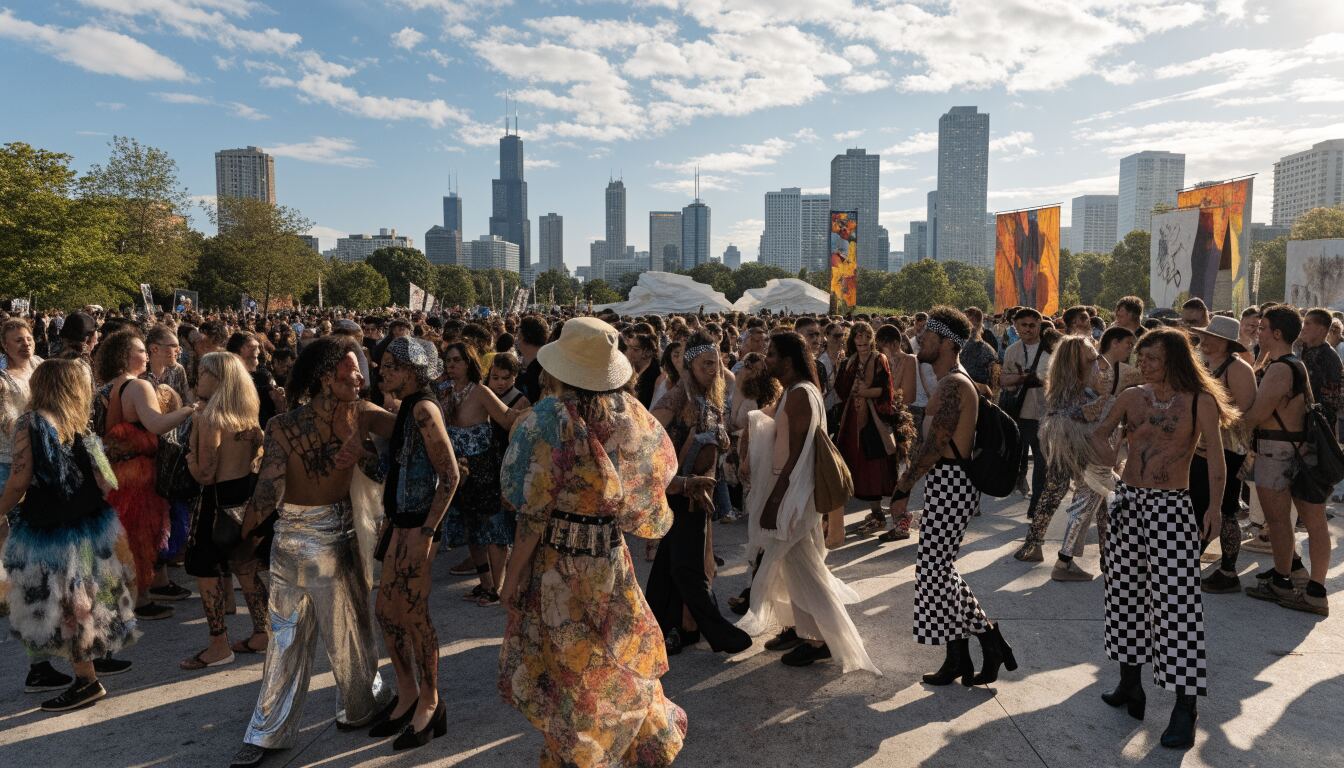
Consider how restrictive the "normal" mode of living can be. It comes with a detailed rulebook for how we should look, act, love, and where we can express ourselves. When bodies that don't fit these neat categories start to push back, it's a direct, physical challenge to that rulebook. This isn't just about saying no to the system; it's about actively creating something new in its place. This means reclaiming spaces, whether a park bench or a dance floor, and charging them with the kind of energy and expression the "normal" world tries to suppress. In this sense, it becomes a physical, embodied rebellion against the very idea that there is only one legitimate way to exist.
Living Without Limits and Loving with Fierce Intensity
What if we stopped trying to squeeze ourselves into pre-made molds? What if we fully embraced the messy, unpredictable, and sometimes overwhelming nature of our desires? This is not a call for moderation; it's an invitation to go all in. It's about loving with a depth and fierceness that might unsettle some, and connecting with others in ways that defy easy categorization. It's about recognizing that our lives and loves are not commodities to be neatly measured or controlled. When we give ourselves permission to live and love beyond these imposed limits, we create something with the power to shake the very foundations of the world around us. It's about finding profound joy and liberation in the very things society tries to shame.
This approach to life and connection looks like:
- Reclaiming Spaces: Actively transforming public and private areas into zones for authentic connection and free expression, not just transit or commerce.
- Intense Connection: Seeking out and cultivating deep, passionate relationships that go far beyond conventional, scripted norms.
- Embracing Intensity: Allowing the full spectrum of emotions and desires to flow without self-censorship or holding back.
- Challenging Limits: Consistently pushing against societal expectations of behavior, identity, and relationship structures.
This entire exploration is a testament to the power of diversity, not just in who we love, but in how we choose to express the most intimate parts of ourselves. From the historic uprisings that carved out space for visibility to the personal, everyday acts of defiance that redefine pleasure, the journey is about refusing to be confined. It's a continuous process of building, questioning, and connecting with an intensity that transforms both the individual and the community. The beauty lies in the constant questioning, the rejection of a single narrative, and the vibrant, messy, and deeply human process of creating a life that feels truly one's own.
Reimagining Urban Spaces Through Desire and Defiance
Engaging in intimate acts within shared public environments goes far beyond immediate physical gratification. It represents a conscious push against the invisible boundaries and behavioral codes that structure our daily lives. Modern cities are meticulously planned to guide movement and enforce order, functioning as mechanisms of subtle social discipline. When communities appropriate these controlled environments for expressions of erotic connection, they actively reject that imposed structure. This is about transforming supposedly neutral or sterile zones—parks, boardwalks, forgotten corners—into vibrant arenas of mutual joy and profound human contact, reclaiming autonomy over how bodies interact and find pleasure outside sanctioned norms.
Forgotten Landmarks as Spontaneous Gathering Points
Decaying piers, deserted warehouses, and other neglected urban relics often fade into the background of city life, overlooked by conventional development. Yet these very spaces can become powerful focal points for unscripted encounters and community bonding. By breathing new purpose into abandoned architecture, people revitalize more than just the physical location; they inject a sense of playful possibility into the urban fabric. A crumbling waterfront becomes a hub of connection rather than a dead end. These temporary, intense gatherings turn emptiness into opportunity, allowing city dwellers to reshape their environment into something that feels genuinely alive and collectively owned. Even transient locations like subway cars or quiet alleys can shift from mundane transit routes to potential sites of meaningful, if fleeting, intimacy, proving that desire can reshape the map of a metropolis.
The Tightening Grip of Urban Order
Dense metropolitan areas often amplify the mechanisms of social regulation. Surveillance, zoning laws, and behavioral expectations create a grid of control designed to manage populations and sanitize public life. This connects to broader concepts of biopower—the subtle ways institutions govern bodies, health, and personal conduct. In such a closely monitored landscape, choosing to engage in shared pleasure openly disrupts the predictable, alienating rhythm of city existence. It introduces moments of unplanned physical closeness that operate entirely outside official approval, serving as a direct, embodied critique of how urban life is supposed to be lived. These acts of connection break the isolation often felt in crowds, forging brief but powerful solidarities rooted in mutual vulnerability and rebellion.
Challenging the Invisible Barrier Around Private Life
A persistent cultural narrative insists that sexuality must remain hidden, confined strictly to private domains behind closed doors. This division serves to keep communal areas unnaturally devoid of desire, a sanitization that ultimately reinforces existing power structures. When individuals choose to express erotic connection in open settings, they shatter this artificial boundary. Such actions demonstrate that longing and passion are not shameful impulses to be locked away but integral parts of a full human experience. It is a forceful reclamation of bodily autonomy and emotional expression from the forces that seek to regulate them. This practice is rooted in a deep history of queer defiance, a lineage offering inspiration and context for those seeking to live more openly. By refusing to hide, people assert that liberation is found not in secrecy, but in the bold, visible claiming of space and sensation.
These spaces are constantly being re-imagined: waterfronts shift from city edges to vibrant connection points, abandoned buildings become hosts for fleeting, intense gatherings, and everyday locations like parks or transit stops transform into landscapes of desire.
Tracing the Roots of Resistance
The conversations surrounding diverse expressions of intimacy and identity are far from simple or modern inventions. They are deeply intertwined with decades of struggle, historical upheaval, and the persistent effort to live beyond rigid societal boxes. From early acts of queer resistance to more recent philosophical explorations of dismantling norms, a consistent theme emerges: a refusal to accept limitations and a drive to forge new possibilities. This lineage is complex and often turbulent, defying neat categorization. That very messiness is essential, as it reflects a living, breathing challenge to conformity. It honors a tradition of finding one's own path, even when that path is loud, unconventional, and fiercely independent.
Frequently Asked Questions
What pivotal early moments saw LGBTQ+ communities confront mistreatment?
Key historical flashpoints include the 1959 Cooper's Donuts Uprising in Los Angeles and the 1966 Compton's Cafeteria Riot in San Francisco. During these events, queer and transgender individuals directly resisted persistent police harassment. Rather than passively enduring abuse, they physically fought back, embodying a resilient spirit of defiance that predated and laid groundwork for later movements.
How can we understand the concept of 'carnal invention'?
This idea revolves around exploring desire and human connection through fresh, innovative lenses that transcend societal expectations. It involves crafting new forms of intimacy and shared experience through deep physical and emotional engagement. The focus is on pushing past established boundaries, discovering a sense of freedom within those powerful, inventive connections that challenge conventional relationship models.
Why is the term 'queerness' often described as a contested territory?
The meaning of queerness varies significantly among different groups and individuals. For some, it serves as a positive, affirming foundation for building community and shared identity. Others interpret it more broadly as anything that fundamentally disrupts normative rules and categories. These divergent understandings can spark vibrant debates and strategic differences within movements, making the concept a dynamic and sometimes disputed field.
What is the essence of 'whore theory' in this discussion?
Whore theory advocates for embracing the entirety of one's being, including aspects society might label as impure or excessively emotional. It represents a conscious rejection of externally imposed shame and judgment. The approach champions living defiantly and without self-censorship, fully inhabiting one's desires even if this openness provokes discomfort in others, reframing so-called filth as a source of power.
In what way can intimate acts in shared spaces be considered resistance?
Within environments characterized by intense regulation and control, such as modern cities, using public areas for private intimacy directly challenges those governing rules. It reclaims territories that are systematically desexualized and monitored, reimagining them as realms of autonomy and human connection. This practice subverts the intended use of space, transforming it from a site of order into one of liberating possibility.
What does it mean to adopt a 'bash back' mentality in queer politics?
Adopting a 'bash back' stance means actively confronting oppression rather than simply enduring or politely requesting tolerance. This perspective often involves rejecting assimilationist goals that seek to fit into existing societal structures. Instead, it emphasizes direct action and systemic challenge, focusing on dismantling the roots of inequality. It is a more confrontational, unapologetic approach to fighting for rights, safety, and collective liberation.
Embracing the Unruly Conversation
Reflecting on these intertwined themes of spatial reclamation, historical struggle, and diverse desire reveals that they are anything but superficial. The drive to push back, to create new forms of connection, and to live outside prescribed boxes is a powerful thread running through history. It connects early queer uprisings to contemporary acts of reimagining urban life. This journey is inherently messy, resistant to simple definitions, and full of wild, unapologetic energy. That enduring complexity is precisely the value, as it keeps the dialogue open and evolving. The ongoing conversation about how we find liberation, connection, and joy outside the mainstream is a sign of a vibrant, unbroken spirit of inquiry and resistance.