A Different Kind of Night Out in Dallas–Fort Worth
For quite some time, one particular private gathering spot captured attention across the Dallas–Fort Worth lifestyle community. It wasn't a conventional bar or a flashy nightclub. Instead, it operated as an invitation-driven, on-premise party house where the evening unfolded on the guests' own terms. The whole model was built around comfort, mutual respect, and giving couples room to breathe — whether they wanted to dance, chat, or quietly explore.
What made the place so memorable wasn't a single feature, but rather how all the pieces fit together. The crowd was varied, the spaces ranged from lively to intimate, and the guidelines around conduct and consent were crystal clear. That combination earned it a reputation as somewhere couples could genuinely relax while remaining fully in charge of how their night played out.
If you've heard whispers about this venue and are curious what separated it from the pack, or why so many duos spoke fondly of their visits, the following breakdown covers the essentials. We'll walk through the atmosphere, the people, the operational rules, and the overall design that helped it become a standout in the scene.
Understanding the Venue's Core Concept
This location built its name as one of the most notable private, on-site lifestyle spots in the region, designed especially for couples and broad-minded adults looking for something organized and discreet. Rather than acting like a public-access club, it operated as a reservation-mandatory party space where entry was strictly managed. That structure was intended to nurture a more tailored, relaxed experience—particularly attractive to anyone who values privacy and a well-run setting over the uncertainty of a drop-in bar.
The guiding philosophy centered on a "pressure-free" atmosphere. Guests decided how much or how little they wanted to participate. Some came mainly to socialize, swap stories with other pairs, and soak in the ambiance. Others gravitated toward the more secluded sections of the property. At every turn, the emphasis landed squarely on consent, personal boundaries, and moving at whatever speed felt right.
Another defining trait was the multi-zone layout, which traditionally included:
- A roomy dance floor driven by DJ sets
- Conversation nooks and lounge-style seating
- Hot tubs and calm relaxation corners
- Designated areas for more private interactions
By stitching these elements together, the venue blended the feel of a social club, a celebratory party, and a secluded retreat under a single roof. The mix allowed different types of evenings to coexist without forcing everyone into one mold.
As for the attendees, the usual age range sat around 35 to 45, and the crowd hailed from a broad array of walks of life. The mood was intentionally open and friendly, yet still grounded in a structure that prioritized couples and polite interaction. At its core, what truly distinguished the venue was the operational approach: a reservation-centered model, well-articulated guidelines, and a dedication to crafting a space where couples could explore the lifestyle in a manner that felt social, secure, and entirely on their own schedule.
Why Couples Kept Coming Back
What etched this venue into so many recollections wasn't just the look or the sound—it was how the whole experience was put together. The official communication described a party house where pairs could mix, dance, relax, and go further only if and when they wished. One core pledge was that nobody was ever obligated to join anything, and the words 'No Always Means NO' served as more than a catchphrase; they were a bedrock. For couples, that kind of structure indicates a space where inquisitiveness, personal boundaries, and comfort can all coexist in the same environment.
A huge part of the appeal came from the equilibrium between vibrancy and self-control. The venue provided an energetic dance section, a calm library for low-key conversation, a lounge, an outdoor hot tub, and distinct semi-private or shared rooms. That variety let couples shape the night they actually desired—perhaps staying in social mode, watching from a relaxed distance, or eventually moving into more personal quarters. Instead of steering everyone toward a single type of evening, the layout offered multiple pathways for engagement, which is a major reason spots like this build loyalty among couples rather than merely drawing one-time guests.
Another steady strength was the couple-centered feel. The official policy opened the door to couples and single women at all times, while single men were only allowed on a restricted basis during Friday events and, on Saturdays, required a sponsoring couple. Even without detailed elaboration, that guideline conveys a lot about the type of crowd balance the organizers wanted to uphold. It made evident that the venue was purposelly managing attendance to sidestep dynamics that can leave some couples feeling uncomfortable or outnumbered in adult social environments.
The official content also indicates that patrons appreciated the focus on confidentiality and clear boundaries. The rules barred drugs, weapons, photography, audio capture, and mobile use outside the lobby. Combined with the reservation-required model for first-timers, those policies suggest a place that treated privacy as a serious matter and worked to build an environment where visitors could feel more assured about who else was there and how the space was handled. For couples with public-facing careers or simply a preference for a chaos-free atmosphere, those kinds of safeguards can be just as important as the gathering itself.
Another factor that made the venue memorable was its framing of the evening as a complete, well-rounded occasion rather than a bare-minimum gathering. The official descriptions spotlighted dancing, relaxing, soaking in the hot tub, and socializing in an open yet orderly environment. That presentation helps clarify why many couples recall such spots as social hubs first and lifestyle venues second. The draw isn't limited to what might occur later; there's already plenty woven into the setting to make the night fulfilling for pairs who are simply there to connect, settle in, and see if the atmosphere suits them.
Just as crucially, the venue's own language aimed to assure readers that a wide spectrum of individuals could feel comfortable there. The official site portrayed the typical crowd as varied across age, look, job, and origin, with the average age falling between 35 and 45. That detail is important because when couples research a lifestyle venue, they're not only asking if it's thrilling—they want to know if it feels welcoming. A location that openly signals diversity and maturity tends to come across as more inviting to everyday duos who are after a mature, social vibe rather than a rigidly controlled scene.
Pull everything together, and what couples appeared to value most was the fusion of freedom, framework, and reassurance. The venue pledged energy without chaos, confidentiality without isolation, and an open-minded atmosphere that still had clear rules. That's an uncommon mix, and it goes a long way toward explaining why the place developed such a strong name among pairs seeking a location where they could feel relaxed, honored, and in command of their own experience.
The People, the Energy, and the Overall Mood
What stands out from the venue's own portrayals is that it sought to be more than just a party location. It framed itself as a private, on-site lifestyle community crafted for broad-minded guests who valued a structured setting with clear guidelines. The official content painted a picture of a space where people could watch the dance floor, slip away to calmer conversation spots, relax in the lounge, or enjoy the outdoor hot tub before determining how social or adventurous they wanted the night to be. That range suggests a venue built to let couples set their own pace rather than being pushed into a single mode of participation.
As for the demographic, the venue's own 'About' section stated that the typical age of attendees ranged from 35 to 45, and that the gathering was varied 'ethnically, economically, professionally and in appearance.' For couples investigating the scene, this matters because it points to a more seasoned and mixed assembly rather than a narrowly defined group. The site also stressed that visitors should feel at ease regardless of age or origin, reinforcing the sense that the mood was meant to be open to both longtimers and inquisitive newcomers alike.
The size and liveliness of the gatherings also seem to have heavily influenced the venue's standing. According to the official website, Friday nights typically drew about 35 to 50 couples, while Saturdays were larger, often falling between 45 and 60 and sometimes reaching 70, 80, or beyond. That scale helps explain why the club gained a reputation for being energetic without necessarily feeling like a conventional club. Readers can reasonably infer that Fridays likely offered a gentler start for pairs wanting a calmer introduction, while Saturdays probably provided the fuller, more high-spirited experience for which the venue was known.
The atmosphere itself seems to have struck a balance between social energy and physical division between areas. The guidelines page described a dance space for vibrancy, a library for quiet talk, a lounge for relaxation, and semi-private and group zones for those wanting a more enclosed setting. Equally importantly, the club plainly declared there was 'never any pressure' to take part and that 'No Always Means NO.' That combination is significant because it indicates the vibe wasn't built only around allure or display, but around giving couples the liberty to join, observe, or simply mingle without feeling cornered.
Guest praise featured on the club's website supports that impression. Reviewers frequently noted warmth, vibrancy, tidiness, and a feeling of safety and confidentiality. One sample comment from a pair who identified as public school administrators particularly remarked they experienced more protection and privacy there than at other lifestyle venues they'd visited. Another testimonial portrayed the spot as full of 'real' individuals and lauded the hosts and helpers, while others emphasized the dance area, staff care, and the sense that the organizers felt like participants rather than distant workers. Because these endorsements are selected by the venue itself, they should be seen as illustrative snapshots rather than impartial third-party assessments, but they still provide a helpful glimpse into the kind of atmosphere the club wished to project.
Several of those same posted reviews also suggest that couples viewed the venue as a place for socializing first and physical connection second. Patrons commended the cuisine, tunes, parking, crew, and the chance to savor the evening well before exploring any more intimate parts of the night. One testimonial specifically highlighted there was 'NO pressure' and that the play spaces were kept distinct from the dancing and bar areas. That sort of design can be enormously important for new or still-curious couples who need some space within the experience.
Another standout trait of the venue's personality was its focus on structure and limits. The official rules highlighted discretion, courtesy, no unwelcome contact, and no photos or recordings, while the guidelines page outlawed drugs, weapons, and mobile use beyond the reception zone. These measures aren't trivial housekeeping; they mold crowd conduct. For couples, such rules frequently translate to a greater sense of ease, particularly in a context where confidentiality and personal boundaries are fundamental to the occasion.
All in all, the venue seems to have cultivated its vibe around a fairly unique mix: an older demographic, lively energy, multiple gathering areas, and firm behavioral guidelines. That's likely why so many pairs appear to recall it as both vibrant and easy to navigate. It offered thrills, but within a structure that highlighted respect, personal choice, and the freedom to engage on your own terms—traits that are hugely important in determining whether a place feels simply titillating or genuinely comfortable.
Reservations, Guidelines, and What Newcomers Should Understand
One of the most obvious features of this venue's model is that it was never intended as a spur-of-the-moment hangout. Per the club's guidelines, admission was exclusively by reservation, and first-timers needed to phone in rather than just show up. The site noted that same-week bookings were possible via phone for newcomers, and that the ideal window for new couples to call was before 6:00 PM on Thursday, Friday, or Saturday—though new couple reservations were taken up to 10:00 PM on Friday and Saturday. That kind of system reveals a place that valued vetting, planning, and managed entry over impromptu arrivals.
For couples, that reservation-required approach probably held considerable appeal. Rather than operating as an open-to-the-public nightspot, the venue apparently used the phone booking process to supply first-time attendees with essential information beforehand. Its site mentions that newcomers received 'pertinent information and directions' during the reservation call, suggesting that entry details were managed thoughtfully. In a lifestyle setting, that kind of process can help establish expectations early and cultivate a more intentional, private atmosphere right from the start.
The venue's stated policies also make clear that how guests behaved was fundamental to the overall experience. The guidelines explicitly note there was never an obligation to participate and emphasize that 'No Always Means NO!' This is among the most crucial messages a couple-oriented space can communicate, because it establishes the setting around mutual consent and personal ease rather than pressure or entitlement. For those looking into this location, this rule helps clarify why the club earned a name for being welcoming to both seasoned pairs and those still exploring their own limits.
The house rules themselves underscore that principle. The establishment prohibited drama, drugs, weapons, photography, audio recording, and phone usage outside the reception area. These aren't just minor policies; they define the overall feel of such a venue. A ban on photos and recordings directly protects privacy, while restricting phone use beyond the lobby cuts down on distraction and minimizes any sense of being watched or recorded. For couples who prioritize discretion, especially those with careers or personal lives requiring caution, guidelines like these made the space feel safer and more purposeful.
The club also laid out a transparent admission policy regarding who could attend. Its guidelines stated that couples and single women were consistently welcome, whereas single men faced restrictions—limited access on Friday nights and, on Saturdays, a requirement to be sponsored by a couple already present. Without needing lengthy explanation, that rule speaks volumes about the venue's crowd management strategy. It suggests an atmosphere crafted primarily around couples, with safeguards meant to maintain the equilibrium and ease that many pairs seek in a lifestyle environment.
Viewed collectively, these elements indicate the venue employed its rules and booking system for more than just operational needs. They seem to have been integrated into the venue's core character. The club wasn't merely instructing guests about timing or restrictions; it was defining the kind of environment it aimed to foster—discreet, structured, consent-driven, and focused on ensuring couples felt in charge of their own journey from the very first interaction.
Exploring the Space and Its Features
What truly defined The 13th Floor was its thoughtful design as a collection of interconnected environments, avoiding the feel of a single, overwhelming room. The club's own materials painted a picture of variety, inviting visitors to immerse themselves in the dance floor's energy, retreat to a library for hushed chats, unwind in a cozy lounge, or drift outside to a welcoming hot tub. This architectural choice is significant because it acknowledges that not everyone arrives with the same intentions or moves at the same rhythm. Rather than pushing all attendees into a uniform experience, the venue seemed crafted to accommodate a spectrum of desires, from lively socializing to quiet observation, allowing couples to navigate the night in a way that felt natural to them.
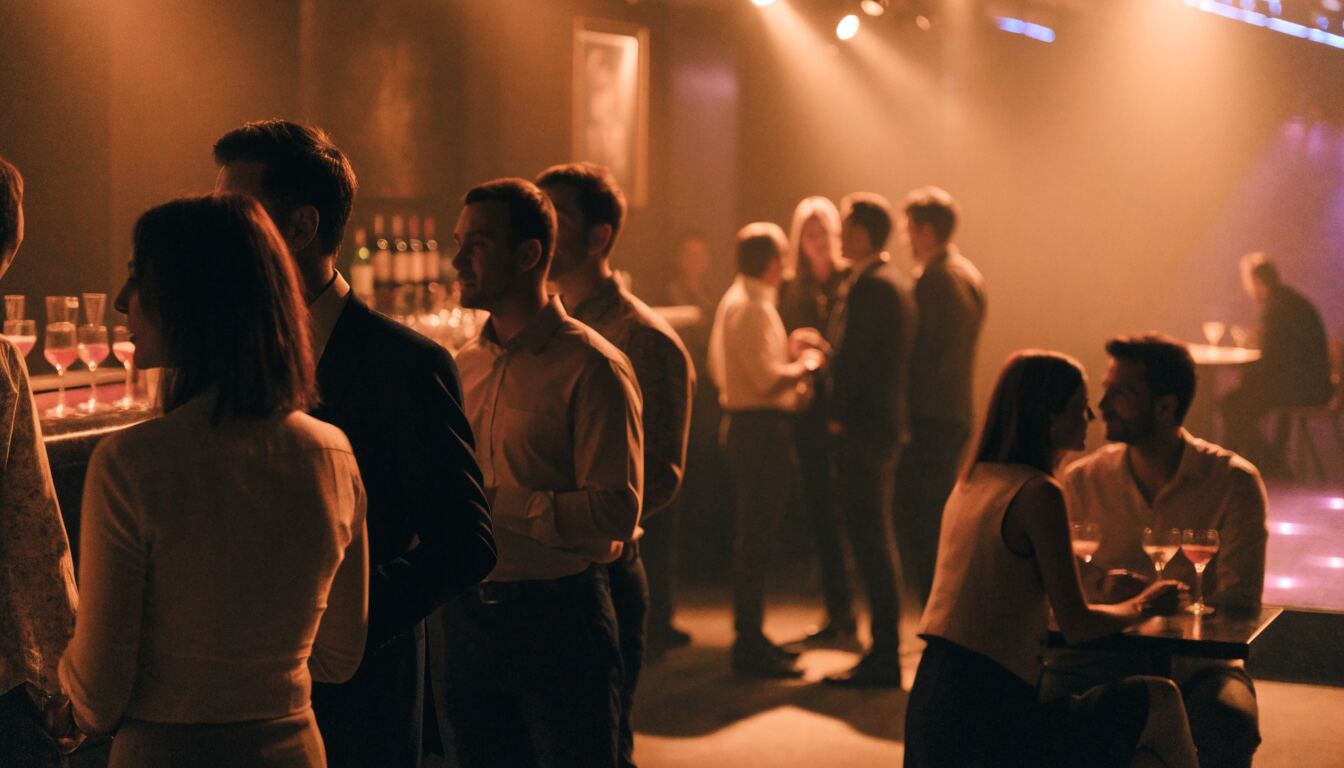
The dance floor itself acted as the heartbeat of the social scene. Described as a spot to both participate in and witness the evening's vibrancy, it was clearly more than a peripheral feature—it was a central gathering point. For partners, this kind of focal area is invaluable. It provides a gentle on-ramp to the evening, letting people connect with others through music and movement without any immediate expectation to escalate intimacy. You could simply enjoy the collective buzz, share a dance, and gauge the room's atmosphere, making it an accessible starting point even for those who prefer to take things slowly.
Equally crucial were the designated quiet zones. The presence of a library meant for subdued conversation and a lounge built for close, relaxed moments offered a necessary counterbalance to the more spirited parts of the venue. These areas likely served as essential sanctuaries, particularly for newcomers. Having a place to step away, have a private word with your partner, or simply acclimate to the surroundings can transform an intimidating prospect into a manageable and enjoyable outing. It suggests the venue was engineered to support a complete, rounded evening rather than a narrow, high-pressure interaction.
The outdoor hot tub further enriched this layered environment. Far from being a mere novelty, it functioned as a fluid social space, bridging the gap between the public buzz of the dance floor and the seclusion of private rooms. In a relaxed, less formal setting, couples could mingle, flirt, and read the social currents around them. It offered a unique way to engage that felt less structured than sitting in a lounge and less direct than moving to a play area. As per the club's own framing, the hot tub was woven into the fabric of the night's social progression, not tacked on as an afterthought.
For those seeking more secluded interactions, the layout included semi-private and group rooms. The club's guidance emphasized that guests could participate in activities within these spaces or merely observe from the periphery, with a firm assurance that involvement was never mandatory. This design choice is telling; it directly links the physical structure to a culture of consent and comfort. The environment itself empowered couples to be as social or as reserved as they wished, to watch, to join, or to simply enjoy the ambiance without feeling coerced into a single mode of engagement. The flexibility to remain a spectator or become a participant was built into the very walls.
When you piece together these elements—a high-energy dance floor, a quiet library and lounge, a sociable hot tub, and discreet play areas—you get a venue that thrived on versatility. This wasn't a one-dimensional space but a adaptable landscape where the evening could unfold in chapters. For couples, this kind of configuration is deeply appealing because it grants them agency. They could chart their own course, shifting gears as their comfort and curiosity dictated. In essence, the layout was a fundamental part of what made The 13th Floor feel so welcoming, social, and tuned in to different personalities and thresholds of comfort.
What Set It Apart from Other Dallas-Area Lifestyle Spots
When sizing up the local landscape, The 13th Floor carved out a distinct identity primarily through its format and overall feel. It presented itself as a private, on-premise party house that operated exclusively by reservation, disclosing its location only after a booking was confirmed to safeguard guest privacy. This model stands in contrast to venues that function as walk-in clubs with a public-facing presence. Right from the initial booking step, it promised a more curated, house-party-style atmosphere that filtered for a certain level of intentionality among its visitors.
This private-house concept deeply influenced the venue's character. Its promotional language highlighted a library for calm dialogue, a lounge for unwinding, an outdoor hot tub, and distinct semi-private and group areas, all orbiting a central dance floor and social hub. The overall impression was less that of a single-room nightclub and more of a multi-zone residence where the vibe could shift as you moved from room to room. For those evaluating their options, this signaled that The 13th Floor was designed around the principle of pacing—allowing the night to breathe—rather than relying solely on the momentum of a packed crowd.
Another defining characteristic was the rigorous emphasis on discretion and clear behavioral codes. The club's rulebook strictly forbade photography, audio recording, drug use, and any unwanted physical contact, with the unambiguous mantra that "No means no." It also enforced a 21-and-over policy with mandatory ID checks and retained the authority to deny entry. While such rules are common in the broader lifestyle community, The 13th Floor's prominent and upfront declaration of them helped cement its image as a place where privacy was a foundational pillar, not just a casual guideline.
The demographic composition of its guests also played a key role in its differentiation. Official descriptions noted a typical age range of 35 to 45, with a crowd diverse in professional backgrounds, ethnicities, and physical appearances. The venue maintained a clear policy of always welcoming couples and single women, while access for single men was significantly restricted. This deliberate curation points to a concerted effort to preserve a mature, partnership-focused environment. For many couples, this careful balance is often the deciding factor between a venue feeling like a safe, sophisticated space and one that feels unpredictable or overwhelming.
To understand its position, it's useful to look at a prominent current counterpart like Colette Dallas. That establishment identifies itself as a private, membership-based, on-premise club catering to couples, single women, and single men exploring swinging, polyamory, or open relationships. Its public calendar is packed with regular themed events, such as "Newbie Night" and other weekly specials, operating from a known address. In contrast, The 13th Floor historically reads as a more intimate, house-style experience with layers of privacy screening and a reservation-first approach, whereas Colette presents as a structured membership club with a consistent, public event cycle.
Other names that have long circulated in the DFW scene, such as The Marble Door or Players DFW, have less current, verifiable information from official channels. The 13th Floor’s own website has at times pointed newcomers toward these venues as part of the local ecosystem, but detailed, up-to-date public data on them is sparse. This lack of clarity actually serves to highlight The 13th Floor's distinctiveness by comparison, as its own operational model and ethos were much more explicitly documented. Being cautious about over-claiming details on other spots lends credibility, showing that comparisons are drawn from concrete information rather than recycled rumors.
Ultimately, The 13th Floor seemed to distinguish itself by offering a more private, more structured, and more resolutely couple-centric experience. The blend of reservation-only entry, a concealed address, ironclad privacy protocols, diverse social zones, and a mature attendee profile created a feeling of a carefully managed event rather than a generic night out. For couples trying to decode its stellar reputation in Dallas, the explanation is relatively simple: it appears to have wrapped excitement in a framework that fiercely prioritized discretion, guest control, and emotional comfort.
Practical Insights for Couples
Drawing from its own published materials, the most striking takeaway is that The 13th Floor was meticulously crafted for partners who crave structure, privacy, and a menu of choices over a chaotic, free-for-all atmosphere. Its guidance pages depicted a setting where you could dance, hold intimate conversations in a library, decompress in a lounge, socialize in a hot tub, or explore semi-private and group spaces only when it felt genuinely right. Crucially, the venue's literature stressed a zero-pressure philosophy, reinforcing that participation was entirely optional and that the principle of "No Always Means NO" was non-negotiable. This explicit commitment to consent is one of the most powerful signals a couple-focused venue can broadcast about its core values.
For a vast number of couples, that exact combination would have been the magnetic draw: a destination that seemed to offer abundant space to connect socially first and make intimate decisions later. The mandatory reservation system, the requirement for first-time visitors to call for directions, and the strict prohibition on cameras, audio devices, and cell phones beyond the reception area all underscore a venue that treated privacy management as an integral part of the guest journey, not a secondary concern. For anyone seeking to understand the club's celebrated status, this meticulous level of control and discretion provides a substantial part of the answer.
The intended audience profile further illuminates its appeal. The 13th Floor characterized its crowd as diverse and, in earlier iterations of its online presence, positioned itself around a sophisticated, mature audience, distinctly avoiding any spring-break party vibe. Its current online presence still nods to its legacy as one of the nation's more recognized adult clubs, expressing gratitude to the thousands of couples who passed through its doors over the years. This reinforces the notion that its renown was built on a foundation of repeat visits and a loyal, couple-driven community, rather than fleeting novelty.
Another practical insight for couples is the way the venue attempted to strike a balance between openness and necessary boundaries. The policy of always welcoming couples and single ladies, while more tightly regulating single male attendance—especially on Saturdays when sponsorship by an attending couple was required—is a common tactic to maintain a more partner-focused ambiance. This approach helps mitigate the gender imbalances that can sometimes make lifestyle venues feel less comfortable or safe for those in a relationship, ensuring the environment remains aligned with its core demographic's preferences.
In practical terms, couples researching this kind of experience should reframe their thinking. Instead of labeling it as just another "adult club," it's more accurate to view it as a curated, house-style social ecosystem defined by explicit rules, a multi-room layout, and a profound emphasis on mutual respect and discretion. This is what appears to have made it stand out. It wasn't merely peddling a sexy atmosphere; it was offering a structured format where a couple could navigate the entire night on their own terms, armed with enough guidelines to feel secure and enough liberty to customize their journey.
If your intention is to determine if a venue with this philosophy aligns with your tastes, the simplest summary is this: its own communications consistently portray it as a haven for couples who place a premium on privacy, a mature and respectful social current, unambiguous boundaries, and the freedom to ease into experiences at a self-determined pace. For that specific audience, these attributes often eclipse all other considerations. They are not just nice-to-haves; they are the essential ingredients for a positive and memorable experience. The club's design and rules seem to acknowledge that the most thrilling adventures often begin from a place of feeling completely safe, respected, and in control, allowing the night to unfold organically rather than according to a preset script.
Stepping into a space like this, based on its described ethos, would be less about performing for a crowd and more about exploring a shared journey with your partner. The multiple zones—from the kinetic dance floor to the tranquil library to the bubbling hot tub—serve as tools for communication. They allow a couple to silently check in with each other simply by moving to a different space. Want to signal a need for a quiet debrief? Head to the lounge. Feeling bold and curious? Drift toward the group rooms. This non-verbal dialogue, supported by the venue's architecture, is a subtle but profound feature that likely contributed to its loyal following. It transforms the environment into a silent partner in the couple's experience, facilitating connection without intrusion.