A Fresh Look at a Unique Group Dynamic
From the outside, the swinger world can appear layered with unspoken rules and elaborate social scripts. Even those actively participating sometimes find themselves untangling the nuances of different interaction styles. Among the more talked-about configurations is one often called the Queen’s Buffet. The name itself conjures images of luxury and selection, but the reality is far more grounded in human connection and mutual respect than any label might suggest. This isn't about spectacle; it's about crafting a specific container for intimacy where one individual's comfort and curiosity set the rhythm for everyone else.
We’re going to walk through what this arrangement actually looks like in practice, who it suits, and why the power flowing through it feels so distinct from other forms of group play. Think of this as an exploration of how desire can be structured without becoming rigid, and how confidence can flourish when expectation is deliberately removed from the equation. If you've ever wondered how a scene can be both highly focused on one person and still feel collaborative for all, you're in the right place.
What Actually Defines a Queen’s Buffet?
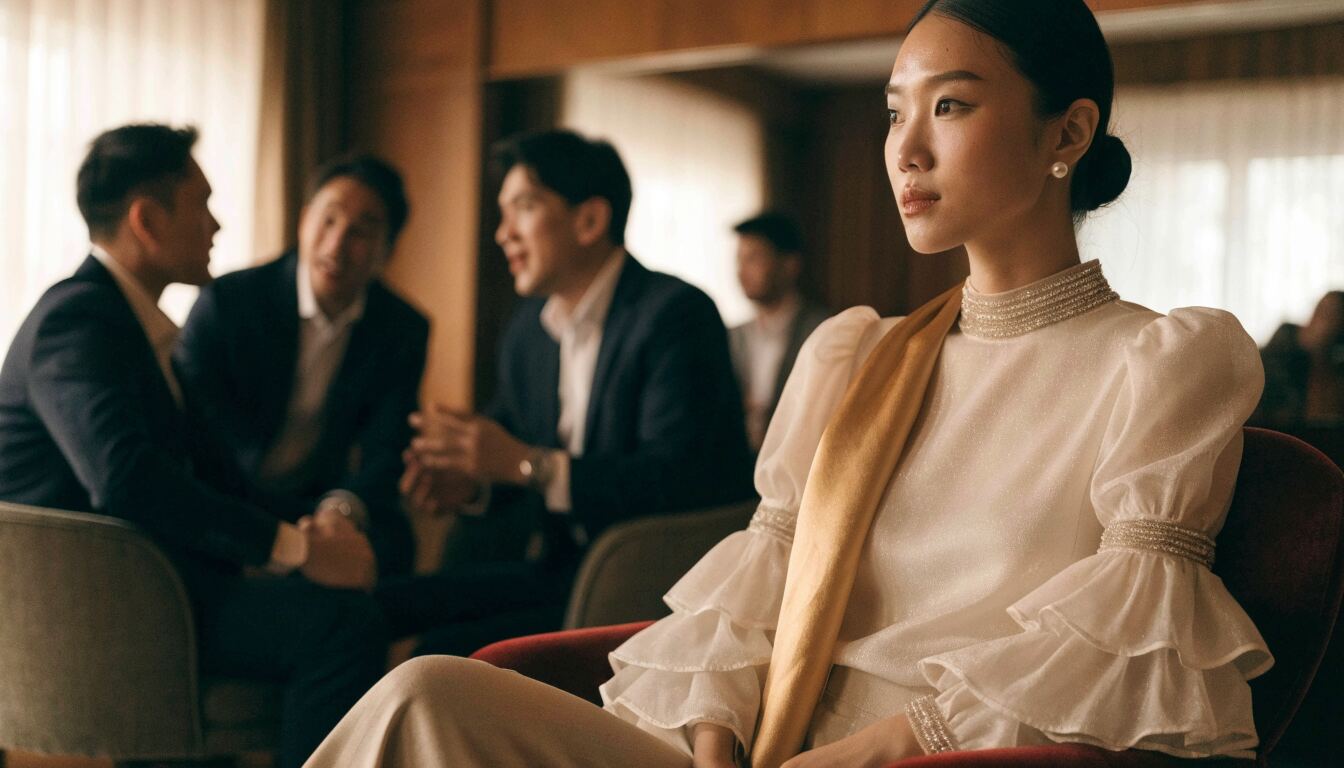
Strip away the playful imagery, and you’re left with a scenario where a single person—most commonly a woman, though gender isn't a rule—occupies the central role of decision-maker for a given encounter. Several willing partners make themselves available, and the central figure surveys those options with complete autonomy. There’s no predetermined match, no obligation to distribute attention evenly, and no script dictating who pairs off with whom. The entire interaction orbits around her preferences, her pace, and her right to engage or disengage at will.
This flips many conventional dating dynamics on their head. In traditional contexts, pursuit is often mutual or initiated by one party with an expectation of reciprocation. Here, the offer is made openly and without strings, and the acceptance is a gift rather than a negotiation. The “buffet” metaphor works because it highlights abundance and choice, but it’s crucial to remember we’re talking about human beings, not objects. The selection process is rooted in genuine attraction, chemistry, and a reading of energy that goes far deeper than physical appearance.
More Than Just a Metaphor
Calling it a buffet might sound transactional, but the lived experience is usually quite tender. The central figure isn't simply grabbing what she wants; she's often engaging in quiet conversation, reading body language, and feeling out who aligns with her mood that evening. Potential partners, meanwhile, aren't passive dishes waiting to be consumed. They're active participants who have chosen to offer their time and attention freely, finding satisfaction in the act of being considered and potentially selected. This mutual, consensual framing transforms what could be a cold selection process into a warm, human exchange.
For couples who attend together, the dynamic often involves one partner taking the Queen role while the other supports from nearby, either as a spectator, a participant in the selection pool, or simply a reassuring presence. The arrangement is endlessly customizable, which is why conversations beforehand are so vital. No two Queen’s Buffet scenes look exactly alike, because no two people bring the same desires to the table.
The Inner Workings of Choice and Attention
When the spotlight shines this brightly on one person, the quality of the experience hinges on how that attention is managed. It’s not simply about being desired; it’s about navigating the vulnerability of being watched, the responsibility of making selections that affect others’ feelings, and the self-awareness to know what you actually want in the moment. This is where the dynamic moves from theory into practice.
How the Selection Process Unfolds
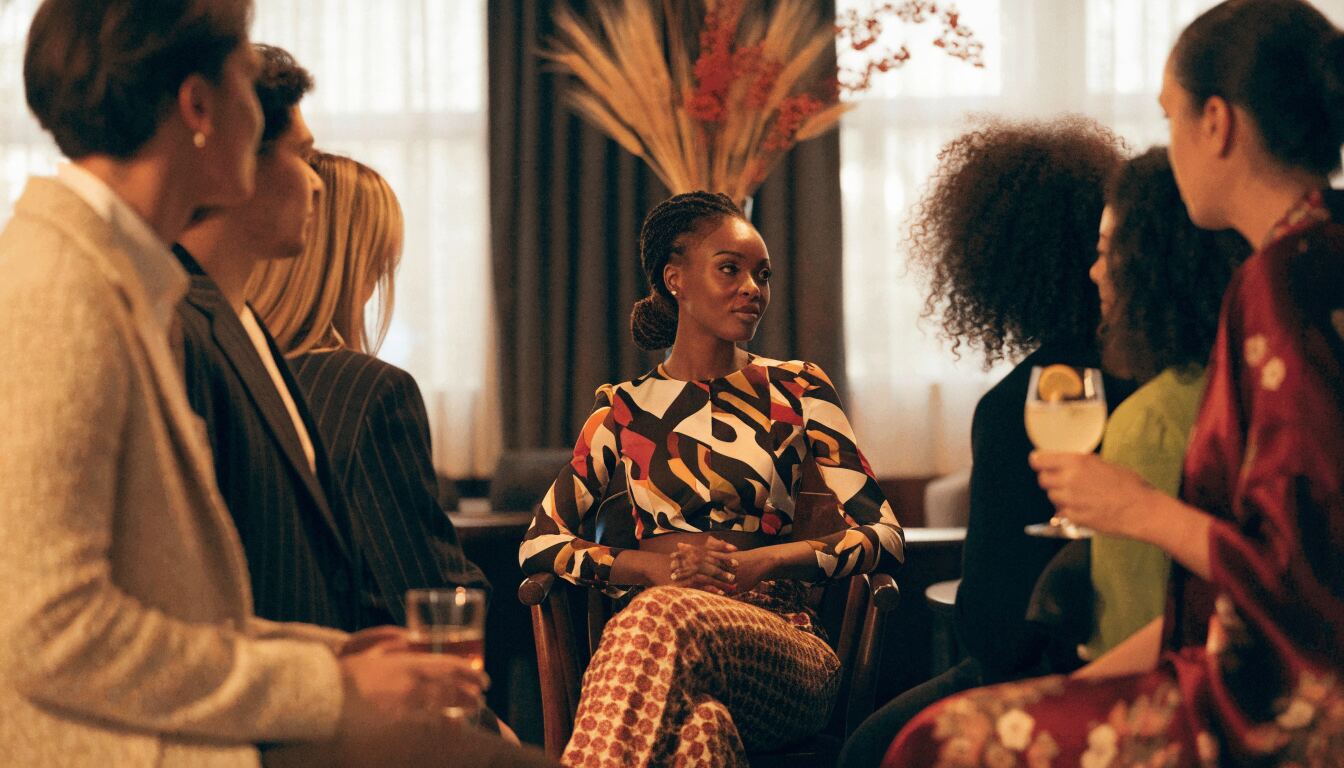
In many cases, the Queen will take time to mingle casually before any play begins. She might chat with several people, share a drink, or simply observe the room’s energy. This preliminary phase is critical because it establishes comfort and allows everyone to settle into the social atmosphere. When she feels ready, she may signal her interest in someone through direct invitation—a gesture, a whispered question, or an extended hand. There’s no rush, and a good host or facilitator will help maintain a relaxed pace.
Those who aren't chosen right away, or at all, are encouraged to view the situation through a lens of abundance. Their worth isn't diminished by not being picked; it simply means the chemistry wasn't aligning in that specific moment. Sometimes, the Queen will engage with multiple people sequentially, or even simultaneously if that’s her preference and everyone involved is enthusiastically on board. The only fixed element is her right to direct the flow.
Emotional Preparation for All Roles
Stepping into the Queen role requires more than just willingness. It asks for a grounded sense of self and the ability to communicate boundaries clearly, sometimes under the subtle pressure of multiple hopeful gazes. Preparation might involve journaling about what you're hoping to experience, discussing fears with a trusted partner, or simply checking in with your body to ensure you're genuinely in the mood to lead.
For those offering themselves as options, emotional preparation is equally important. They need to sit with the possibility of rejection and reframe it not as a personal failing, but as a natural part of a dynamic built on specific, momentary attraction. Building resilience around this can actually strengthen self-esteem over time, because it separates external validation from internal worth. The healthiest participants are those who can offer themselves fully while holding their sense of identity lightly.
Power Dynamics: Who Really Steers the Ship?
At first glance, the power structure seems simple: one person commands, others comply. But the reality is far more collaborative than that surface reading suggests. The Queen may hold the visible reins, but her authority is granted by the willing participation of everyone else. This creates a fascinating interplay where control is simultaneously centralized and distributed.
The Queen’s Authority and Its Limits
Her authority is real but bounded by the consent of the group. She decides who joins her, what activities unfold, and when things end. This can feel deeply empowering, especially for women who have spent a lifetime navigating spaces where their desires were secondary. Yet she cannot compel anyone to do something against their will. If a chosen partner declines a specific act, that boundary is non-negotiable. The Queen’s power is one of invitation, not command. Recognizing this distinction prevents the dynamic from tipping into domineering territory.
There’s also a quieter form of power held by those in the offering role. By choosing to be present, by extending their attention and availability, they create the very context in which the Queen’s choice matters. Without their voluntary presence, the dynamic collapses. This interdependence means that even the most seemingly passive participant exerts influence over the scene’s shape.
Collaboration Beneath the Surface
Successful Queen’s Buffet experiences are almost always underpinned by thorough, collaborative groundwork. Before anything intimate occurs, there’s usually a discussion—sometimes days in advance, sometimes minutes—about hopes, limits, and signals. The Queen might share what kind of energy she’s seeking, while others might voice their own boundaries or curiosities. This pre-negotiation transforms the event from a solo performance into a group co-creation, even if one person ultimately directs the action.
Think of it like a jazz ensemble. The Queen is the lead soloist, improvising and setting the melodic direction, but she’s supported by a rhythm section that provides structure and responds to her cues. Without that underlying collaboration, the music falls apart. In the same way, the most memorable Queen’s Buffet scenes are those where everyone feels like an essential part of the whole, even when the spotlight stays fixed on one person.
Building Confidence Without an Ounce of Pressure
Perhaps the most liberating element of this dynamic is its explicit rejection of obligation. No one is expected to perform, to feign interest, or to push through discomfort. This creates a rare container where genuine desire can surface organically, untainted by guilt or social pressure.
Why Freedom from Obligation Matters
In many social and romantic settings, we carry invisible scripts about what we “should” do: reciprocate a compliment, accept an advance to avoid hurting feelings, or go along with a group’s momentum. The Queen’s Buffet dismantles these scripts by making the right to choose—or refuse—absolutely central. For the Queen, this means she never has to justify a “no.” A simple, gracious decline is built into the framework and expected by everyone present. For potential partners, it means their offering is just that: an offering, given freely and without strings.
This absence of pressure often unlocks a profound sense of safety. When you know you can step back at any moment without repercussion, you’re more likely to step forward with authenticity. Participants frequently report feeling bolder and more playful in these settings than in traditional dating scenarios, precisely because the stakes feel lower and the respect for autonomy feels higher.
Cultivating Self-Assurance Through Practice
Confidence in this context isn't about bravado or flawless performance. It's a quieter quality: the ability to sit comfortably with your own desires and articulate them without apology. For many, this confidence grows through repeated positive experiences. Each time a boundary is honored, each time a “no” is met with a warm smile instead of a sulk, self-trust deepens. Over time, this inner security tends to spill over into other areas of life, influencing how you communicate in your primary relationships, your workplace, and your broader social circles.
Practical steps for building this kind of confidence include starting small. If you're new to the lifestyle, you might attend an event simply to observe, with no intention of participating. You might practice verbalizing a boundary in a low-stakes situation, like declining a dance or a drink, just to feel what it's like to honor your own limits. These small acts accumulate, gradually constructing a foundation of self-assurance that can support more adventurous exploration later.
Navigating Etiquette and Unspoken Rules
Every social environment has its norms, and lifestyle gatherings are no exception. The Queen’s Buffet carries its own set of expectations around behavior, communication, and respect. Understanding these unwritten guidelines helps everyone relax and focus on connection rather than confusion.
The Art of Respectful Engagement
When you're in the role of a potential partner, your primary task is to be present, warm, and non-intrusive. This means avoiding aggressive pursuit, leering, or any behavior that could be interpreted as pressuring. Good etiquette involves making eye contact, smiling, and allowing the Queen to initiate closer conversation or touch. Pay close attention to her body language. If she turns slightly away, crosses her arms, or seems distracted, those are signals to give her space. Conversely, if she leans in, asks you questions, or finds reasons to touch your arm, you're likely receiving a green light—though you should still wait for a clear verbal or non-verbal invitation before escalating.
It's also considerate to engage with the other people present, not just the Queen. Building rapport with everyone fosters a sense of community and reduces any awkwardness around the selection process. The atmosphere should feel like a friendly gathering where something more intimate might unfold, not a sterile audition room.
Communicating Desire with Clarity and Grace
Expressing interest can feel vulnerable, but in this context, clarity is a gift. Vague hints and ambiguous signals create confusion. If you’re hoping to be chosen, it’s perfectly acceptable to say something like, “I’m really enjoying your energy tonight, and I’d be delighted to join you if that feels right.” This kind of statement is direct yet pressure-free because it leaves the decision entirely in her hands. It also demonstrates emotional maturity, which is often deeply attractive.
If you’re the Queen and you feel drawn to someone, similar principles apply. A simple, “I’d love to spend some closer time with you—how does that feel?” honors their agency while clearly stating your desire. The goal is to make invitations feel like opportunities, not summons.
Mastering the Gentle Refusal
Saying no gracefully is a skill that serves everyone well, both inside and outside the lifestyle. A clear but kind refusal preserves dignity on both sides. “Thank you so much for the offer; I’m not feeling that connection right now,” is perfectly sufficient. You don’t owe elaborate explanations or apologies. If you’re on the receiving end of a refusal, the appropriate response is a warm acknowledgment: “No worries at all, I’m glad you’re taking care of yourself.” This response reinforces the culture of consent and makes future interactions far less awkward.
For facilitators or hosts, modeling these gracious refusals and acceptances sets the tone for the entire group. When newcomers see that “no” is treated as normal and respectable, they internalize that safety is genuine, not just a stated policy.
Why This Dynamic Appeals to So Many
The Queen’s Buffet resonates with a wide range of people for reasons that extend well beyond the obvious sexual components. It touches on deeper human needs for recognition, autonomy, and structured adventure.
A Safe Harbor for Newcomers
For individuals or couples just beginning to explore non-monogamous spaces, the Queen’s Buffet can serve as an ideal entry point. Its structure reduces ambiguity. You know what role you’re stepping into, and you know what’s expected of you. This clarity is comforting when you’re still learning the broader social codes of the lifestyle. Instead of navigating a free-form party where anything goes, you’re operating within a defined framework that still allows for spontaneity and genuine connection.
Many people report that their first positive lifestyle experience occurred in a setting like this. They were able to watch, learn, and participate at their own comfort level without feeling thrust into situations they weren't ready for. The explicit emphasis on the Queen’s choice also tends to slow things down, which benefits everyone who prefers a more gradual, organic unfolding of intimacy.
Empowerment Through Structured Play
There’s something uniquely validating about being the sole focus of positive, respectful attention. For those who take the Queen role, the experience can be profoundly healing, especially if they’ve previously felt invisible or pressured in sexual contexts. The dynamic affirms that their desires matter, that their boundaries are non-negotiable, and that their pleasure is worth centering. This isn't selfishness; it's a corrective to cultural narratives that often sideline women's sexual agency.
For those in the supporting roles, a different form of empowerment emerges. There’s a quiet confidence that comes from being able to offer yourself without attachment to outcome, from being secure enough to celebrate someone else’s pleasure without needing to be its direct recipient. This capacity for compersion—finding joy in another’s joy—is a skill that deepens with practice and enriches all forms of ethical non-monogamy.
From Single Scene to Ongoing Growth
A single Queen’s Buffet encounter can be thrilling, but the real value often reveals itself over time. The skills and insights gained in these settings tend to ripple outward, influencing how people approach intimacy, communication, and self-awareness in their broader lives.
Deepening Communication in Primary Relationships
For couples who explore this dynamic together, the conversations it sparks are frequently transformative. Discussing what each partner hopes to experience, what fears arise, and how they’ll support each other through the process requires a level of honesty that can feel vulnerable but ultimately strengthening. These dialogues often unearth desires or concerns that had been simmering unspoken for years. Even if the couple only engages in a Queen’s Buffet once or twice, the communication muscles they build during preparation and debriefing serve their relationship indefinitely.
Regular check-ins become a habit. Partners learn to ask not just “Did you have fun?” but “How did that feel in your body?” and “Is there anything you’d like to adjust for next time?” This depth of inquiry fosters emotional intimacy that extends far beyond the bedroom.
Evolving Desires and Shifting Roles
Human sexuality isn’t static. What excites you today might feel neutral or even unappealing a year from now. The Queen’s Buffet dynamic accommodates this fluidity beautifully. Someone who starts out exclusively in the Queen role might later feel curious about being among those offering attention. A couple might alternate who takes center stage depending on the evening’s mood. There’s no rule that says you must stick to one identity.
Allowing desires to evolve without judgment is a hallmark of a healthy approach to lifestyle exploration. It means staying curious about yourself and your partners, and resisting the urge to box anyone into a permanent category. This flexibility keeps things fresh and prevents the kind of stagnation that can creep into any long-term relationship or community.
Carrying Empowered Play Into Everyday Life
The lessons absorbed in a Queen’s Buffet setting don’t stay at the party. Learning to state your boundaries clearly, to accept rejection without crumbling, and to celebrate another’s pleasure—these are life skills, not just lifestyle skills. Many people find that after spending time in environments where consent is explicit and respected, they become more assertive in their workplaces, more honest with their families, and more attuned to their own needs in all areas of life.
This is perhaps the most enduring gift of the dynamic. It’s not just about a memorable night; it’s about internalizing a model of human interaction where everyone’s agency is sacred, where desire is expressed openly, and where connection is built on mutual, enthusiastic participation. Carry that model with you, and you’ll find it transforms far more than your social calendar.
Practical Considerations for Your First Experience
If you’re intrigued and considering stepping into this dynamic, a bit of practical groundwork can make all the difference between an awkward evening and a genuinely nourishing one. Here’s what to keep in mind as you prepare.
Finding the Right Environment
Not all lifestyle events or venues host Queen’s Buffet-style arrangements, and among those that do, the vibe can vary wildly. Some are held in private homes with a carefully curated guest list; others take place in clubs with designated areas for this type of play. Before attending, research the event’s reputation, read reviews if available, and reach out to organizers with any questions. A responsible host will be transparent about how they facilitate the dynamic, what safety measures are in place, and what’s expected of attendees.
Look for events that emphasize orientation sessions for newcomers, have clear policies around consent, and employ staff or volunteers who monitor the space for any boundary violations. An environment that prioritizes education and safety over sheer numbers is almost always a better choice for a first experience.
Packing Your Emotional Toolkit
Beyond the practical items you might bring—comfortable clothing, safer sex supplies, perhaps a favorite beverage—consider packing an emotional toolkit. This means arriving with a clear sense of your own boundaries, a plan for how you’ll handle unexpected feelings, and a support system in place. If you’re attending with a partner, agree on a check-in signal or a safe word that either of you can use if you need to pause, regroup, or leave entirely.
If you’re attending solo, identify a friend you can text afterward, or commit to some gentle post-event self-care. The emotional aftermath of any intense social experience can be unpredictable. You might feel elated, drained, unexpectedly tender, or a mix of all three. Allowing space for those feelings without judgment is part of the process.
Common Misunderstandings Clarified
Because the Queen’s Buffet carries a vivid name and a distinctive structure, it’s prone to misconceptions. Let’s clear up a few of the most frequent ones.
Misconception: The Queen is selfish or cold.Reality: The role requires emotional intelligence, clear communication, and genuine care for the people offering their attention. A good Queen reads the room, checks in with partners, and ensures everyone involved feels respected, even if they aren't chosen for play.
Misconception: Participants in the offering role have no power.Reality: They hold the power of presence and consent. They can withdraw at any time, set their own boundaries, and shape the scene through their energy. Their voluntary participation is what makes the dynamic possible in the first place.
Misconception: It’s all about sex.Reality: While sexual connection is often part of it, the experience is equally about social interaction, flirtation, and the thrill of being seen and desired. Many people derive satisfaction from the buildup and the atmosphere, even if they don’t engage in physical intimacy.
Misconception: Jealousy won’t arise because the structure is clear.Reality: Jealousy can surface in any non-monogamous scenario, no matter how well-defined. The key is acknowledging it, communicating about it, and using it as information rather than treating it as a failure.
Wrapping It All Together
The Queen’s Buffet is far more than a provocative label. It’s a thoughtfully crafted social container that prioritizes one person’s agency while inviting others into a space of generous, pressure-free participation. When approached with clear communication, genuine curiosity, and a deep respect for boundaries, it offers a rare opportunity to experience desire on your own terms—whether you’re the one choosing, the one being chosen, or simply a supportive presence in the room.
What makes this dynamic endure in lifestyle communities isn’t just the excitement of the moment. It’s the way it teaches us to ask for what we want, to accept a “no” with grace, and to find joy in someone else’s pleasure. Those are lessons that extend far beyond any single evening, shaping how we connect with partners, friends, and even ourselves. If you decide to explore this path, carry with you the understanding that the truest power lies not in controlling others, but in knowing and honoring your own heart while respecting the hearts of those around you.