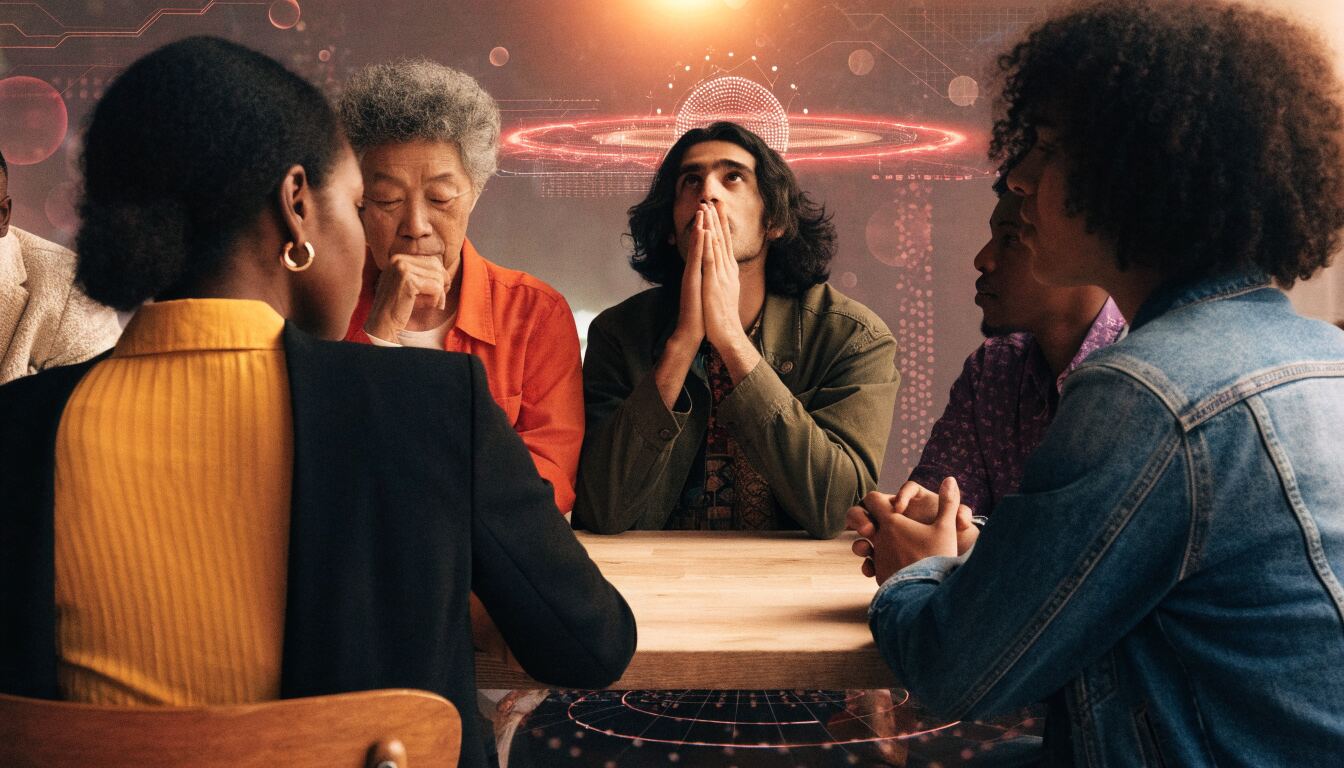
When Technology Meets Desire: A New Ethical Frontier
The creative landscape is shifting rapidly, and few spaces feel that tremble quite like the world of kink and adult expression. Artificial intelligence has slipped into our toolkits almost overnight, promising endless visual stories, interactive role-play, and personalized fantasies. It’s exhilarating, no doubt. Yet underneath that excitement hums a quieter question: how do we play with these powerful instruments without leaving a trail of unintended harm? This isn’t a conversation about stifling creativity. It’s about weaving responsibility into the fabric of our digital explorations, so that consent, dignity, and fairness aren’t left behind in the rush to innovate.
We’re standing at a junction where personal expression collides with broader societal effects. Every image generated, every scenario scripted by a language model, carries ripples that extend beyond a single screen. Those ripples can lap against real performers, artists, and communities who have built their livelihoods on authentic human connection. This article dives into the practical side of keeping your AI-assisted creations ethical, whether you’re a curious newcomer or a seasoned content maker. We’ll unpack the thorny issues around training data, wrestle with the idea of digital consent, and map out concrete guidelines you can adopt right now. Think of it as a compass, not a cage—a way to navigate the thrilling unknown while keeping your moral bearings intact.
Building a Personal Code: Community-Inspired Standards for AI and Kink
Before we wade into the deeper debates, let’s ground ourselves with some actionable principles. These aren’t rigid commandments handed down from on high, but rather a living set of ideas that many mindful creators are already embracing. They revolve around intentionality, transparency, and a genuine regard for the humans on the other side of the data pipeline.
Start by examining your own motivations. Are you reaching for AI to expand your artistic voice, to safely explore a private fantasy, or to build something that educates and connects? The answer matters. When your intention is rooted in respect—for yourself, for imagined audiences, and for the unseen people whose work may have trained the model—you’re already on firmer ground. The impact of what you produce matters just as much as the spark that ignited it. A piece of content that feels clever to you might land as invasive or exploitative to someone else, especially if it borrows heavily from real-world imagery without permission.
Another pillar is openness. If you’re blending AI generation with your own photography, writing, or design, be upfront about that blend. Audiences appreciate honesty, and it builds a cushion of trust that can protect you if questions arise later. Also, make peace with the reality that not every platform or community will welcome AI-assisted work. Some spaces have drawn firm lines, and respecting those boundaries is part of being a good participant. Finally, keep learning. The ethical terrain shifts quickly, and staying informed about how datasets are compiled, what new regulations are emerging, and how marginalized voices are being affected will help you adapt your practices over time.
Digging Beneath the Surface: The Broader Ethical Terrain
Intentions Aren’t Everything—But They’re a Starting Point
It’s remarkably easy to get hypnotized by the technology itself. The speed, the photorealism, the sheer novelty can distract us from the fact that real human beings are entangled in every stage of the process. So let’s pause and ask the uncomfortable questions. What are you truly aiming to do with these tools? Maybe you’re designing a graphic novel that explores power dynamics in a thoughtful way. Perhaps you’re crafting a private journal of erotic art that helps you understand your own desires. Those are examples where the intention leans toward personal growth or legitimate creative output. The ethical weight shifts dramatically if the goal is to mimic a specific performer without consent, to generate degrading material that targets a group, or to flood platforms with content that undercuts independent artists.
Impact often outpaces intent. You might create something with no malice whatsoever, yet if it inadvertently reinforces a harmful stereotype or makes someone feel violated, the damage is real. That’s why a reflective practice is so valuable. Before finalizing a piece, ask yourself: who could this affect, and how? Would I be comfortable explaining my process to someone whose work inadvertently ended up in the training data? These aren’t easy reflections, but they cultivate a mindset that sees beyond the pixels.
Societal Ripples: Deepfakes, Harassment, and the Bigger Picture
Zoom out from individual creation, and the view gets sobering. AI models are not neutral; they absorb the biases, inequalities, and toxic patterns that already saturate the internet. When those models are then used to generate adult content, they can amplify existing problems. Deepfake pornography—where a person’s face is digitally grafted onto explicit material without their knowledge—has already caused profound psychological and professional harm. It’s a stark reminder that these tools, in the wrong hands, become weapons of harassment.
Beyond deepfakes, there’s the quieter erosion of trust. If audiences can no longer distinguish between authentic human-made erotica and algorithmically generated imitations, what happens to the value we place on genuine connection and craft? Creators who have spent years building a body of work may find their styles replicated endlessly, diluting their brand and income. Being a responsible participant means acknowledging these systemic effects, even if you personally never cross those lines. It means advocating for better safeguards, supporting platforms that prioritize consent, and speaking up when you see misuse in your own circles.
The Hidden Foundation: Unpacking AI Training Data
Let’s get specific about something that often stays in the shadows: the datasets that teach AI how to generate images, text, and even voices. Imagine teaching a painter by showing them millions of artworks, but never telling them which pieces were stolen from living artists’ studios. That’s uncomfortably close to how many large-scale AI models are trained. They ingest vast swaths of the internet—photos, illustrations, stories, videos—often without any meaningful filter for copyright, consent, or context.
This has profound implications for the kink and adult content community. Many performers and artists share their work on platforms with specific terms of use, never imagining that their images could be scraped to train a commercial AI. Their creative labor, their distinct visual styles, and sometimes even their faces become raw material for a machine that may later be used to produce competing content. It’s a bit like discovering that someone built a profitable business using bricks quietly taken from your own walls. The lack of transparency around dataset composition makes it nearly impossible to trace exactly what was used, which in turn makes accountability a foggy concept.
What can a creator do with this knowledge? First, choose your tools thoughtfully. Some AI platforms are beginning to offer models trained on properly licensed or opt-in data. Others provide at least partial disclosures about their sources. Second, support initiatives that push for ethical data practices—whether that’s through public commentary, financial contributions to advocacy groups, or simply amplifying the voices of artists who are speaking out. Third, if you’re a creator who also shares your own original work online, consider the metadata and protections you can employ, understanding that no method is foolproof but every layer helps.
Forging Responsible Habits: Practical Steps for Creators
Consent as a Digital Imperative
In physical kink spaces, consent is the bedrock. We negotiate scenes, establish safewords, and check in continuously. Why would the digital realm be any different? When generating content that involves human likenesses—even fictionalized composites—pause to consider whether your process respects the spirit of consent. Using a recognizable person’s face, body, or distinctive features without explicit permission is a violation, plain and simple. It doesn’t matter if they’re a public figure, an ex-partner, or a stranger whose photo you found online. The harm is real, and in many jurisdictions, the legal consequences are becoming increasingly severe.
Here are some concrete guardrails to keep your work on solid ethical ground:
- Stick to fictional characters. If you want to explore specific dynamics or aesthetics, build personas from scratch. Give them names, backstories, and appearances that aren’t traceable to any living individual.
- Never generate explicit content of real people. This includes celebrities, acquaintances, and even historical figures. The privacy violation and potential for reputational damage are enormous.
- Consider audience and distribution. If you plan to share your creations publicly or within a community, review the platform’s guidelines carefully. Many sites now explicitly ban AI-generated imagery that mimics real individuals, and some are expanding restrictions to cover certain types of synthetic adult content altogether.
- Practice self-auditing. Before you hit save or share, ask yourself: would I feel comfortable if someone applied this exact process to my own image? If the answer is no, it’s time to rethink.
Pushing Back Against Harmful Stereotypes
AI models have a notorious habit of regurgitating and even magnifying societal biases. In the realm of adult and kink content, this can show up as narrow beauty standards, rigid gender roles, or the fetishization of certain identities without any nuance or humanity. Because the training data often over-represents mainstream, often objectifying, portrayals, the output can feel stale at best and actively damaging at worst.
You have the power to nudge the output in a better direction. Be deliberate in your prompts. Instead of accepting the first result, refine your requests to include diverse body types, varied expressions of gender and sexuality, and dynamics that emphasize mutual enjoyment rather than one-dimensional power imbalances. Think about the stories you’re telling. Does the scene depict a negotiated, consensual exchange, or does it lean on tired tropes where one party is merely a prop? When creators consciously push for variety and depth, they contribute to a broader cultural shift within these digital ecosystems. It’s a small act of resistance against the homogenizing pull of biased algorithms.
Guarding Your Digital Footprint and Privacy
Every time you interact with an AI tool, you’re leaving traces. Some platforms store your prompts, your generated images, and even your editing history. In the context of adult content, this raises obvious privacy concerns. You might be crafting something deeply personal, intended only for your own exploration, yet it could be sitting on a server somewhere, subject to the company’s data policies—or lack thereof.
Take time to read the privacy policies and terms of service for any AI application you use. It’s tedious, but essential. Look for language about data retention, whether your content is used to further train the model, and what rights the platform claims over your creations. Whenever possible, favor tools that offer local generation (where the processing happens on your own device) or that provide clear, user-friendly options to delete your data permanently. Treat your AI playground with the same caution you’d apply to any sensitive online activity. Strong passwords, two-factor authentication, and a healthy skepticism about free services are all part of the package.
The Murky Middle: Creative Expression Versus Exploitation
This is where the path gets genuinely tangled. On one side, AI opens up breathtaking possibilities for self-expression. Someone who has never held a paintbrush can now visualize intricate scenes. A writer grappling with a complex emotional dynamic can use a language model to brainstorm dialogue. These are valid, even beautiful, uses of the technology. They can help people understand their own desires, communicate better with partners, and create art that resonates.
But the line between expression and exploitation is thin and often blurred. If the AI model you’re using was trained on a massive, indiscriminate scrape of the web, then every output you generate is, in a sense, built on the uncredited labor of countless individuals. When you then use that output to attract clients, sell products, or build a following, the ethical ground gets shaky. Are you profiting from a system that extracted value from people without their knowledge or compensation? It’s a question without a perfectly clean answer, but wrestling with it honestly is part of being a conscientious creator in this era.
Consider the difference between using AI as a sketchpad for personal exploration and using it to mass-produce content that mimics a specific living artist’s style. The former stays within the realm of private growth; the latter veers into appropriation. If you find yourself drawn to a particular aesthetic, take the time to learn about its human origins. Support the artists who pioneered it. Let your AI experiments be a supplement to, not a replacement for, genuine engagement with the creative community.
Decoding Platform Rules and the Transparency Factor
Navigating the patchwork of platform policies can feel like a part-time job. Every website, app, and marketplace has its own stance on AI-generated adult content. Some ban it outright. Some allow it with strict labeling requirements. Others are still figuring it out, their policies evolving in real time. As a creator, staying informed is non-negotiable.
Here’s a checklist to run through before you post or sell anything:
- Terms of Service deep dive. Don’t just skim. Search for keywords like "synthetic," "AI-generated," "deepfake," and "likeness." See what’s explicitly prohibited and what falls into a gray area.
- Content moderation practices. How does the platform enforce its rules? Is there a human review process, or is it mostly automated? Understanding this can help you gauge the risk of having your work flagged or removed.
- Data usage transparency. Does the platform explain how it handles the content you upload? Some services reserve the right to use your creations to improve their own AI, which could mean your unique style gets absorbed into a future model.
- Openness about training sources. A small but growing number of AI providers are publishing details about their training datasets. Prioritizing these tools sends a market signal that transparency matters.
Think of this diligence as part of your craft. Just as you’d research the safety of physical equipment for a scene, you research the digital environment you’re entering. It’s not glamorous, but it prevents a lot of heartache down the road.
The Open-Source Dilemma: Freedom and Its Shadows
Open-source AI models have democratized access in remarkable ways. They allow tinkerers, independent developers, and artists to modify and build upon existing technology without the gatekeeping of large corporations. This can lead to fascinating niche tools tailored to specific communities, including those within the kink world. The collaborative spirit is genuinely exciting.
However, this freedom comes with a significant shadow side. Once a model is released openly, it can be nearly impossible to control how it’s used. The same tool that helps someone create consensual, artistic erotica can be repurposed by bad actors to generate non-consensual imagery or harass individuals. There’s no central authority to revoke access or enforce ethical guidelines. The burden of responsibility shifts almost entirely to the end user. If you choose to work with open-source tools, that burden rests on your shoulders. It means being extra vigilant about your own practices, educating those in your circle, and advocating within those communities for shared ethical norms. The absence of a corporate gatekeeper doesn’t mean the absence of moral obligation.
Defending the Humans Behind the Art
Livelihoods and Intellectual Property at Stake
Behind every AI-generated image lurks the ghost of human creativity. The photographers, models, illustrators, and writers who populate the adult and kink spaces with authentic work are facing an existential squeeze. When algorithms can churn out endless variations of a style or a look, the economic foundation of their careers begins to crack. Why commission a custom piece when you can prompt an AI to produce something similar in seconds? Why subscribe to a performer’s feed when you can generate a personalized fantasy that scratches the same itch?
This isn’t a call to reject AI outright, but rather an invitation to be mindful of the ecosystem. If you value the human artistry that has shaped kink culture for decades, look for ways to support it actively. Commission original work. Credit your inspirations. Use AI as a complement to human creativity, not a wholesale substitute. Recognize that intellectual property rights, though imperfect and lagging behind technology, represent a principle worth defending: that creators should have a say in how their work is used and should share in the value it generates.
The Unauthorized Likeness Problem
Few issues are as emotionally charged as having one’s face or body replicated without consent. Deepfake technology has made this disturbingly easy, and the adult industry has been ground zero for much of the resulting harm. Even outside of explicit content, seeing a synthetic version of yourself saying or doing things you never agreed to can be deeply destabilizing. It’s a violation of personal sovereignty.
For creators, the rule is simple: don’t do it. Don’t use tools to generate imagery that features real people unless you have their explicit, informed, and enthusiastic permission. And be aware that "permission" means more than a casual nod. It means a clear conversation about what you’re creating, where it will appear, and how it might be used in the future. If you’re on the other side of the equation—someone worried about your own likeness being misused—know that legal frameworks are slowly catching up, with new laws addressing digital impersonation emerging in various regions. Documenting instances of misuse and seeking legal counsel are becoming more viable paths.
The Ethics of Data Scraping: A Closer Look
Let’s return to that metaphor of stolen bricks. Data scraping, the automated harvesting of online content, is the engine behind many AI models. While some scraping targets publicly available data with benign intentions, the scale and opacity of the practice in commercial AI development raise serious ethical red flags. Copyrighted photographs, paywalled videos, personal social media posts—all can be swept up indiscriminately.
Consider these points when evaluating the tools you use:
- Consent should be the baseline. Individuals and creators ought to have a meaningful mechanism to opt out of having their work used for AI training, and opting in should be the gold standard.
- Fair compensation models need exploration. If a company profits from an AI model trained on someone’s creative output, there’s a compelling argument that the original creator deserves a share. This is a complex legal and economic puzzle, but one that ethical companies are beginning to address.
- Transparency is non-negotiable. Without knowing what data a model was trained on, users and regulators are flying blind. Demanding clearer disclosures is a form of advocacy that every user can participate in.
- Legal evolution is underway. Court cases and legislative proposals around the world are starting to define the boundaries of fair use in the context of AI training. Staying informed helps you anticipate shifts that could affect your own work.
Cultivating Trust Through Openness and Built-In Safeguards
Why Clear Ethical Frameworks Matter
An ethical framework isn’t a dusty document; it’s a living set of commitments that guides your daily choices. For individual creators, this might look like a personal manifesto you revisit regularly. For collectives or small businesses, it could be a shared set of principles that governs what projects you take on and which tools you use. The key components usually include: a commitment to consent, a promise to avoid harm, a dedication to transparency, and a willingness to be accountable when mistakes happen.
Investing time in crafting such a framework pays off in multiple ways. It helps you make quicker, more confident decisions when faced with ethical gray zones. It signals to collaborators and audiences that you take these issues seriously. And it provides a foundation for growth—as the technology changes, you can update your framework rather than starting from scratch each time.
Teaching Digital Consent and Boundary-Setting
AI can actually serve as a training ground for healthier human interactions, if designed and used thoughtfully. Some interactive AI applications in the intimacy space are being programmed to model good consent practices. They might initiate scenarios slowly, ask for verbal confirmation before escalating, and respond appropriately to "stop" or "pause" commands. For users, especially those new to kink, this can be an educational experience that normalizes ongoing, enthusiastic consent.
Creators who build or customize such AI experiences have a unique opportunity to embed these values directly into the technology. Think of it as designing an environment where boundaries are respected by default. If you’re using AI to craft role-play scenarios or interactive stories, consider scripting in moments where characters check in with each other, where safewords are introduced naturally, and where aftercare is depicted as a normal and essential part of the encounter. These choices ripple outward, shaping user expectations and normalizing a culture of care.
Programming Caution into the Core
When developing or fine-tuning AI for intimate contexts, a principle of "erring on the side of caution" can prevent a lot of unintended distress. This means designing systems that default to asking permission rather than assuming it. An AI companion, for example, could be programmed to avoid making assumptions about a user’s desires based on previous interactions, instead explicitly inviting the user to set the direction each time. This mirrors the real-world practice of not assuming that past consent applies to present activities.
Such design choices might feel less "spontaneous," but they build a foundation of safety that allows for deeper exploration in the long run. They also protect the creator from inadvertently facilitating harmful scenarios. If you’re not a developer yourself, you can still advocate for these features by choosing tools that prioritize them and by providing feedback to companies about the importance of built-in safety measures.
Money, Law, and the AI-Generated Marketplace
Treading Carefully in Monetization Gray Zones
The prospect of earning income from AI-assisted creations is undeniably appealing. But the legal and ethical landscape is riddled with tripwires. Before you set up a shop or launch a paid subscription, do your homework. The platform you’re using may have strict rules against selling AI-generated adult content, or it may require clear labeling that could affect your sales. Beyond platform rules, consider the broader ethical implications: if your revenue stream depends on a model trained on dubiously sourced data, you’re building a business on shaky moral ground.
Ask yourself: would you feel comfortable explaining your monetization model to one of the artists whose work likely ended up in the training set? If that conversation feels uncomfortable, it might be a sign to recalibrate. Some creators are finding ways to monetize that feel more aligned with their values—for example, using AI to enhance their own original photography or writing, rather than generating content from scratch. Others are transparent with their audience about their use of AI, turning that honesty into a selling point rather than a secret.
Likeness Laws: A Legal Minefield
Using someone’s face or voice without permission isn’t just ethically dubious; it’s increasingly illegal. "Right of publicity" laws in many jurisdictions give individuals control over the commercial use of their identity. Defamation, false light, and intentional infliction of emotional distress are other legal theories that can come into play when AI-generated content harms someone’s reputation or peace of mind. Celebrities have begun filing lawsuits, and legislators are paying attention.
The safest path is simply to avoid generating any content that features a real person’s likeness, full stop. If you have a compelling artistic reason to include a recognizable figure, you need explicit, preferably written, permission that covers the specific use case. And even then, be prepared for the possibility that the person might revoke that permission later, especially if the context changes. The legal framework is evolving, and what seems permissible today could be restricted tomorrow.
Staying Compliant Across Platforms and Borders
The internet is global, but laws are local. A piece of content that’s perfectly legal in one country might violate obscenity statutes or privacy regulations in another. Add AI into the mix, and the complexity multiplies. When you distribute your work online, you’re potentially subject to the laws of every jurisdiction where it can be accessed. That’s an intimidating prospect, but a few habits can reduce your risk:
- Read every word of the terms. It’s tedious, but knowing the rules of your chosen platforms inside and out is your first line of defense.
- Research local regulations. If you’re based in a particular region, understand its specific laws around adult content, intellectual property, and digital likeness. If you have a significant audience in another country, be aware of major legal differences.
- Label clearly. Transparency about AI involvement can help manage audience expectations and may protect you if questions of authenticity arise.
- Keep records. Document your creative process, your prompts, and any permissions you’ve obtained. If a dispute ever arises, having a paper trail can make all the difference.
Ultimately, the monetization question circles back to the core themes of this conversation: respect, transparency, and a willingness to prioritize human dignity over convenience or profit. The creators who thrive in this new landscape will likely be those who recognize that ethical engagement isn’t a barrier to creativity—it’s the foundation on which lasting, meaningful work is built.
Navigating a New Landscape of Digital Connection
Artificial intelligence is reshaping our understanding of human connection in ways that feel both thrilling and unsettling. Sophisticated platforms can now craft lifelike visuals, narratives, and audio that blur the boundaries between what’s simulated and what’s genuine. This evolution extends far beyond adult-oriented media—it challenges the very definition of closeness in an era dominated by screens. A recurring concern centers on how we integrate respect and permission into intimate technologies. With simulations becoming increasingly convincing, the responsibility to handle these tools with integrity grows more urgent by the day.
Examining What Matters to You in Virtual Environments
The sheer novelty of artificial intelligence can easily sweep us up, but there’s real value in slowing down to reflect on our motivations. When a program can conjure nearly any scenario, it pushes us to confront our personal principles head-on. Operating ethically in a space where formal guidelines are still emerging demands a kind of self-honesty that isn’t always comfortable. It’s about acknowledging what we genuinely want and examining how we choose to express those desires, particularly when technology removes many traditional barriers.
To make this reflection practical, consider setting aside a few minutes before engaging with an AI tool to ask yourself a handful of direct questions. What emotional need am I trying to meet right now? Could this interaction influence how I treat people offline? Am I comfortable with the idea that my digital activity might leave traces beyond my control? Writing down your answers, even briefly, can bring surprising clarity. The goal isn’t to judge yourself harshly but to cultivate a habit of mindful awareness that can guide your choices over time.
Shifting Dialogues Around Technology and Longing
We’re collectively stepping into uncharted territory when it comes to machine-driven companionship. Some individuals turn to AI partners for emotional support during lonely periods, such as after a separation, or as a low-stakes way to practice social skills. The appeal is clear: unlike a human exchange, a digital conversation can be reset at any moment without awkwardness or consequence. Yet that very flexibility raises deeper questions about our expectations for flesh-and-blood relationships. Are we gradually training ourselves to prioritize convenience over the messy, unpredictable beauty of authentic interaction? The cultural conversation is evolving rapidly, and no one has definitive answers yet—only a shared sense that we need to keep talking about it.
One helpful approach is to treat AI interactions as a supplement rather than a substitute. If you use a chatbot to rehearse difficult conversations or explore fantasies safely, try to balance that with real-world social nourishment. Even small steps—a phone call with a friend, attending a local meetup, or simply making eye contact with a stranger—can keep your relational muscles from atrophying. Technology works best when it enhances our humanity rather than replacing it.
Handling Intelligent Tools with Deliberate Care
At its core, no piece of technology is inherently virtuous or villainous; the distinction lies entirely in its application. Think of AI as you would any powerful instrument—a camera, a printing press, a surgical scalpel. It can open doors to creativity, self-exploration, and novel forms of bonding, but only when wielded with clear-eyed intention. Staying mindful means acknowledging that even digital actions can ripple outward and affect real people, sometimes in ways we don’t immediately see.
Here are several practical checkpoints to integrate into your routine:
- Pinpoint your purpose: Before you launch any AI tool, articulate why you’re reaching for it. Are you seeking artistic inspiration, emotional comfort, sexual exploration, or simply killing time? Naming the drive helps you stay aligned with your values.
- Investigate the origins: Look into how the model was trained. Does the developer openly discuss their data sources? Were images, texts, or audio clips gathered with consent from the original creators? Opt for platforms that prioritize transparency and ethical data collection.
- Scrutinize what emerges: Pause to examine the content you’re generating or consuming. Does it depict scenarios that could normalize harmful behavior? Could it be mistaken for a real person’s likeness? Even if you never share it publicly, the act of creation shapes your own mindset.
- Uphold limits, even digitally: Ethical lines don’t vanish just because a partner is synthetic. If you’d feel uneasy explaining your actions to a trusted friend, that discomfort is worth exploring. Consider establishing personal rules—for example, never generating imagery that mimics someone you know without enthusiastic permission.
- Audit your emotional aftereffects: After a session, check in with yourself. Do you feel energized, ashamed, curious, or disconnected? Tracking these emotional footprints over time can reveal patterns that inform healthier habits.
Charting a Thoughtful Route Ahead
So what conclusions can we draw from this rapidly shifting terrain? The integration of AI into adult expression—and kink-oriented spaces in particular—presents a knotty set of challenges that won’t fade away. These tools are firmly embedded in our cultural fabric and will only become more sophisticated. The core message is that heightened awareness is no longer optional; it’s essential. We need to examine where an algorithm acquired its knowledge and whether that process honored the people behind the data. Every time we produce or engage with machine-generated material, we should weigh its potential impact on others, from the artists whose work was scraped to the communities that might be misrepresented.
This isn’t about hunting for flawless moral conclusions, because few exist in such a fluid domain. Instead, it’s about embracing a mindset of ongoing reflection. Responsible use demands that we respect limits, remain vigilant about consent—even in simulated contexts—and honestly interrogate our own motives and their wider repercussions. Each person’s journey with these tools is unique, but navigating it well requires a healthy blend of self-awareness, practical wisdom, and genuine consideration for the wellbeing of those around us.
Common Questions About AI and Adult Content
What exactly are NSFW AI generators, and why do they matter so much?
These are software systems designed to produce adult-oriented images, written stories, or synthesized voices. Their significance stems from their rapidly improving quality, which makes generating explicit material alarmingly simple. This surge in capability forces urgent conversations about artistic ownership, ethical boundaries, and how we safeguard dignity in digital communities.
Is it acceptable to use these AI platforms for creating explicit material?
The answer depends heavily on context. Employing them for private, consensual exploration or personal creative projects can fall within ethical bounds, provided you operate with respect and avoid causing harm. Complications arise, however, when the underlying models were trained on scraped content posted without permission, or when individuals weaponize the technology to fabricate damaging, non-consensual media depicting real people.
What are the most pressing ethical dilemmas tied to these tools?
One of the gravest issues involves training data. Many popular models ingest vast quantities of images and text from the open web, often incorporating material that was never intended for such use by its original creators—a clear fairness problem. Beyond that, bad actors can exploit these generators to produce counterfeit explicit imagery of actual individuals, including public figures and private citizens alike. This represents a profound violation of privacy and can inflict lasting emotional and reputational damage.
Can I earn income from adult content made with artificial intelligence?
Monetizing this kind of output sits in a murky legal and ethical zone. Numerous platforms explicitly forbid selling AI-generated adult material, particularly when it involves unauthorized likenesses or infringes on copyright protections. Before attempting to profit, scrutinize the terms of service for any site you plan to use, and honestly assess whether your venture respects the rights and dignity of everyone involved.
How safe is my personal data when I use these AI services?
Data security varies dramatically from one provider to the next. Some companies retain the content you create, along with account details, on their servers, while others permit you to run everything locally on your own hardware. Always read privacy policies and user agreements with care, even if it feels tedious. For maximum control, prioritize applications that support offline generation and local storage, minimizing the trail of sensitive information you leave behind.
What effect do these AI systems have on human artists and performers?
The impact on flesh-and-blood creators is substantial and deeply concerning. Since many models learn by absorbing online portfolios without consent or compensation, they can undercut the livelihoods of the very individuals whose labor fueled their development. This dynamic threatens to devalue human artistry, divert income away from performers, and erode the creative ecosystem that makes adult content vibrant and diverse in the first place.