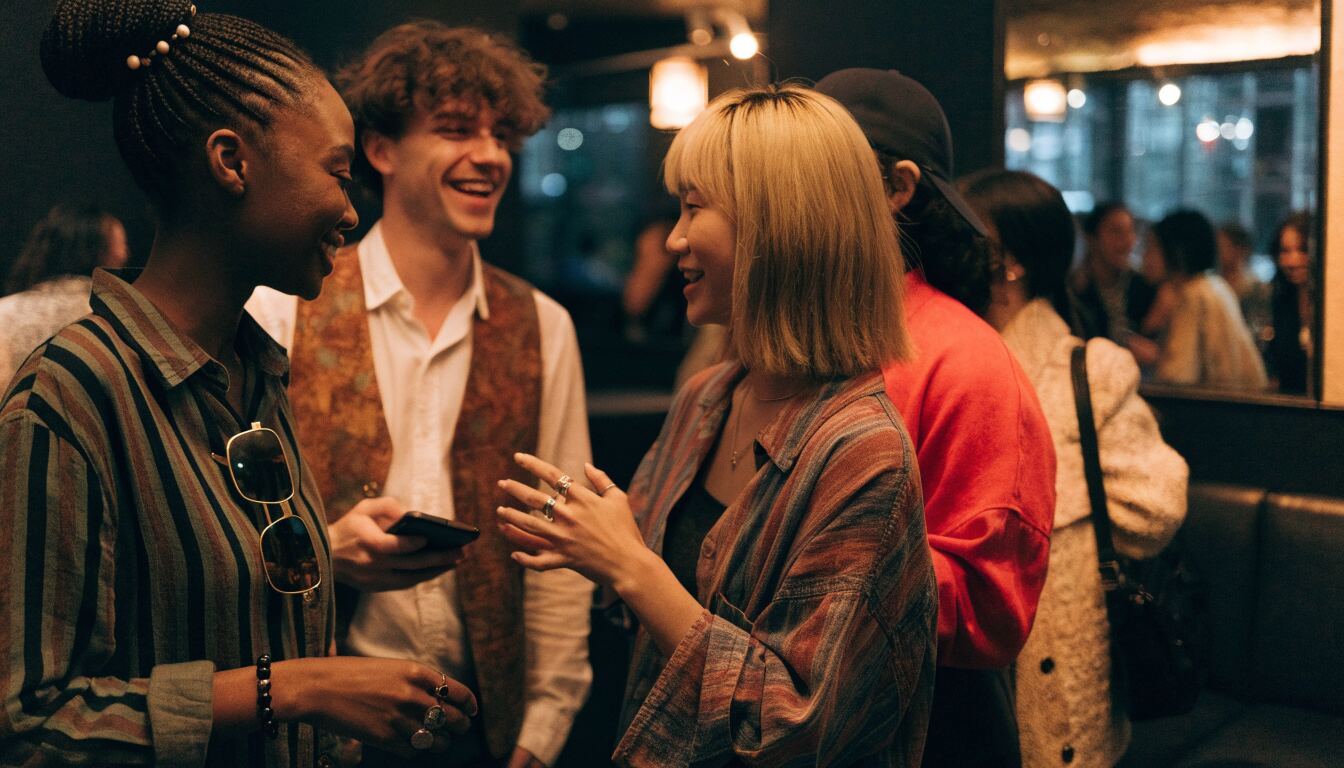
Connecting Through Screens: The New Landscape of Closeness
It's remarkable to step back and observe just how much the blueprint for human connection has transformed in the digital era. Not long ago, forming a bond typically meant sharing a physical space, reading body language, and hearing a voice in real time. Today, a significant portion of our relational world unfolds through swiping gestures, direct messages, and carefully curated profiles. We've constructed an entirely new ecosystem of intimacy, one that lives largely behind glass screens. It’s a fascinating evolution, but one that can feel oddly detached when you pause to consider its implications.
This shift isn't merely about convenience; it's rewiring the very expectations and pathways we use to find closeness. The sheer scale of potential connections can be both exhilarating and overwhelming. You’re no longer limited to your immediate social circle or geographic location. Instead, you can engage with people who share your niche passions, however obscure, from all over the globe. This digital bridge has been a lifeline for those who felt isolated in their offline environments, especially individuals exploring aspects of their identity that aren't widely understood in their local communities.
Decoding Relationships in a Virtual Realm
Navigating the terrain of online relationships requires a skillset entirely different from traditional dating. It’s not simply about chemistry felt across a table; it’s about managing a personal brand, interpreting the tone of a text, and mastering the delicate art of knowing when to move a digital interaction into the physical world. The lack of non-verbal cues makes it dangerously easy to misread someone's intentions or project a fantasy onto a profile that doesn’t match the reality.
We often find ourselves caught in the highlight reel of another person’s life, comparing their most polished moments to our own messy, unfiltered experiences. Furthermore, the paradox of choice can be crippling. With a seemingly endless queue of potential partners just a tap away, people can fall into a trap of constantly believing the grass is greener, making it difficult to invest deeply in a single connection that is already right in front of them. It’s a strange cocktail of instant accessibility and deep-seated complexity.
The Double-Edged Sword of Dating Platforms
Dating applications have completely revolutionized the introduction phase of romance. They’ve democratized access to people you’d likely never cross paths with in your daily routine, creating opportunities for cross-cultural and cross-social circles. Yet, this efficiency comes with a unique set of psychological hurdles. The gamified nature of swiping can reduce people to commodities, making rejection feel sharper because it’s often based on a split-second assessment of a static image rather than a holistic human impression.
The digital space also introduces specific anxieties. We’re navigating the risks of deceptive profiles, the abrupt silence of ghosting, and the persistent pressure to present an idealized, flawless version of ourselves. It can feel less like a romantic pursuit and more like a continuous, high-stakes job interview for your heart. The mark left by online dating culture is indelible, changing not only how we meet but how we value ourselves and others in the process.
Social Platforms as a Bridge to Belonging
Beyond dating, social media functions as a surprisingly robust tool for finding your tribe. It moves past the superficial sharing of memes to become a space for discovering communities centered on shared experiences, struggles, and triumphs. For younger generations, these platforms are not an escape from reality but an extension of it, a place where meaningful relationships are forged through shared vulnerability and support.
Of course, the environment is not without its shadows. The pressure to maintain a flawless facade, the relentless culture of comparison, and the potential to overshare are constant companions. However, when approached with intention and mindfulness, these digital tools can cut through isolation. They allow people to find others who mirror their own experiences, stay connected with loved ones across distances, and even build professional networks that transcend physical borders.
Questioning the Old Guard: A Shift in Core Beliefs
A profound cultural re-evaluation is underway, spearheaded by younger people who are dismantling rigid historical frameworks regarding gender and connection. The conversation has moved beyond simple binary labels into a more nuanced appreciation of fluidity and personal truth. This generation isn’t interested in inheriting static definitions; they are actively constructing an understanding of identity that is expansive, personal, and subject to change over time. This shift is visible not just in protest marches, but in the casual, everyday vernacular of social feeds and story posts.
Expanding the Vocabulary of Identity
The way we talk about sexuality and gender is undergoing a rapid expansion. There is a growing cultural literacy around the idea that these aspects of self are not fixed points but spectrums. The rigidity of “either/or” is giving way to a more playful and authentic exploration of “both/and” or “neither.” People are increasingly reluctant to squeeze themselves into boxes that don’t fit, and they’re finding the language to articulate that dissonance online.
This linguistic shift isn't just academic; it’s a lifeline. Seeing others confidently live out complex identities on platforms normalizes the exploration for those who are still questioning. It provides a mirror that reflects back a possibility they might never have seen in their immediate physical surroundings. This push for fluidity is gently but firmly compelling broader society to expand its capacity for acceptance and to unlearn restrictive binary programming.
Normalizing the Unspoken
Perhaps the most radical act has been the direct confrontation of shame. Millennial and Gen Z adults are dragging previously taboo subjects into the harsh, cleansing light of public discourse. Topics like mental health struggles, body image issues, and detailed sexual experiences are being discussed with a frankness that can feel jarring to older generations. This openness is a strategic tool for stripping away the secrecy that often breeds stigma.
By speaking aloud about the things we were told to hide, they are reframing the narrative. It’s a collective declaration that these experiences are normal facets of the human condition, not sources of disgrace. The message is clear: we should be able to discuss the complexities of our bodies and minds without the weight of moral judgment. This transparency is a powerful antidote to the isolation that secrets create.
How Digital Creators Steer the Conversation
Online personalities and content creators hold immense sway over this cultural recalibration. They act as informal educators, sharing personal anecdotes and worldviews that can deeply resonate with adults trying to make sense of themselves. When an influencer discusses their journey with sexual orientation or relationship models, it can validate the feelings of millions of followers in real time.
However, this influence is a mixed bag. While many creators champion psychological safety, consent, and self-love, others can inadvertently promote misinformation or peddle a polished unreality that creates new pressures. The curated nature of a feed often blurs the line between authentic representation and performance. It's crucial to remember that a fifteen-second video rarely captures the messy, unglamorous truth of a person's life. The responsibility falls on the viewer to consume this content with a critical eye, separating aspirational fiction from actionable, healthy advice.
The Sanctuary of Digital Tribes
For many, the most significant gift of the internet is the discovery of a digital home. Online communities have evolved into vital support systems where understanding and validation are readily available. These spaces offer a profound sense of belonging that might be entirely absent in a person's offline life. It’s within these niche corners of forums, group chats, and comment sections that perspectives are shaped and the shame of difference is dissolved.
Peer-Driven Networks for Wellness
One of the most tangible benefits of these communities is the access they provide to sexual health resources. Adults can pose sensitive questions and exchange experiences regarding contraception, testing, or navigating pleasure without the fear of a judgmental stare. This is particularly vital for those living in areas where comprehensive education is restricted or where access to non-judgmental healthcare is scarce.
Within these dedicated hubs, you’ll find threads dissecting everything from specific STI anxieties to nuanced discussions about hormonal health. It’s a decentralized library of lived experience, where learning is collaborative and immediate. The ability to ask a burning question anonymously and receive a chorus of supportive, informative replies can be life-changing, filling the gaps left by inadequate institutional education.
Finding Strength in Shared Stories
There is a unique, potent power in realizing you are not an anomaly. When individuals share their personal journeys—the confusion, the joy, the heartbreak—it chips away at the walls of isolation. Reading a story that mirrors your own hidden reality provides a massive emotional release, a sigh of relief that says, "It's not just me."
These virtual support groups function as a permanent, ongoing campfire where people gather to offer wisdom, encouragement, and a deep sense of solidarity. The act of voicing a struggle and being met with empathy rather than alienation is deeply restorative. While these spaces aren't a replacement for professional therapy, they serve as a crucial first step toward self-acceptance and a buffer against loneliness.
The Architecture of Supportive Spaces
Platforms dedicated to specific interests—whether on large aggregators or private messaging apps—act as the modern town square for sexual discourse. These structures allow for a sliding scale of visibility, letting people choose between total anonymity or a verified identity depending on their comfort level. You can lurk and absorb information silently, or you can become a vocal advocate.
Inside these groups, you’ll find distinct ecosystems dedicated to:
- Navigating specific relationship orientations and non-traditional structures.
- Offering and receiving advice on complex interpersonal dynamics and dating.
- Sharing deeply personal wins and setbacks in a non-judgmental environment.
- Mobilizing around issues of sexual rights and pushing for policy changes.
The Tightrope of Visibility and Safety
While the openness of the digital age is liberating, it also requires a delicate dance with privacy. The very platforms that offer community also present substantial risks to our personal data and psychological safety. The boundaries between public and private have blurred, creating a landscape where a moment of vulnerability can have a permanent shelf life. Navigating this requires a keen awareness of the illusion of invisibility that the internet provides.
The Myth of Being Invisible
It’s a seductive fantasy: that a clever username and an avatar allow us to speak without consequence. We often feel disembodied online, free to express hidden parts of ourselves as if we are wearing a digital mask. But the reality is far more traceable. Even if your legal name isn't attached to a post, a constellation of metadata—your browsing history, IP address, and behavioral patterns—can often be pieced together to form a clear picture of who you are.
The lack of immediate, face-to-face reaction can lower our inhibitions, leading to disclosures we would never make in a physical room. We forget that the internet possesses a perfect, unforgetting memory. The mask might cover your face, but your digital shoes leave distinct, trackable footprints.
The High Cost of Over-Disclosure
Most of us have witnessed, or experienced, the sinking feeling of a post gone wrong. Whether it’s a heat-of-the-moment rant, a divisive opinion, or an embarrassing relic from a younger self, the internet’s virality makes retraction nearly impossible. The architecture of screenshots, archives, and reposts ensures that even the most hastily deleted content can linger forever in the shadows of a server.
It’s worth considering the long game. Future employers routinely scan social histories. College admissions panels and scholarship committees do the same. Relationships can be irreparably damaged by words stripped of their original context and time. In a digital world, context collapses; a joke meant for a small circle of friends can easily be broadcast to the world and judged by a very different standard.
Curating Your Digital Shadow
So, what does a healthy strategy look like? It’s not about retreating from digital life entirely, but about moving from a reactive to a proactive stance. It involves a conscious pause before hitting “send,” a regular audit of your privacy configurations, and a periodic review of what your online footprint actually looks like to a stranger.
Managing your presence is an ongoing act of curation. It’s about ensuring that your digital shadow reflects the person you are today and the person you want to be seen as tomorrow. This mindfulness is not paranoia; it’s a fundamental hygiene practice for protecting your reputation and psychological well-being in an era where the personal is permanently public.
The Hunger for Hearts and Thumbs
We’ve engineered a culture where self-perception is often outsourced to strangers. Social platforms have become a high-stakes arena for validation, creating a feedback loop where personal worth is quantified through notifications. This dynamic, particularly potent for those who have never known a world without it, ties identity to performance, making the separation between a true self and a curated avatar increasingly difficult to maintain.
When Metrics Define Self-Esteem
There’s a pervasive, unspoken rule: if you didn’t document it and it didn’t receive a reaction, did the moment even happen? People are tirelessly sculpting their online personas to broadcast an image of effortless perfection. This constant performance creates a dangerous cycle where self-worth becomes a function of a volatile metric. The number of likes or the tone of comments can dictate a person's mood for the entire day, creating an emotional rollercoaster tethered to a server’s algorithm.
The Neuroscience of a Notification
The pull of the notification is not a moral failing; it’s a chemical one. Positive social feedback triggers a release of dopamine, the neurotransmitter associated with pleasure and reward. This creates a powerful reinforcement loop that hooks us into the habit of posting and obsessively checking for a response. The algorithms are engineered specifically to exploit this vulnerability, serving up variable rewards like a slot machine to keep us craving the next hit of digital approval.
This biochemical hijacking can lead to a cascade of issues, including:
- A sharp spike in anxiety when a post doesn't meet an internal benchmark of popularity.
- A compulsive, almost involuntary urge to refresh feeds for updates.
- Deep-seated feelings of inadequacy triggered by comparing your raw, unedited life to others’ polished outputs.
The Drain of the Attention Economy
Our focus is a limited resource, and the architecture of social media is a masterful machine designed to extract as much of it as possible. The relentless bombardment of stimuli and information can cultivate a state of attention addiction, where individuals become dependent on the constant, fragmented stimulation of the feed. It’s a state of perpetual distraction that makes deep work, focus, and quiet reflection feel almost physically uncomfortable.
When your brain is perpetually pulled in a dozen different directions, the ability to be present in a physical space or to sustain a single train of thought erodes. This cognitive fragmentation has tangible consequences for mental health, contributing to burnout and a generalized sense of being overwhelmed by a world that demands your attention but doesn't respect your peace.
Learning About Bodies and Boundaries Online
The digital world has become the de facto library for adult sexual education. This is a seismic shift from the past, where information was gatekept by institutions. Now, the floodgates are open, presenting a chaotic mix of clinically accurate facts, dangerous myths, and everything in between. Discerning the signal from the noise is a critical survival skill in this new informational wild west.
Navigating the Flood of Facts and Fakes
Social channels grant immediate access to an ocean of information about relationships, pleasure, and bodily health. The challenge is that reliable, science-based resources share the same stage as harmful stereotypes and puritanical propaganda. The burden of fact-checking falls squarely on the individual, a task that can be overwhelming, especially for an adult just beginning to ask difficult questions. This constant exposure to conflicting information can create confusion and anxiety rather than clarity.
Raising Awareness or Amplifying Noise?
There's no denying that social media has been instrumental in raising the visibility of marginalized identities and crucial concepts like enthusiastic consent. These platforms can spark global conversations that push society toward a more inclusive and respectful understanding of relationships. However, this powerful tool is a double-edged sword. While some educators promote messages of body autonomy and safety, others spread unrealistic performance standards or glamorize unhealthy dynamics.
The visual nature of these platforms can also distort expectations, presenting a sanitized, filtered version of intimacy that bears little resemblance to the awkward, vulnerable, and beautiful reality of human touch. It’s essential to approach educational content with a skeptical mind, recognizing that an influencer’s primary goal might be engagement, not accuracy.
The Power and Peril of Peer-to-Peer Learning
The most dynamic shift is the rise of lateral learning. People are turning to their peers for advice, sharing personal anecdotes and hard-won lessons in the comments of a post or the threads of a forum. This peer-to-peer exchange can be incredibly powerful, providing the kind of real-talk wisdom that textbooks and clinical brochures often lack. It creates a sense of shared discovery that is deeply validating, particularly for those who feel failed by formal education systems.
Yet, we must remember that personal experience is not universal truth. What works safely for one person might be harmful or emotionally damaging for another. Advice from a well-meaning peer is not a substitute for medical or therapeutic guidance. The key is to balance the comforting solidarity of shared stories with the sobering reality of professional expertise. The landscape is breaking down old stereotypes, but progress is slow and messy.
Glimpsing the Horizon of Connection
As we look forward, the definitions of commitment and connection are poised to evolve even further. The static, one-size-fits-all model of a relationship is giving way to a bespoke approach where the people inside the bond design its architecture. We are moving toward a future where the only rule is that the arrangement must serve the authentic well-being of the individuals involved, rather than upholding a rigid external ideal.
Redrawing the Map of Commitment
What does it even mean to be committed in a landscape of infinite options? The answer is no longer monolithic. We are witnessing a growing cultural curiosity and acceptance of relationship styles that deviate from the traditional path. Ethical non-monogamy, polyamory, and conscious uncoupling are entering the mainstream vocabulary, challenging the assumption that lifelong, cohabiting monogamy is the default path to happiness.
This evolution sees a shift in values: a move from prioritizing structural permanence to prioritizing personal growth and emotional honesty. The emphasis is moving away from rigid rules and toward dynamic, ongoing communication and consent. The structure matters less than the safety and fulfillment it provides.
The Next Frontier of Technological Intimacy
Technology’s role in our intimate lives is only going to deepen. We’re already moving past swiping on static profiles. The horizon holds immersive VR dates that simulate physical presence, AI companions that offer a specific kind of interaction, and haptic technology that could simulate touch across distances. These tools promise to bridge physical gaps in unprecedented ways, but they also raise profound questions.
As simulations become more convincing, how do we maintain the vulnerability and friction of a genuine, messy human connection? The challenge of the future will be integrating these tools without losing the organic, unpolished beauty of a bond that exists outside of a server.
Anticipating the New Normal
The attitudes forged in digital spaces are actively pushing boundaries and rewriting the social script. What was whispered in shame a generation ago is now broadcast with pride and nuance. We are moving toward a culture with a greater capacity for acceptance of diverse sexual orientations and gender expressions, and a collective rejection of one-size-fits-all relationship expectations. The future is not about a single type of love or a single type of family; it’s about embracing a complex, diverse, and deeply human spectrum of connection.
Embracing the Unwritten Rules
The digital revolution has fundamentally altered the terrain of human intimacy. A generation raised with a screen in hand is dismantling the walls of silence that previous eras built, and they are doing it with a fluency that feels organic and inevitable. They are unafraid to publicly dissect the nuances of dating, consent, and bodily autonomy. This radical transparency is shaking the foundations of dusty institutions and making space for a richer, more compassionate dialogue.
It’s true that the path is messy. Not everything shared is positive, and not every community is safe. The digital space comes with shadows of misinformation and anxiety. Yet, the trajectory is unmistakable: this cohort is ready to challenge, redefine, and reclaim the narrative around intimacy. As they continue to weave through this digital terrain, we can expect an accelerating evolution in how we conceptualize closeness. The ride is turbulent, but it is only just beginning.
Common Questions About Digital Intimacy
What does "digital intimacy" actually mean?
Digital intimacy refers to the emotional closeness and bonds that people cultivate through online channels. It involves using social media, messaging apps, and dating platforms as the primary landscape for forming and maintaining relationships, replacing or supplementing face-to-face interaction.
How have dating apps changed the way we form relationships?
Dating apps have streamlined the process of meeting new people by expanding our pool of potential partners beyond our immediate geography. However, this convenience can also create confusion and anxiety, as the abundance of choice often makes it harder to commit to real-life connections and can blur the lines between casual interaction and genuine romantic pursuit.
What outdated norms are being challenged by younger generations?
Younger people are actively deconstructing rigid ideas surrounding gender binaries and sexual orientation. They are making it more socially acceptable to openly discuss fluidity, reject labels, and explore identities in a way that feels authentic, moving the conversation from a place of fixed categories to a place of personal spectrum and evolution.
How do online communities provide support for sexual wellness?
Digital groups and forums create a safe harbor for sharing personal experiences and seeking advice. They help people feel less isolated by connecting them with others who have navigated similar challenges, offering peer-to-peer support, resources, and a sense of solidarity that might not be available in their physical environment.
What are the main risks of sharing personal details online?
Oversharing can lead to significant privacy breaches. Content posted on the internet is extremely difficult to permanently erase and can be weaponized, taken out of context, or resurface years later to damage reputations, careers, and personal relationships. The illusion of anonymity often leads to a false sense of security.
Is social media a reliable source for sexual education?
Social media provides incredible access to information, but it’s a mixed landscape. While it raises awareness on important topics, it is also rife with misinformation, myths, and dangerous advice. It is critical to verify the credentials of educators and cross-reference social media content with established medical and therapeutic sources.