What Does It Really Mean to Be Febfem?
You may have stumbled across the word Febfem in a social media thread, a niche forum, or a late-night internet rabbit hole. At its heart, the term describes a woman whose romantic or sexual attraction leans entirely toward other women, yet who still identifies with bisexuality in some meaningful way. It’s a label that lives in the space between broader categories, refusing to be squeezed into a box that doesn’t quite fit.
For many, this distinction matters deeply. Identifying as a Female-Exclusive Bisexual Female isn’t about denying one’s bisexuality—it’s about adding a layer of precision that feels authentic. Someone might have experienced attraction to multiple genders in the past, or simply recognize that their internal landscape is more complex than a single word can capture. By choosing Febfem, they’re saying: “Here is my whole self, specifically and unapologetically.”
It’s crucial to note that this isn’t a clinical diagnosis or a box to check for approval. It’s a tool for self-description, one that honors the fluid, multifaceted nature of human attraction. The label gives people permission to articulate a lived reality that might otherwise go unnamed.
Tracing the Roots: Where Febfem Fits in a Longer Story
To appreciate Febfem, it helps to zoom out and look at how bisexual identity has been understood—and misunderstood—over time. For decades, bisexuality was dismissed as a temporary stop on the way to a “real” orientation, or painted as confusion, greed, or an inability to commit. These stereotypes erased genuine experiences and left many people without language that felt like home.
Yet historical records show that attraction to more than one gender has always existed. Love letters, diaries, and community archives reveal women who loved women while also navigating attractions elsewhere. They didn’t have the vocabulary we use now, but their lives demonstrate a consistent thread of bisexual experience running through history. Recognizing this lineage helps us see that newer labels like Febfem aren’t fads—they’re the latest chapter in a long effort to name what has always been real.
By understanding this backdrop, the emergence of highly specific terms makes perfect sense. When umbrella words fail to capture nuance, people naturally coin new ones. Febfem is a product of that organic linguistic evolution, born from a need to honor both bisexuality and an exclusive, present-tense pull toward women.
Before the Internet: The Quiet Work of Connection
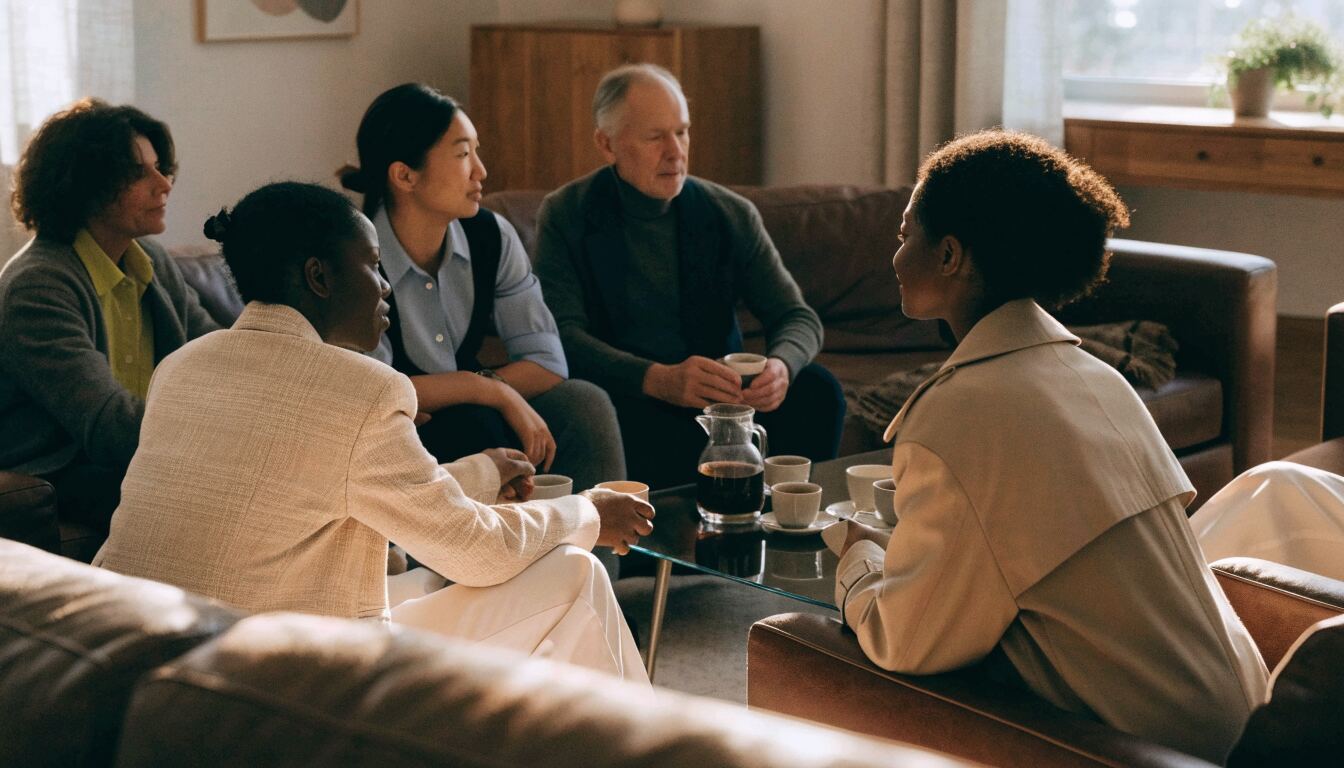
Long before hashtags and viral posts, women seeking women—and those wanting to articulate a bisexual-plus-exclusive identity—found each other through sheer determination. They circulated underground zines, pinned notices on community center bulletin boards, and gathered in living rooms for potlucks that doubled as support groups. Word of mouth was the original algorithm.
These face-to-face networks were small but mighty. They offered validation at a time when mainstream culture largely ignored or pathologized queer experiences. In those spaces, people experimented with language, trying on phrases that might later crystallize into formal labels. The seeds of what would become Febfem were planted in these intimate, analog environments. Without that foundation, the rapid digital spread we see today would have had no roots to grow from.
How the Internet Rewrote the Script
The shift from physical meetups to digital connection didn’t just change speed—it transformed the entire experience of discovering and inhabiting an identity. For those who identify as Febfem, the internet has been a revelation, turning whispered conversations into visible, searchable, and archivable dialogues.
Early Digital Campfires: Forums and Message Boards
Cast your mind back to the internet of the late 90s and early 2000s. Before sleek apps, there were clunky forums threaded with text and pseudonyms. For marginalized identities, these spaces were lifelines. A woman questioning her attractions could log on, find a board dedicated to bisexuality, and slowly realize she wasn’t alone. Within those broader discussions, micro-communities began to form around shared experiences—like feeling exclusively drawn to women while still resonating with a bisexual framework.
These early digital campfires were intimate despite their global reach. Members swapped stories, offered advice, and built a shared vocabulary in real time. The term Febfem itself likely gained traction in such corners, shaped by countless late-night posts and empathetic replies. It was messy, organic, and deeply human.
The Social Media Boom: Visibility and Complexity
When platforms like Tumblr, Twitter, and Instagram arrived, they supercharged visibility. Suddenly, an adult in a rural town could scroll through a feed full of queer art, personal essays, and identity explorations. Hashtags became portals. Searching for #Febfem could lead to a cascade of posts—some educational, some deeply personal, some artistic.
Social media did more than just connect individuals. It allowed the identity to be seen by allies, researchers, and curious outsiders, sparking broader cultural conversations. At the same time, this visibility brought new challenges. Misunderstandings multiplied. Trolls and gatekeepers questioned the label’s legitimacy. People had to constantly explain, defend, or justify their chosen words. The gift of connection came wrapped in the friction of public scrutiny.
Archiving a Movement in Real Time
One of the internet’s quiet superpowers is preservation. Personal blogs, Tumblr archives, and even old Twitter threads have become digital time capsules for Febfem history. When someone writes a heartfelt post about finally finding a word that fits, that post doesn’t vanish—it becomes a record. Future generations can trace the contours of the identity’s evolution, seeing how language shifted, what debates flared up, and which voices shaped the conversation.
This living archive is invaluable. It guards against erasure and ensures that the community’s self-documented story remains accessible. A reader in 2040 might stumble upon a 2023 blog entry and feel an electric jolt of recognition—proof that they, too, belong to a lineage.
Navigating Febfem in Today’s Online World
Fast-forward to the present, and the digital landscape for Febfem is both richer and more tangled than ever. Finding your footing requires patience, discernment, and a willingness to curate your own experience.
On the positive side, there are more dedicated spaces than ever before. Private Discord servers, invite-only Facebook groups, and carefully moderated subreddits offer shelter from the noise. These micro-communities emphasize mutual support, shared storytelling, and the simple comfort of being understood without a lengthy preamble. They’re modern iterations of those living-room gatherings, scaled up and accessible across time zones.
Yet the internet’s vastness also means that finding genuine, safe spaces can feel like searching for a specific pebble on a sprawling beach. Algorithms don’t always serve up what you need, and public platforms can be a mixed bag of affirmation and hostility. Many Febfem individuals become adept at filtering—muting certain keywords, blocking bad-faith actors, and gravitating toward corners where the conversation feels nuanced and kind.
Common Misunderstandings and Pushback
Let’s be candid: the Febfem label often gets met with raised eyebrows, even within queer circles. Some of the most persistent misconceptions include:
- “It’s just a phase.” This classic dismissal implies that a Febfem identity is temporary confusion rather than a stable, meaningful orientation.
- “You’re actually a lesbian.” The assumption that exclusive attraction to women automatically equals lesbian erases the bisexual component of the identity.
- “You’re not really bisexual.” Conversely, some argue that a focus on one gender invalidates bisexuality entirely, ignoring the internal experience of the individual.
- “This label is unnecessary and divisive.” Critics sometimes see specificity as fragmentation, rather than an honest attempt at self-understanding.
Navigating these reactions takes emotional energy. Online, Febfem individuals often find themselves in the role of educator, patiently explaining that labels are descriptive tools, not prescriptive cages. Over time, many learn to pick their battles, conserving energy for conversations that feel productive rather than draining.
The Quiet Power of Being Seen
Despite the hurdles, the impact of online visibility cannot be overstated. Imagine a woman who has felt subtly out of step with both lesbian and broader bisexual narratives. She stumbles upon a post describing Febfem, and suddenly, years of vague discomfort click into place. That moment of recognition is transformative. It says: your experience is real, shared, and worthy of a name.
This is the quiet power of digital communities. They validate, normalize, and educate. They chip away at isolation and replace it with solidarity. Even when the wider world misunderstands, having a pocket of the internet where your identity is taken seriously can be life-changing.
The Ever-Shifting Language of Identity
Words are not static. They bend and stretch to accommodate new understandings, and the journey from “bisexual” to “Febfem” is a perfect illustration of this linguistic fluidity.
Why Specificity Matters
Broad labels serve an important purpose—they create big tents where many people can gather. But big tents can also feel impersonal. For someone whose attraction to women is the defining feature of their romantic life, the word “bisexual” might feel too wide, catching people who experience attraction very differently under the same umbrella. Febfem narrows the aperture, offering a sharper image.
This isn’t about rejecting bisexuality. It’s about enriching it. Think of how a painter might use a broad brush for the background and a fine brush for the details. Febfem is the fine brush, capturing the particular hue of a life oriented around loving women while still acknowledging a broader palette.
The Personal Journey of Choosing a Label
Finding the right word is rarely a one-time event. People often cycle through terms—lesbian, queer, bisexual, pansexual—before landing on something that feels like a perfect fit. Febfem might be the final stop, or it might be a stepping stone to another understanding. The key is that the choice belongs to the individual.
Someone might choose Febfem because:
- It communicates their relational reality clearly to potential partners.
- It connects them with a community that shares their specific vantage point.
- It distinguishes their experience from other bisexual narratives that don’t resonate.
- It offers a sense of internal coherence, aligning their inner world with their outer language.
No external authority gets to veto that choice. Self-identification is a sovereign act.
The Internet as a Living Dictionary
Online spaces have become the primary arenas where terms like Febfem are defined, debated, and disseminated. Wiki-style glossaries, Tumblr explainer posts, and TikTok explainers all contribute to a collective understanding. These aren’t top-down definitions handed out by institutions; they’re built collaboratively, often with a refreshing attention to nuance and lived experience.
This crowdsourced lexicography has its downsides—definitions can drift, and disagreements can get heated—but it also means the language stays close to the people who use it. Febfem means what the community collectively understands it to mean, and that understanding can evolve gracefully over time.
Building Real Bonds in Virtual Rooms
Beyond definitions and debates, the heart of the Febfem experience online is community. These connections aren’t abstract—they’re lifelines made of text, voice notes, and shared laughter.
Where People Gather
The geography of Febfem community is diverse. Some prefer the semi-public rhythm of a well-moderated subreddit, where posts can spark long, thoughtful threads. Others thrive in the real-time chatter of Discord servers, where inside jokes and spontaneous support sessions blur the line between digital and real friendship. Still others find solace in the slower, more reflective space of personal blogs and newsletters.
What unites these spaces is a commitment to genuine understanding. When someone posts about a confusing crush or a frustrating encounter with biphobia, the responses aren’t generic platitudes—they’re rooted in shared context. That context is the glue that holds these communities together.
Beyond Small Talk: The Depth of Shared Experience
In Febfem spaces, conversations often go deep quickly. People discuss the nuances of coming out (or choosing not to), the complexity of navigating queer women’s spaces while holding a bisexual identity, and the joy of finally feeling at home in one’s own skin. These aren’t just information exchanges; they’re acts of mutual witnessing.
This depth fosters resilience. When the outside world feels dismissive, the community becomes a refuge. Members remind each other that their identity is valid, their feelings are real, and their stories matter. It’s a form of collective care that strengthens everyone involved.
Turning Connection into Advocacy
Many Febfem communities naturally evolve into platforms for advocacy. Members pool resources to create educational graphics, write articles debunking myths, and gently correct misinformation when it appears in wider LGBTQ+ discussions. This work is often unpaid and emotionally taxing, but it’s driven by a desire to make the world a little softer for the next person who comes looking for answers.
Advocacy can look like:
- Sharing personal stories on public platforms to humanize the label.
- Collaborating on FAQ documents that address common questions with patience and clarity.
- Amplifying underrepresented voices within the Febfem community, ensuring diversity of experience is visible.
- Organizing online panels or discussion groups during Pride months or awareness weeks.
Looking Ahead: The Future of Febfem in Digital Spaces
The internet never stands still, and neither will the ways Febfem individuals find each other and express themselves. Predicting exactly what’s next is impossible, but some trends feel likely.
Adapting to New Platforms
Today’s dominant apps may fade, replaced by decentralized networks, virtual reality spaces, or something entirely unforeseen. Febfem communities have already proven adaptable, migrating from forums to Tumblr to Discord with relative ease. Whatever comes next, the core impulse—to connect authentically—will persist. The tools will change, but the need for belonging won’t.
Guarding Against Digital Loss
One real concern is the fragility of online history. Servers crash, platforms shut down, and entire archives can vanish overnight. For a relatively niche identity like Febfem, this poses a risk. Without intentional preservation, the stories, debates, and resources that define the community could erode. Some members are already discussing ways to back up important content, create offline archives, or establish more permanent digital homes. It’s an act of historical stewardship, ensuring that future generations can access their own lineage.
Growing Understanding, Inside and Out
As Febfem continues to surface in broader cultural conversations, there’s hope that understanding will deepen—both among outsiders and within the community itself. Internally, this means holding space for diverse interpretations and resisting the urge to police identity too rigidly. Externally, it means patiently educating friends, family, and allies, trusting that visibility can soften ignorance over time.
The internet, for all its chaos, remains one of the most powerful empathy engines ever built. A single well-told story can shift perspectives. A trending hashtag can spark thousands of lightbulb moments. The future of Febfem online will likely be written in countless small acts of courage—posts, comments, and conversations that collectively weave a richer, more inclusive tapestry.
Bringing It All Together
The story of Febfem is, at its core, a story about the human need to be understood. It traces a path from quiet, offline gatherings to the buzzing, borderless internet, showing how language evolves to meet our deepest needs. What started as a whisper in history books and local meetups has grown into a visible, vibrant thread in the queer digital fabric.
This journey matters because it demonstrates that identities aren’t fixed relics—they’re living conversations. Febfem offers a home for those who love women and also carry a bisexual identity that matters to them. It’s a reminder that we get to name ourselves, find our people, and rewrite the scripts we’ve been handed. In a world that often demands simplicity, Febfem insists on nuance. And in that nuance, countless people have found a mirror, a community, and a quiet, steady sense of belonging.
Frequently Asked Questions
What exactly is a Febfem?
A Febfem is a woman who identifies as bisexual while experiencing exclusive or primary attraction to other women. The label allows for a nuanced self-description that honors both an internal bisexual identity and a focused, woman-centered romantic or sexual life.
Why did the term Febfem come into use?
As online conversations about identity grew more sophisticated, some women felt that “bisexual” alone didn’t fully capture their experience of being exclusively drawn to women. Febfem emerged as a way to add specificity, creating a distinct space within the broader bisexual community.
How did women with this identity connect before the internet existed?
Before digital networks, connections happened through local LGBTQ+ centers, printed zines, private social gatherings, and word-of-mouth. These in-person networks were smaller but deeply meaningful, laying the emotional and cultural groundwork for the online communities that followed.
What impact has the internet had on the Febfem community?
The internet has dramatically expanded access to connection and visibility. Forums, social media platforms, and private groups allow Febfem individuals to find each other across vast distances, share personal stories, offer mutual support, and educate a wider audience about their identity.
What are some common misunderstandings about the Febfem label?
Common misconceptions include the ideas that Febfem is just a phase, that the person is secretly a lesbian, or that the label is unnecessary because it seems contradictory. In reality, Febfem is a legitimate and stable identity that reflects an individual’s authentic self-understanding.
How might the Febfem identity continue to evolve online?
As digital platforms shift, Febfem communities will likely adapt by migrating to new spaces and developing fresh ways to connect. There’s also a growing focus on preserving online history and expanding public understanding, ensuring the identity remains visible and supported for future generations.