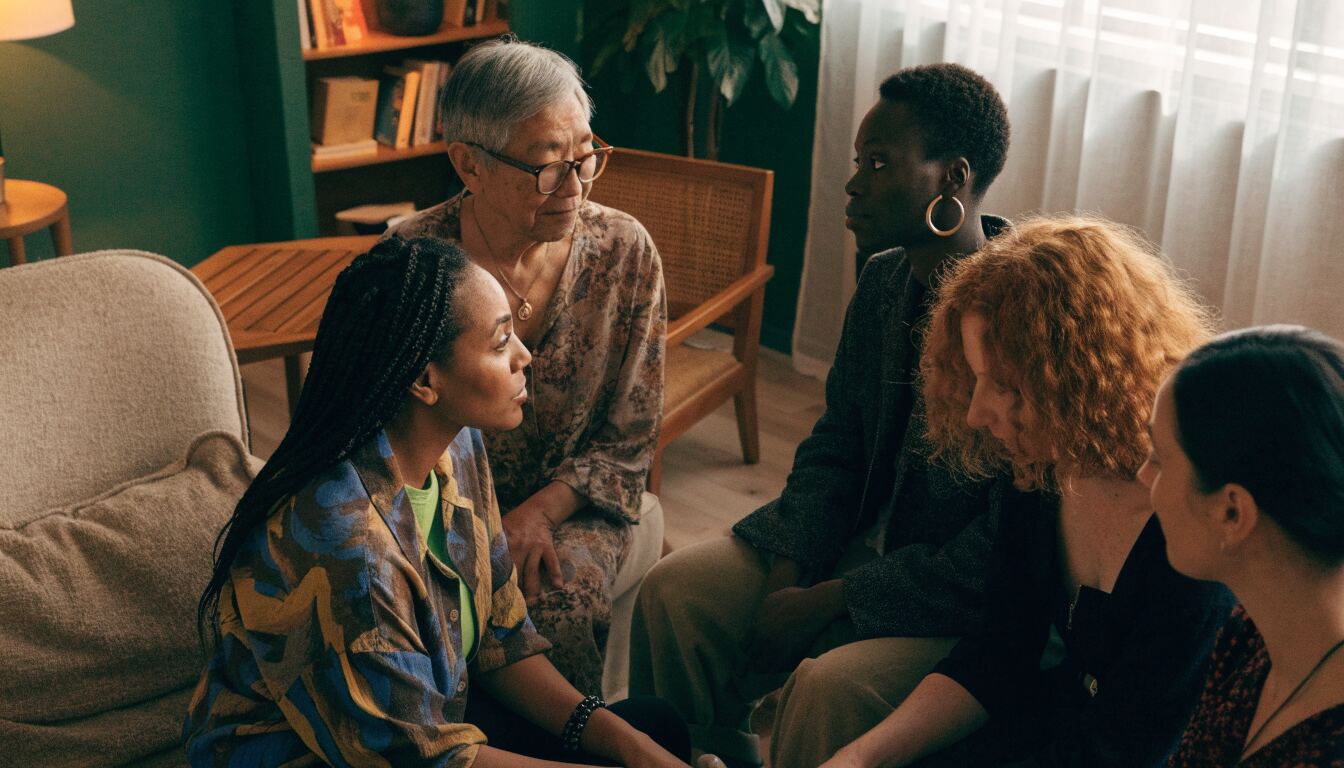
A New Lens on Connection
Our collective understanding of intimacy is shifting in remarkable ways. More individuals are stepping beyond traditional frameworks to explore relationship styles that honor multiple meaningful bonds simultaneously. Within this expanding landscape, the way a person experiences and expresses their gender becomes a powerful undercurrent—one that influences everything from daily interactions to long-term emotional patterns. Rather than treating gender as a fixed backdrop, we can view it as an active, living element that shapes how people negotiate boundaries, express affection, and build trust across their various connections.
This exploration looks at the intersection where gender identity meets polyamorous living. We will examine the social forces that inform our ideas about gender, the varied shapes that multi-partner relationships can take, and the practical challenges that arise when diverse identities come together. By paying attention to these layers, we gain a richer appreciation for the creativity and resilience found in today’s evolving romantic landscapes.
Unpacking Gender Within Polyamorous Dynamics
How Society Constructs Our Ideas of Gender
Gender is far more than a biological given; it is a tapestry woven from cultural expectations, repeated social rituals, and unspoken rules about how people should behave based on perceived identity. From childhood, we absorb messages about what it means to be masculine, feminine, or anywhere along the spectrum. These messages often reinforce heterosexist assumptions—the idea that opposite-sex attraction is the default and that certain roles naturally follow. In reality, much of what we label as “natural” is learned performance, rehearsed over years of social feedback.
Within polyamorous circles, this awareness opens doors. When people recognize that their impulses around jealousy, caretaking, or even initiating intimacy might stem from ingrained scripts rather than authentic desire, they can begin to question those patterns. This doesn’t mean discarding tradition entirely, but rather examining it with curiosity. A person raised to believe they must be a provider might discover relief in sharing financial and emotional labor across multiple partners. Another taught to prioritize a partner’s needs above their own might learn to voice their boundaries clearly for the first time.
The Ripple Effect of Gender on Relationship Flow
Gender identity permeates the daily texture of polyamorous life. It affects who feels comfortable expressing vulnerability, how conflicts are approached, and even the subtle choreography of household responsibilities among partners. In settings where traditional roles are consciously challenged, something liberating can emerge: relationships built on explicit negotiation rather than assumption. A triad might decide that no single person handles all the emotional labor simply because of their gender. A quad might rotate childcare duties without defaulting to maternal expectations.
Yet this reimagining requires deliberate effort. Open communication serves as the foundation, but so does self-awareness. Partners benefit from regularly asking themselves: Am I reacting this way because it aligns with my genuine feelings, or because I’ve internalized a gendered script? This kind of inquiry doesn’t always feel comfortable, but it tends to foster deeper authenticity. Over time, individuals report a sense of relief as they shed outdated roles and discover more fluid ways of relating.
Queer Perspectives That Broaden the Frame
Queer theory offers valuable tools for understanding polyamory because it questions the assumption that heterosexual monogamy is the natural center of human relating. From this vantage point, forming multiple loving connections can be seen as a quiet act of resistance against rigid norms. Many polyamorous people—whether they identify as queer or not—find themselves rejecting the narrow scripts that dictate how a “proper” relationship should look.
Key contributions from a queer-informed approach include:
- Dismantling the idea that one partner must fulfill all emotional and practical needs.
- Refusing to assign caregiving, initiation, or decision-making roles based on gender.
- Celebrating individual expression as a cornerstone of healthy relating.
When these principles take root, relationships become less about fitting a mold and more about co-creating a shape that honors everyone involved. This doesn’t mean chaos; it means intentional design grounded in mutual consent.
Layered Identities and Relationship Structures
The Overlooked Role of Racial and Cultural Background
Polyamory does not exist in a vacuum. It intersects with every other facet of a person’s identity, including race, ethnicity, and cultural heritage. What feels like an empowering relationship choice in one community might carry different weight in another, where extended family expectations or religious traditions hold strong sway. Partners who come from different cultural backgrounds may discover that their definitions of commitment, discretion, or even what counts as “family” diverge in significant ways.
Unfortunately, much of the existing research and popular writing on polyamory centers on white, middle-class experiences. This leaves a gap in understanding how people of color navigate multiple partnerships while also dealing with systemic pressures, cultural stigmas, and sometimes a lack of representation in polyamorous spaces. Bridging this gap requires intentional listening, amplifying underrepresented voices, and recognizing that there is no single “right” way to practice ethical non-monogamy.
Gender and Sexual Orientation as Intertwined Threads
Gender identity and sexual orientation are distinct yet deeply connected aspects of a person’s experience. For LGBTQ+ individuals in polyamorous configurations, additional layers of complexity often surface. They may face discrimination not only from mainstream society but occasionally from within polyamorous communities that haven’t fully examined their own biases. A bisexual woman, for example, might encounter fetishization or assumptions about her availability. A non-binary person might struggle to find partners who genuinely affirm their identity without reducing it to a novelty.
Creating truly supportive environments means going beyond surface-level acceptance. It involves educating oneself about different gender experiences, using correct pronouns consistently, and challenging jokes or comments that marginalize anyone. Small, consistent actions build the trust necessary for people to show up fully in their relationships.
Barriers That Marginalized Groups Navigate
For those who hold multiple marginalized identities, polyamory can present amplified challenges. Legal systems rarely recognize multi-partner families, which can complicate housing, parenting, and medical decisions. Social judgment may come not only from conservative circles but also from progressive spaces that haven’t yet broadened their definition of valid relationships. On top of this, internal community dynamics can sometimes replicate the very hierarchies people seek to escape.
Addressing these barriers takes collective effort. It means advocating for legal protections that extend beyond dyadic couples. It means building networks where people can share resources, from polyamory-friendly therapists to co-parenting agreements. It also means practicing allyship that is active rather than performative—showing up, speaking out, and sharing power.
The Heart of the Matter: Communication and Consent
Why Ongoing Dialogue Matters
If polyamorous relationships had a single non-negotiable ingredient, it would be communication. Not just the occasional check-in, but a steady, woven practice of sharing what’s alive inside. This goes deeper than logistics like scheduling dates; it touches fears, joys, insecurities, and evolving desires. Partners who make space for this kind of dialogue tend to catch small misunderstandings before they balloon into larger conflicts.
Practical habits can support this. Some people hold weekly or monthly “relationship summits” where everyone can raise topics in a structured, calm setting. Others practice active listening techniques, such as reflecting back what they heard before responding. The goal isn’t perfection but a shared commitment to staying connected even when conversations get uncomfortable. Over time, this builds a reservoir of goodwill that helps weather the inevitable storms.
Negotiating Boundaries That Actually Work
Boundaries in polyamory are less like rigid walls and more like thoughtfully placed fences with gates that can open or close by agreement. They cover a wide terrain: sexual health practices, time allocation, emotional availability, public displays of affection, and involvement with metamours (partners’ partners). Because needs shift over time, boundary conversations are never truly finished; they require regular revisiting.
A helpful approach involves distinguishing between rules and agreements. Rules tend to be imposed by one person to control another’s behavior, while agreements arise from mutual discussion and consent. For example, an agreement might be: “We’ll let each other know before a new sexual connection becomes physically intimate, so we can discuss any health considerations.” This feels collaborative rather than restrictive. Writing down key agreements can also prevent the “I thought you said…” confusion that sometimes arises.
Cultivating Trust Across Multiple Connections
Trust isn’t a static possession; it’s built in small moments of reliability and honesty, and it can erode just as gradually. In polyamorous configurations, where multiple people’s emotions intertwine, trust becomes both more essential and more complex. Transparency about feelings—including jealousy, which is a normal human emotion rather than a failure—helps prevent resentment from festering underground.
Concrete trust-building practices include:
- Following through on promises, even small ones, consistently over time.
- Admitting mistakes promptly rather than hiding them.
- Creating space for each partner to express vulnerability without fear of punishment.
- Respecting privacy while avoiding secrecy that harms others.
When trust is damaged, repair becomes possible through sincere acknowledgment, changed behavior, and patience. Many polyamorous people find that navigating these repairs deepens their understanding of themselves and their partners in unexpected ways.
A Tapestry of Relationship Configurations
Mapping the Shapes of Connection
Polyamorous relationships come in as many shapes as the people who form them. Some find it useful to think in terms of “poly geometry”—visualizing the connections between individuals as points and lines. This isn’t about reducing relationships to diagrams, but about gaining clarity on who relates to whom and how information and affection flow. A simple V structure involves one person connected to two others who aren’t romantically involved with each other. A triangle, by contrast, involves three people all mutually connected.
These visualizations can help partners identify potential pressure points. For example, in a V, the “hinge” person carries significant responsibility for communication between the two arms. Recognizing this can prompt proactive discussions about how to keep channels open without overloading any single individual.
Triads, Quads, and Expanding Webs
Moving beyond the V, triads and quads represent some of the more recognizable configurations, though each one functions uniquely. A triad might form organically when three people discover mutual attraction, or it might involve a couple who opens their relationship and a new partner who connects with both. Quads add another layer of complexity: two couples might intertwine, or four individuals might form a closed or open network of varying intensities.
Larger networks, sometimes called polycules, can grow quite intricate. In these webs, not everyone dates everyone else; instead, connections radiate outward like a chosen family tree. Some people find deep satisfaction in these expansive structures, appreciating the distributed support and diverse perspectives. Others prefer smaller, more contained arrangements. Neither is inherently better; the key lies in honest self-assessment and clear communication about what each person genuinely wants.
Designing Your Own Blueprint
One of the most liberating aspects of polyamory is the permission to customize. No external authority dictates how many partners you should have, how often you should see them, or what level of entanglement is appropriate. This freedom, however, comes with the responsibility of co-creating structures that work for everyone impacted. For people from minoritized backgrounds, this self-determination can feel particularly significant—a way of reclaiming agency that broader society often denies.
Customization might involve blending solo polyamory (maintaining one’s own independent household) with deeply committed partnerships. It might mean practicing hierarchical polyamory with clear distinctions between primary and secondary relationships, or embracing a non-hierarchical approach where no single bond automatically outranks others. The design process itself—sitting down with partners to articulate hopes, fears, and practical needs—can be a bonding experience that strengthens the entire network.
Relationship Anarchy: A Different Kind of Map
What Relationship Anarchy Actually Means
Relationship Anarchy (RA) pushes customization even further by questioning the very categories we use to organize our connections. Rather than sorting relationships into boxes like “romantic partner,” “friend,” or “family,” RA proposes that each bond deserves its own unique definition, free from predetermined expectations. Autonomy sits at the center: each person decides what they want to offer and receive, negotiating directly with the individuals involved.
This philosophy extends beyond romance. A deep friendship might involve cohabitation and financial entanglement, while a sexual partnership might remain intentionally casual. The point isn’t to reject commitment but to commit consciously, moment by moment, rather than following a script handed down by culture. For those who feel constrained by traditional labels, RA offers a liberating alternative.
Stepping Away from Relationship Hierarchies
One of RA’s most provocative ideas is its challenge to hierarchy. In many relationship models, a “primary” partner receives automatic priority in decisions about time, resources, and life planning. RA asks: what if we distributed our attention based on present needs and desires rather than fixed rankings? This doesn’t mean treating everyone identically—different connections naturally involve different levels of involvement—but it does mean avoiding the assumption that one relationship always trumps others.
In practice, this requires ongoing negotiation and a willingness to sit with discomfort. Jealousy can still arise, but it’s met with curiosity rather than panic. Partners learn to self-soothe while also reaching out for reassurance. Over time, many find that removing hierarchical safety nets actually deepens trust, because each connection must be continuously chosen rather than resting on its labeled status.
Real-Life Glimpses of Anarchy in Action
Consider a scenario involving three people—let’s call them Morgan, Casey, and River—who decide to apply RA principles. They consciously avoid terms like “primary” or “secondary.” Instead, they focus on articulating specific needs: Morgan wants a weekly overnight with Casey, River needs solo time to recharge after work, Casey values spontaneous coffee dates. By negotiating these particulars rather than defaulting to roles, they create a flexible system that adapts as circumstances change.
They also lean on community resources, including online forums and local polyamory meetups, to normalize their approach. When jealousy surfaces, they treat it as information rather than a crisis, exploring what underlying need might be calling for attention. This doesn’t eliminate hard moments, but it reframes them as opportunities for deeper intimacy rather than threats to the relationship’s survival.
Navigating the Shadow of Heteronormativity
Mononormativity: The Unseen Default
Mononormativity describes the pervasive cultural assumption that monogamy represents the only healthy, moral, and mature way to conduct relationships. This belief system is so deeply embedded that many people never consciously examine it. It shapes everything from fairy tales to tax codes, from workplace benefits to social invitations that assume a plus-one rather than a plus-several.
For polyamorous individuals, mononormativity creates a constant background hum of invalidation. They may find themselves explaining their relationships repeatedly, facing skepticism about their children’s wellbeing, or encountering legal obstacles when trying to share custody or property among multiple partners. Recognizing mononormativity as a systemic force—not just a personal preference—helps contextualize these challenges and galvanizes advocacy efforts.
How It Affects Queer and Polyamorous Overlap
The push for same-sex marriage equality, while a crucial civil rights victory, also highlighted a tension within LGBTQ+ communities. Some felt that the campaign emphasized assimilation into monogamous, two-person norms at the expense of validating other relationship forms. This doesn’t diminish the importance of marriage equality, but it does raise questions about what visions of “the good life” we collectively endorse.
Queer polyamorous people often find themselves navigating multiple layers of marginalization: they may face homophobia or transphobia in broader society, mononormativity in some queer spaces, and heteronormativity in some polyamorous spaces. Building coalitions across these communities requires acknowledging these intersections and working toward a solidarity that doesn’t ask anyone to leave parts of their identity at the door.
Polyamory as Quiet Subversion
Choosing polyamory in a mononormative world can be an act of resistance, whether or not one explicitly frames it that way. Every time a polyamorous family shows up authentically in their neighborhood, workplace, or extended family, they widen the aperture of what relationships can look like. This ripple effect matters. It challenges the scarcity mindset that suggests love is a finite resource to be hoarded rather than an abundant experience to be shared.
Ways this resistance manifests include:
- Rejecting the cultural script that a single soulmate must fulfill all emotional needs.
- Redistributing domestic and emotional labor beyond gendered expectations.
- Centering explicit consent and ongoing negotiation as relationship cornerstones.
These shifts may seem small on an individual level, but collectively they chip away at the monolith of mononormativity and open space for more diverse ways of loving.
Social Justice and the Polyamorous Movement
Fighting for Legal and Social Recognition
From a justice-oriented perspective, advocating for polyamorous rights means confronting the power structures that privilege certain relationship forms over others. Currently, most legal systems offer no recognition to multi-partner families, leaving them vulnerable in areas like hospital visitation, inheritance, and parental rights. Changing this requires organized effort: lobbying for legal reforms, supporting test cases, and educating lawmakers about the reality of polyamorous family life.
But justice extends beyond the legal realm. Social recognition matters too. When media representations of polyamory move beyond sensationalism toward nuanced portrayals, when therapists receive training in non-monogamous relationship dynamics, and when employers offer benefits that accommodate diverse family structures, the everyday lives of polyamorous people improve measurably.
Creating Truly Welcoming Communities
Polyamorous communities have the potential to be havens of acceptance, but they can also replicate exclusionary patterns if not carefully tended. Building inclusive spaces means actively addressing racism, ableism, classism, and transphobia within polyamorous circles. It means ensuring that events are accessible to people with disabilities, that sliding-scale pricing doesn’t exclude those with lower incomes, and that leadership reflects the diversity of the community.
Concrete steps toward inclusion might involve:
- Hosting discussion groups specifically for polyamorous people of color, trans individuals, or others who share marginalized identities.
- Inviting feedback about community dynamics and acting on it visibly.
- Educating oneself rather than relying on marginalized people to do all the teaching.
When communities get this right, they become powerful sources of support and belonging for people who may feel isolated in other areas of their lives.
The Vital Role of Allies
Allies to the polyamorous community—whether monogamous or polyamorous themselves—play an important part in shifting cultural attitudes. Effective allyship goes beyond passive acceptance. It involves challenging jokes that mock non-monogamy, correcting misinformation when it arises in conversation, and advocating for policies that protect diverse family structures. Allies also recognize that they will make mistakes and approach learning with humility rather than defensiveness.
In polyamorous spaces specifically, allies can help by amplifying voices that are often overlooked, offering practical support like childcare during community events, and using their privilege to advocate for those with less social power. The goal isn’t to center allies but to create conditions where everyone can participate fully in shaping the communities they call home.
Bringing It All Together
Gender identity doesn’t just sit alongside polyamory as a separate consideration; it threads through every aspect of how people form, maintain, and sometimes end their multiple relationships. By examining the social construction of gender, embracing queer and intersectional perspectives, and committing to rigorous communication, polyamorous individuals can build connections that feel liberating rather than confining. The diversity of configurations—from triads to sprawling networks to relationship anarchy—reflects the beautiful variety of human needs and desires.
As societal understanding continues to evolve, the conversation around gender and polyamory will deepen. What remains constant is the importance of treating each person’s identity and choices with respect. By approaching relationships with curiosity, compassion, and a willingness to challenge outdated norms, we contribute to a world where love in all its forms can flourish without shame or constraint.