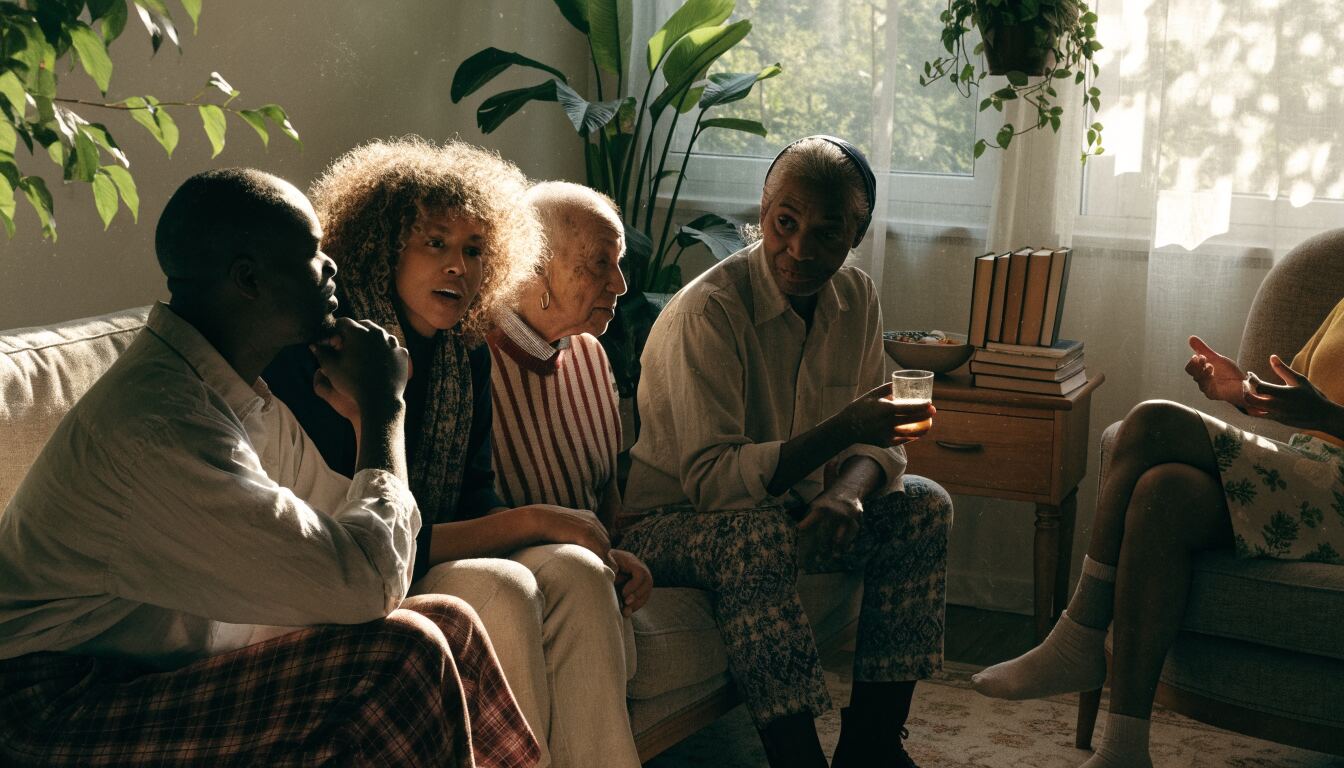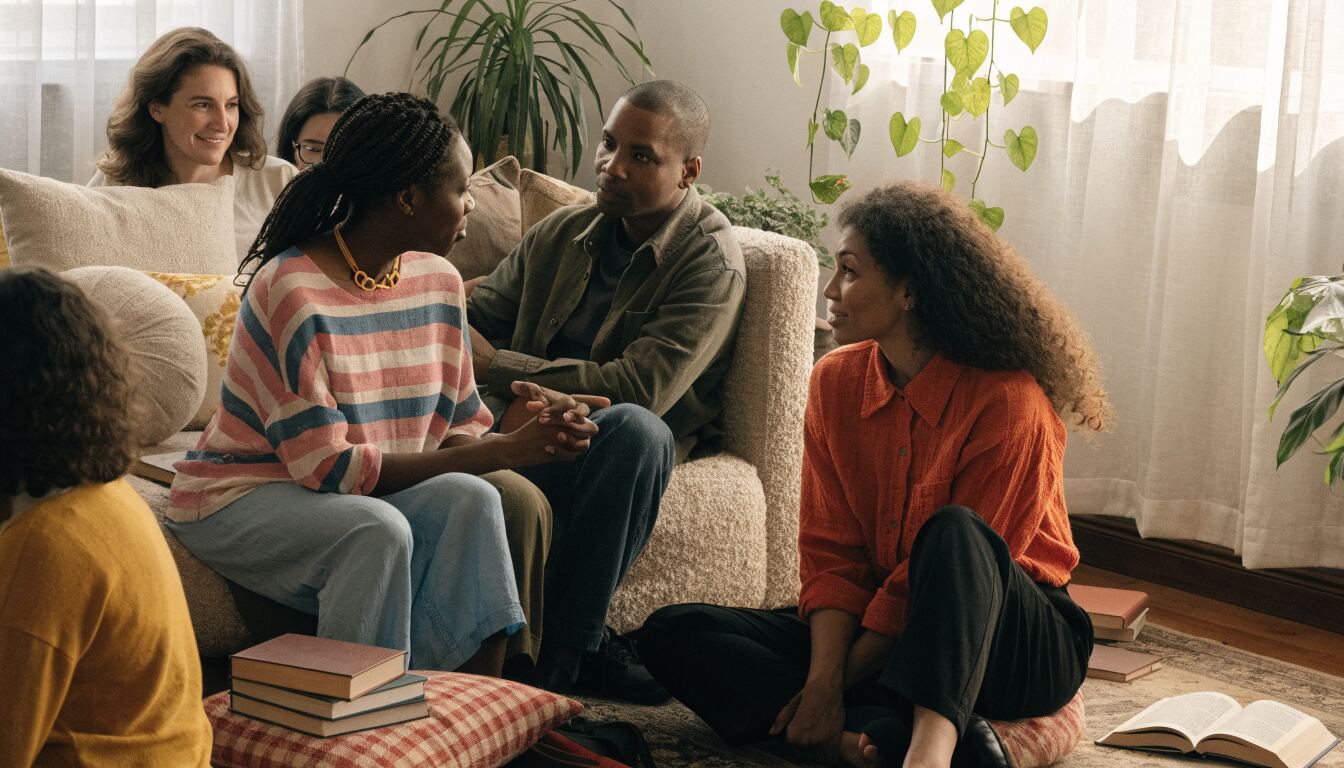
Embracing Love's Many Forms
Conversations about intimacy and partnership have grown remarkably in recent years, moving beyond rigid frameworks to embrace diversity. Within queer circles, there's a vibrant exploration of non-monogamous connections that feel genuine and life-giving. This piece examines how queer experiences inform polyamorous ways of relating, pushing back against narrow definitions of romance and commitment. We'll consider the fresh outlooks queer folks contribute, the inner work of navigating emotions, and the ways these bonds can reshape what family means.
Core Insights at a Glance
- Polyamory provides a pathway to step away from standard monogamous expectations, offering a sense of freedom particularly resonant for queer people.
- Many queer identities naturally align with relationship flexibility, making room for varied and adjustable partnership styles.
- Open dialogue stands as a cornerstone in polyamorous dynamics, especially when working through feelings like jealousy or insecurity.
- Through polyamory, individuals can craft intentional support networks that mirror their unique needs, often called chosen families.
- The philosophy of relationship anarchy questions built-in hierarchies, championing equity and autonomy in how bonds are formed.
The Queer Lens on Polyamory
What Polyamory Really Means
At its heart, polyamory involves cultivating several affectionate, close relationships simultaneously, with everyone involved being aware and consenting. It's a deliberate move away from the default script of coupling up with just one person. A foundational element is ethical non-monogamy, which rests on sincerity, mutual regard, and transparent conversation among all partners. This practice has nothing to do with secrecy or betrayal; rather, it's about constructing bonds grounded in openness and shared agreements. The guiding values typically include:
- Willing Agreement: Every person must freely and eagerly consent to the arrangement without pressure.
- Honest Exchange: Regular, candid discussions are vital for surfacing needs, worries, and personal limits.
- Consideration: Valuing each partner's feelings and treating them with genuine care.
Where Queer Identity and Ethical Non-Monogamy Meet
Queer communities have frequently led the charge in questioning standard relationship blueprints, making polyamory a comfortable fit for many. There's a collective familiarity with examining societal rules and designing connections that honor personal values and longings. For numerous individuals, diving into queer-oriented polyamory unlocks a richer investigation of self and intimacy, unburdened by cisheteronormative pressures. It's about carving out room for a spectrum of love expressions and closeness.
Questioning What Society Expects
Polyamory inherently disputes the notion that affection and closeness are scarce resources, or that partnerships must adhere to a pecking order. It pushes back on the cultural push to locate "the one" and instead welcomes the prospect of caring for multiple people at once. This stance can hold special appeal within queer spaces, where members may already be rethinking and redefining other facets of their personhood and presentation. It's about forming relationships that feel true and satisfying, rather than bending to outside demands.
How Queer Worldviews Enrich Polyamory
Embracing Fluidity in How We Connect
Queer outlooks inject a distinctive energy into polyamory, highlighting how identity and desire can shift over time. This perspective calls into question the fixed boxes that conventional relationship templates often impose. It's an acknowledgment that emotions and bonds can mature, and partnerships can assume countless shapes. For instance, a person who identifies as pansexual might form ties with partners of varying genders, or notice their attractions evolve throughout their life. Such fluidity fosters a more receptive and flexible attitude toward relationships, treating change not as a danger but as a natural aspect of personal evolution.
Dismantling Rigid Frameworks
One profound way queerness transforms romantic life is through its refusal of cisheteronormative systems. These systems frequently prescribe what a partnership should resemble, who belongs in it, and the parts people are meant to play. Queerness, by its very nature, interrogates these presumptions. Polyamory, when filtered through a queer sensibility, becomes a tool for actively deconstructing such norms and building connections that are more genuine and attuned to personal principles. This process can include:
- Rethinking gender expectations within intimate bonds.
- Declining the assumption that partnerships must be exclusive.
- Developing family configurations that extend past the nuclear household model.
Welcoming a Variety of Relationship Styles
Queer circles have a long history of pioneering varied relationship models, and polyamory offers yet another avenue for such creativity. It isn't solely about having several partners; it's about intentionally designing relationships that reflect individual needs and wants. This might encompass:
- Interconnected Polyamory: A setup where all partners are close-knit and interact socially on a regular basis.
- Separate Polyamory: An approach where individuals maintain distinct relationships with minimal crossover or interaction.
- Relationship Anarchy: A philosophy that rejects preset hierarchies and standard rules, prioritizing freedom and negotiation.
Ultimately, queerness molds polyamorous worldviews by promoting a more adaptable, inclusive, and self-reflective way of approaching love and intimacy. It's centered on building ties that feel authentic, significant, and liberated from limiting traditions.
Working with Jealousy and Emotional Landscapes
Dispelling Myths Around Jealousy
A frequent misunderstanding is that those practicing polyamory never encounter jealousy. This simply isn't accurate. Jealousy surfaces as a typical emotion across all relationship types, including polyamorous ones. What sets it apart is the method of handling it. In polyamory, there's a strong focus on owning your own emotional responses rather than placing the burden on a partner to fix them. The work involves tracing jealousy back to its roots and building personal strategies to cope with it. It means getting curious about why feelings of insecurity arise.
Practical Tools for Emotional Balance
Navigating feelings in polyamorous arrangements demands self-knowledge and consistent dialogue. Here are several approaches that can prove useful:
- Personal Reflection: Set aside time to map your emotional triggers. Which circumstances or thoughts spark jealousy or unease?
- Open Dialogue: Speak honestly with your partners about what you're experiencing. Voice your needs and worries in a direct yet kind manner.
- Defining Limits: Create clear boundaries that honor everyone's comfort zones and needs. This could cover topics like sexual health practices, time allocation, or degrees of emotional sharing.
- Cultivating Appreciation: Direct attention to the positive dimensions of your connections. Treasure what each partner uniquely contributes to your life.
The Central Role of Conversation
Transparent and truthful communication forms the foundation of any thriving polyamorous bond. It goes beyond mere talking; it involves deep listening, empathy, and a shared readiness to tackle difficulties together. Through communication, partners can address unmet desires and yearnings. It also aids in distinguishing between jealousy (fear of losing something you have) and envy (wanting something someone else has), which are distinct emotions. Staying attuned to your internal state is key. Without solid communication, misinterpretations can grow, breeding resentment and strife. Effective communication means stating your feelings without pointing fingers or accusing others. It equally requires being open to hearing their viewpoints and acknowledging their lived experiences. This takes deliberate effort to counter the mono- and amato-normative cultural conditioning many of us absorb.
Crafting Queer Family Structures
Multi-Caregiver Homes and Intentional Kinship
Polyamory significantly broadens the concept of family, particularly within queer communities. It extends past romantic entanglements into building webs of care and solidarity that surpass the typical nuclear unit. These webs often see multiple adults sharing duties for raising young ones, forming multi-caregiver households that challenge standard parenting assumptions. Intentional families become profoundly meaningful here, providing a haven where individuals discover belonging and backup, regardless of blood relations. It's about purposefully nurturing relationships that sustain and uplift everyone involved.
Shared Parenting in Polyamorous Contexts
Co-parenting within polyamorous frameworks can look quite different from conventional expectations. It doesn't always mean every adult is romantically linked to one another. Rather, it's about assembling a team of caregivers dedicated to raising children collaboratively. This might involve:
- Clearly outlined duties and accountabilities for each parent figure.
- Constant communication about child-rearing philosophies and choices.
- Adaptability and a readiness to adjust as circumstances evolve.
- Recognition of each caregiver's separate relationships and personal limits.
Fostering Nurturing Community Networks
Constructing queer families via polyamory isn't solely about the immediate individuals; it's also about growing supportive communities. This can involve:
- Seeking out or initiating local gatherings for polyamorous households.
- Linking up with other queer families for mutual support and camaraderie.
- Informing friends and relatives about polyamory and intentional family structures.
- Pushing for legal acknowledgment and safeguards for non-traditional family units.
These community circles offer a venue for swapping stories, extending guidance, and fostering a sense of collective identity. They can also serve to question societal conventions and help forge a more inclusive reality for every kind of family.
The Allure of Relationship Anarchy
Understanding Relationship Anarchy
Relationship anarchy centers on scrutinizing the customary regulations we attach to relationships. It's a mindset asserting that you get to define what your connections look like, rather than adhering to a predetermined script. It prioritizes building bonds based on what serves the people in them, not on what mainstream culture deems normal.
Contrasts with Conventional Polyamory
While both relationship anarchy and polyamory treasure multiple connections, their methods diverge. Polyamory frequently includes some degree of structure, like pacts about who is participating and the shape of those relationships. Relationship anarchy discards even those frameworks. It leans less on labels and more on determining what each person seeks and requires in every unique bond, without presuming any rules in advance. It's akin to saying, "Let's witness what unfolds and co-create this together."
Advantages of a Flat Structure
For certain individuals, relationship anarchy can feel incredibly liberating. Here are some possible upsides:
- Greater liberty to characterize relationships according to your own terms.
- Diminished strain to squeeze into traditional roles or societal projections.
- A chance to cultivate deeper, more genuine connections.
- Promotes continuous conversation and negotiation as a norm.
The Power of Self-Worth in Polyamory
The Path of Inner Exploration
Self-worth is remarkably significant, particularly when venturing into polyamory. It's hard to build sturdy relationships with others if your own self-connection is shaky. It involves knowing your desires, your requirements, and where your boundaries lie. This journey of self-discovery can be truly illuminating, helping you approach partnerships from a stance of strength and sincerity.
How Self-Love Guides Relational Choices
When you possess a solid sense of self-love, it transforms how you select partners and conduct yourself within relationships. You're less apt to accept dynamics that feel off, and more inclined to voice your needs plainly. It's about making decisions that resonate with your values and overall wellness.
Growing Healthy Ties
Self-love isn't just about internal contentment; it's also about nurturing healthy bonds with others. When you feel secure in yourself, you're less prone to jealousy or clinginess, and better equipped to manage the rhythms of polyamorous life. It's about generating a space where everyone feels honored, treasured, and cared for. Grasping love within non-monogamous settings demands a robust inner foundation.
Ways self-love bolsters relationships:
- Enhanced communication skills
- More resilient personal boundaries
- Reduced reactivity to jealousy
Cultural Viewpoints on Polyamory and Queerness
The Historical Roots of Non-Monogamy
Non-monogamy isn't a recent invention; it has existed across various eras. Different civilizations throughout history have engaged in diverse forms of non-monogamy, sometimes linked to spiritual beliefs, social standing, or economic realities. It's easy to overlook that the notion of a single lifelong partner is a fairly modern concept in the broader human story. Looking backward, you encounter everything from group marriages to open relationships thriving in assorted societies. It prompts reflection on how much of what we consider "normal" stems purely from our own cultural moment.
Worldwide Attitudes Toward Polyamory
The reception of polyamory fluctuates dramatically around the globe. In certain regions, it's openly welcomed and even honored, while in others, it faces stigma or legal prohibition. Social and legal tolerance often hinges on religious doctrines, political systems, and cultural traditions. For example, some Indigenous groups maintain longstanding customs of polyamorous relating. Meanwhile, Western nations are gradually beginning to wrestle with the concept, frequently encountering pushback from more traditional segments. The picture is complex, with no universal resolution.
Shifts in Cultural Recognition
Recognition of polyamory is incrementally rising, especially among younger demographics. The internet and social platforms have played a substantial role, enabling people to link up, swap experiences, and question established norms. More individuals are openly addressing polyamory and queer-informed views on gender, leading to heightened visibility and comprehension. Still, substantial work remains. Surmounting stigma, tackling legal hurdles, and advancing education are all crucial for building a more inclusive society for polyamorous individuals and families.
Concluding Reflections
In the end, queerness and polyamory vividly illustrate that love can manifest in countless configurations. It's not merely about whom you love, but the manner in which you love. Many within LGBTQ+ spaces are discovering that polyamory permits them to liberate themselves from confining traditional notions about relationships. They're authoring their own guidelines and redefining what kinship signifies. It's fundamentally about connection, dialogue, and staying true to oneself. So whether you're practicing polyamory or simply inquisitive about it, remember that love is deeply personal. Every person's path is unique, and that very uniqueness is what renders it beautiful.
Common Questions
What exactly is polyamory?
Polyamory refers to sustaining romantic ties with more than one individual concurrently, with the full awareness and agreement of all parties. It stands apart from monogamy, which involves a single exclusive partner.
How does queerness interconnect with polyamory?
Numerous queer individuals discover that polyamory aligns more closely with their perspectives on love and intimacy than traditional monogamy does. It grants them room to convey their identities and affections through diverse pathways.
Does jealousy appear in polyamorous dynamics?
Yes, jealousy can surface in polyamorous dynamics just as it does in monogamous ones. That said, many polyamorous people invest significant effort into communicating and handling their emotions to lessen jealousy's impact.
Can polyamorous people create families?
Without question! Polyamorous individuals can build families through numerous routes, including shared parenting of children with multiple partners or forming intentional families with friends and loved ones.
What does relationship anarchy mean?
Relationship anarchy is a method of engaging with relationships that avoids strict regulations or preconceived expectations. It centers on creating bonds rooted in reciprocal understanding and respect, rather than conforming to conventional relationship standards.
How does self-love influence polyamorous partnerships?
Cultivating self-love assists people in grasping their own needs and limits more clearly. This can foster healthier and more rewarding relationships, as they recognize what they desire and can articulate it effectively.