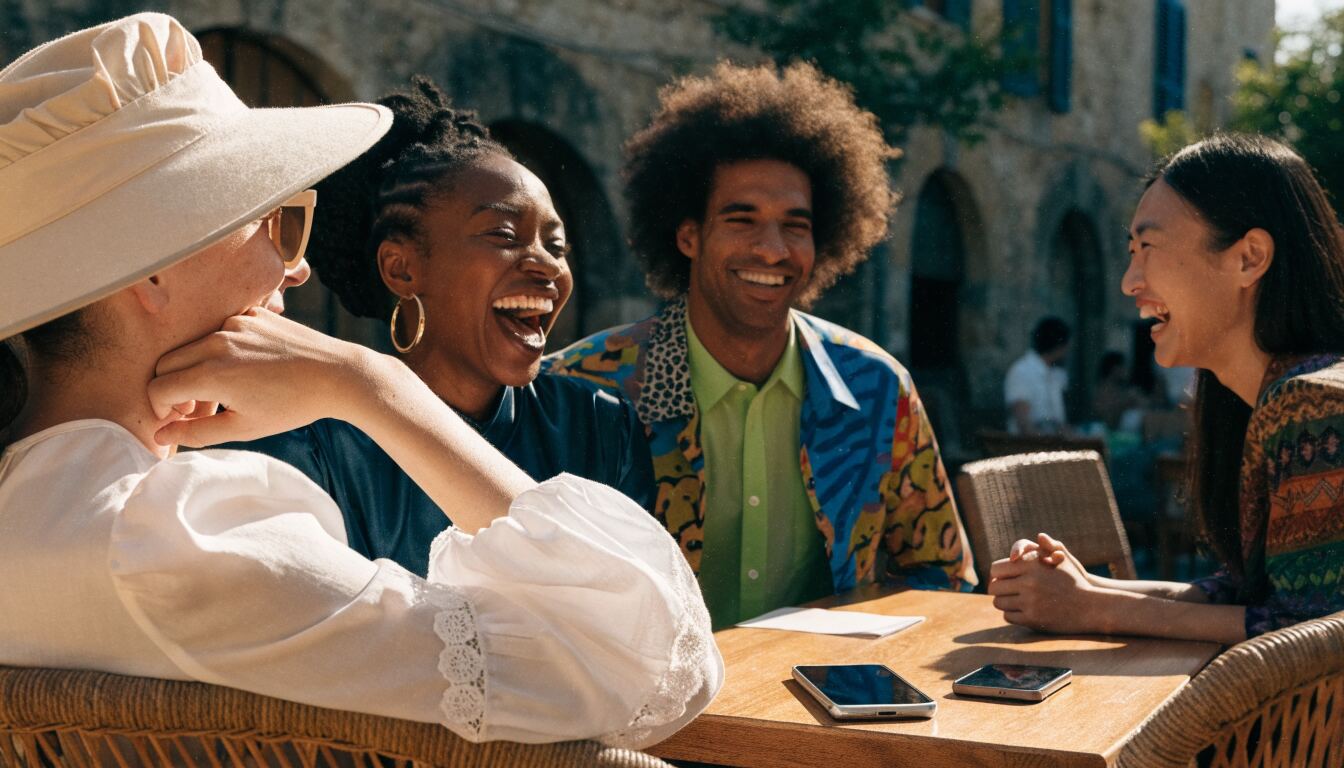
A New Era of Visibility for Open Relationships
The conversation around relationships is shifting dramatically, and much of that change is happening in plain sight on social media. What was once whispered about in private circles is now being discussed openly by people who share their everyday lives online. These individuals aren't hiding their non-traditional relationship structures; instead, they're documenting them, answering questions, and showing that there are countless ways to build a fulfilling romantic life. This growing transparency is chipping away at long-held taboos and inviting a broader cultural rethink about love, intimacy, and partnership.
For a long time, anything outside of strict monogamy carried a heavy stigma. People who explored swinging, polyamory, or other forms of ethical non-monogamy often did so in secret, fearing judgment from friends, family, and employers. The rise of digital platforms changed that equation. Now, a diverse group of content creators is stepping forward to share their experiences, and in doing so, they're making the lifestyle feel more accessible and less intimidating to outsiders. Their message is simple but radical: happiness in relationships doesn't have a single blueprint.
Challenging Deep-Seated Assumptions About Love
The core work these creators do is normalizing variety in relationship design. By simply existing in public view and talking about their lives, they force a reconsideration of what "normal" actually means. They demonstrate that a commitment doesn't have to mean exclusivity, and that security can be built on honesty rather than restriction. This isn't about promoting one choice over another; it's about expanding the menu of socially acceptable options so that people can find what genuinely works for them without shame.
Many of these online personalities emphasize that their relationships are built on rigorous communication and mutually agreed-upon boundaries. They're not presenting a chaotic free-for-all but a deliberate, thoughtful approach to intimacy. This distinction is crucial because it directly counters the stereotype of swinging as reckless or purely hedonistic. Instead, they paint a picture of partnerships where difficult conversations are embraced, jealousy is examined rather than ignored, and personal growth is a shared project.
Moving Beyond the One-Size-Fits-All Model
The traditional narrative tells us that a successful relationship follows a linear path: dating, exclusivity, marriage, and a lifetime of monogamy. These influencers gently but firmly dismantle that script. They show couples who have been together for decades and also explore connections with others. They show single people who find community and intimacy without seeking a traditional partner. They show triads, quads, and other configurations that function with the same care and commitment as any dyadic couple. The sheer variety on display makes it harder to argue that only one model works.
This visibility has a ripple effect. When someone scrolling through their feed encounters a couple joking about their weekend plans that include a meetup with another couple, it plants a seed. Even if that viewer never pursues non-monogamy themselves, the exposure can soften rigid judgments and foster a more live-and-let-live attitude. Over time, this cultural softening makes life easier for everyone who deviates from the norm, whether they're public about it or not.
The New Wave of Adult Content Creators in the Lifestyle
One of the most significant developments in recent years is the number of people in the swinger community who have become professional content creators. Platforms that allow direct fan support have turned private adventures into viable small businesses. Couples and individuals who were already attending events and exploring their sexuality realized there was an audience hungry for authentic, relatable depictions of the lifestyle. Rather than relying on scripted studio productions, viewers can now follow real people on their actual journeys.
This shift has professionalized a space that was previously purely recreational. Creators invest in good cameras, lighting, and editing. They plan content calendars, engage with followers, and build brands around their personalities and philosophies. The result is a body of work that is often educational as well as entertaining. Many creators blend explicit content with candid discussions about relationship skills, making their platforms a hybrid of adult entertainment and self-help resource.
Turning Personal Exploration into a Livelihood
The economic dimension is fascinating. For some, what began as a hobby or a side project has become a primary source of income. This financial viability allows creators to dedicate more time to producing quality material and engaging with their community. Revenue streams have diversified beyond simple subscriptions. Creators now offer personalized content, private chat sessions, merchandise, and even in-person meet-and-greet events. Some host online workshops on topics like communication, boundary-setting, or introducing non-monogamy to a reluctant partner.
This monetization also changes the social dynamics within the lifestyle. Creators often attend swinger events not just as participants but as recognizable figures. They might host panels, lead discussions, or simply serve as approachable ambassadors for curious newcomers. Their presence can help demystify the environment and make it feel safer for first-timers. Knowing that someone they've followed online will be at an event can give a newbie the courage to attend.
Building Trust Through Transparency
A key reason these creators resonate with audiences is their willingness to show the less glamorous sides of the lifestyle. They talk about awkward encounters, moments of insecurity, and the hard work of maintaining multiple relationships. This honesty builds trust and sets realistic expectations. It's not a highlight reel of endless pleasure; it's a nuanced portrait of people navigating complexity with varying degrees of success. Followers appreciate this authenticity and often report feeling less alone in their own struggles.
Platforms Powering the Community Conversation
Different social media platforms serve different functions for the swinger community. Short-form video apps have become surprising hubs for lifestyle discussion. Creators use them to post quick tips, respond to common questions, and give glimpses into their daily routines. The algorithm-driven nature of these platforms can sometimes expose lifestyle content to users who wouldn't have sought it out, sparking curiosity and broadening the audience. Live streaming features allow for real-time Q&A sessions where viewers can ask anything from "How do you handle jealousy?" to "What do you wear to a club?"
Longer-form content finds a home on podcasting platforms and video-sharing sites. Here, creators can dive deep into complex subjects like navigating hierarchy in polyamory, recovering from a bad experience, or the intersection of kink and swinging. These in-depth discussions serve as an invaluable archive of communal knowledge. Someone newly exploring the lifestyle can spend hours listening to seasoned voices reflect on their journeys, absorbing lessons that might otherwise take years to learn through trial and error.
The Rise of Niche Digital Communities
Beyond the major public platforms, private and semi-private digital spaces are thriving. Membership-based websites, encrypted chat groups, and specialized apps provide environments where people can connect with more privacy and intentionality. These spaces often have verification processes to ensure members are genuine and respectful. They host event listings, discussion forums, and member directories. For many, these platforms are the primary way they discover local meetups, clubs, and parties. They function as the digital infrastructure of the real-world community.
The combination of public-facing creators and private community hubs creates a powerful ecosystem. Public content raises awareness and normalizes the lifestyle, while private platforms facilitate actual connection and event coordination. Together, they lower the barriers to entry and provide ongoing support for those already involved.
Practical Wisdom for Lifestyle Beginners
If the content you're seeing online has sparked your curiosity, knowing where to start can feel overwhelming. The sheer volume of information and the intensity of some of the imagery can make the lifestyle seem like a world apart from ordinary life. Seasoned voices consistently offer similar advice to newcomers: slow down, talk everything through, and prioritize emotional safety over immediate gratification. The goal is to enhance your relationship and your life, not to rush into situations you're not ready for.
Starting with Research and Reflection
Before attending any event or making any profiles, invest time in learning. Read articles, listen to podcasts, and watch the educational content produced by lifestyle creators. Get familiar with the terminology so you can understand conversations and negotiate clearly. Reflect on your own desires and fears. What appeals to you about the lifestyle? What makes you nervous? Journaling about these questions can clarify your motivations and highlight areas that need discussion with a partner.
If you're in a relationship, these early stages are critical. Approach the topic gently and without pressure. Your partner may need time to process the idea, and their initial reaction might not be their final stance. Frame the conversation as a joint exploration of possibilities, not a demand. Many couples spend months or even years discussing non-monogamy before taking any concrete steps. That deliberation time is not wasted; it's the foundation upon which successful experiences are built.
Dipping a Toe Before Diving In
A common recommendation is to attend a social event with no expectation of play. Many clubs and groups host meet-and-greets at vanilla bars or casual mixers where the focus is simply on conversation. This allows you to meet people in the community, observe the social dynamics, and get a feel for the vibe without the pressure of a sexual environment. You can ask questions, make friends, and decide if the community feels like a good fit for you. There's no obligation to do anything more, and a respectful community will honor that.
When you do feel ready to attend a club or a party, go with a clear agreement about your boundaries for the night. Maybe you decide you'll only play with each other while watching others. Maybe you'll only engage in soft swap activities. Having a predetermined plan reduces in-the-moment anxiety and prevents decisions made under pressure. You can always do less than your boundaries allow, but you shouldn't do more. Checking in with each other throughout the night is essential.
Mastering the Language and Culture of Swinging
Every subculture has its own vocabulary, and the swinger world is no exception. Learning the terms not only helps you communicate but also signals that you've done your homework. Key distinctions include the difference between a "soft swap" and a "full swap." A soft swap typically involves sexual activities that stop short of penetrative intercourse with someone other than your primary partner, while a full swap includes intercourse. There are also terms like "same room" versus "separate room" play, which describe whether couples stay together or split up during encounters.
Other terms describe specific roles or dynamics. A "unicorn" is a single woman who joins a couple, often sought after but respectfully engaged with as a whole person, not a fantasy object. A "stag and vixen" dynamic describes a couple where the woman plays with other men while the man remains monogamous or observes. "Compersion" is a word borrowed from polyamory that describes the feeling of joy one gets from seeing a partner happy with someone else. Familiarizing yourself with this language makes it easier to read profiles, understand event descriptions, and articulate your own interests.
Recognizing Warning Signs in Social Spaces
Just as important as knowing the lingo is developing a radar for concerning behavior. The vast majority of people in the lifestyle are respectful and ethical, but like any community, it has its bad actors. Red flags include anyone who pressures you to move faster than you're comfortable with, dismisses your boundaries, or tries to separate you from your partner. Excessive drinking or substance use that seems aimed at lowering inhibitions is another warning sign. Trust your intuition. If a situation or a person feels off, you have every right to disengage immediately and without explanation.
Pay attention to how potential play partners treat others, especially staff at events or people they're not interested in sexually. Are they courteous and respectful to everyone, or only to those they want something from? Do they talk about past partners with kindness or with contempt? These observations can reveal a lot about someone's character. A good reputation in the community takes time to build and seconds to destroy, so people who value their standing will generally treat you well.
The Centrality of Consent in Ethical Non-Monogamy
If the lifestyle has a single non-negotiable principle, it is consent. This goes far beyond a simple "yes" or "no." The community standard is enthusiastic, ongoing, and revocable consent. Enthusiastic means that a partner is actively and happily participating, not just going along with something to avoid conflict. Ongoing means that consent is continuously reaffirmed, especially as activities change. Revocable means that anyone can change their mind at any moment, for any reason, and that decision must be respected instantly and without resentment.
Practicing this level of consent requires excellent communication skills. You need to be comfortable asking direct questions: "Is this okay?" "Would you like me to continue?" "How are you feeling right now?" You also need to be attentive to non-verbal cues. If someone seems hesitant, freezes, or becomes quiet, check in verbally. Never assume that silence implies agreement. Creating an atmosphere where a "no" is received as gracefully as a "yes" makes everyone feel safer and more willing to be adventurous, knowing they can stop at any point.
Boundaries as Acts of Self-Care
Boundaries are the practical expression of consent. They are the lines you draw around what you are and are not willing to do. Effective boundaries are specific, communicated clearly, and not open for negotiation in the heat of the moment. They might cover sexual acts, safer sex practices, emotional involvement, or even how much time you spend with other partners. Setting a boundary isn't about restricting someone else; it's about taking responsibility for your own well-being.
Respecting someone else's boundaries is equally important. If a potential play partner states a limit, accept it gracefully. Don't ask why, don't try to talk them out of it, and don't sulk. A simple "Thank you for letting me know" is the appropriate response. This respect builds trust and often leads to better experiences because everyone feels in control of their own participation. People who push against boundaries are showing you that they prioritize their desires over your comfort, which is a fundamental incompatibility.
Real Experiences: The Highs and the Learning Curves
Beyond the educational content, the storytelling aspect of lifestyle media is incredibly compelling. People share tales of transformative weekends at clothing-optional resorts, where they felt a level of freedom and acceptance they'd never experienced before. They describe the electric atmosphere of a club takeover, where an entire venue is filled with like-minded people and the energy is palpable. These stories convey the joy and exhilaration that draw people to the lifestyle, the sense of adventure and the deep connections that can form.
These narratives also include the inevitable challenges. Jealousy is a recurring theme, and experienced voices are candid about its persistence. They explain that jealousy doesn't necessarily disappear when you enter the lifestyle; rather, you develop tools to understand and manage it. Often, jealousy is a signal pointing to an unmet need or an insecurity that needs attention. By approaching it with curiosity rather than shame, couples can use jealous feelings as opportunities to strengthen their relationship.
Navigating Jealousy as a Team
When jealousy arises, the recommended approach is to face it together. The person feeling jealous should try to articulate the specific fear or discomfort without blaming their partner. The partner can listen with empathy, offer reassurance, and work collaboratively to find a solution. Sometimes the solution is a temporary pause on outside activities. Sometimes it's a request for extra quality time or a specific form of aftercare. The key is that the primary relationship is treated as the priority, and both people are committed to working through the rough patches.
Many couples find that working through jealousy ultimately deepens their bond. They develop a level of communication and emotional honesty that might have eluded them before. They learn to advocate for their needs and to trust that their partner will hear them. This growth is often cited as one of the unexpected gifts of the lifestyle. The external adventures become a catalyst for internal strengthening.
Integrating Kink and Holistic Sexual Wellness
For many in the community, swinging intersects with an interest in kink and BDSM. The two worlds share an emphasis on explicit negotiation, consent, and aftercare. Exploring power dynamics, sensation play, or bondage within a non-monogamous context can add another layer of discovery. People find that these practices help them access different parts of themselves and connect with partners in uniquely vulnerable ways. The psychological release and the intense trust required can be profoundly bonding.
This exploration is increasingly framed as a form of wellness. The idea is that embracing one's full sexuality, including kinky desires, contributes to overall mental and emotional health. Shame and repression take a toll, while authentic expression can be liberating. This doesn't mean everyone must be kinky, but rather that those who are should have space to explore without judgment. The lifestyle community, at its best, provides that space.
Open Conversations About Bodies and Pleasure
Another aspect of this wellness orientation is the candid discussion of physical realities. Topics that are often shrouded in anxiety, such as penis size, body image, or sexual dysfunction, are addressed with refreshing directness. The community wisdom emphasizes that connection and skill matter far more than any physical measurement. A partner who is attentive, communicative, and enthusiastic will provide a far better experience than someone who is merely anatomically gifted but disengaged.
Similarly, discussions about orgasm and pleasure focus on individual variation. There's no single path to satisfaction, and good lovers are those who take the time to learn what works for each partner. This involves asking questions, paying attention to feedback, and releasing attachment to scripted ideas of how sex should unfold. The lifestyle encourages a spirit of playful experimentation, where the goal is mutual enjoyment rather than performance.
Finding Your Place in the Community
As the digital world makes the lifestyle more visible, the real-world community continues to thrive through events of all sizes. For many, these gatherings are the heart of the experience. They range from small local house parties to massive hotel takeovers and resort weeks. Attending an event transforms the lifestyle from an abstract concept into a tangible social reality. You meet the faces behind the profiles, form friendships that extend beyond the bedroom, and experience the unique camaraderie of a space where you can be fully yourself.
Takeover events, where a group books out an entire hotel or a section of a resort, are particularly popular. They create a bubble of normalcy where lifestyle behavior is the default, not the exception. The atmosphere is often a mix of vacation relaxation and playful flirtation. Icebreaker activities, themed dances, and pool parties facilitate mingling. For newcomers, these events can be an ideal entry point because the structured social activities reduce the pressure to navigate everything on your own.
Discovering Local Clubs and Gatherings
Finding events requires a bit of research. The most reliable method is through the dedicated lifestyle platforms mentioned earlier. These sites have event calendars, venue reviews, and guest lists. Social media groups, particularly private ones on messaging apps, are also valuable resources. Once you make a few connections, word of mouth becomes a powerful tool. People will share invites to private events and give you the inside scoop on which clubs have the best vibe for your preferences.
When choosing a club or event, consider what kind of atmosphere you're looking for. Some venues are more upscale and emphasize glamour, with dress codes and sophisticated decor. Others are more casual and focused on comfort. Some events are geared toward specific demographics or interests. Reading reviews and asking questions in forums can help you find the right fit. The goal is to find a space where you feel comfortable, safe, and excited to participate at whatever level suits you.
The journey from private curiosity to active participation is deeply personal, but it no longer has to be solitary. The constellation of online voices, educational resources, and welcoming events creates a clear pathway for those who choose to walk it. The message resonating across all these platforms is one of acceptance, responsibility, and the radical idea that love and pleasure can be designed however we wish, as long as everyone involved is on board.
Finding Your Confidence Within the Community
Joining an adult lifestyle circle often stirs up a whirlwind of emotions, and feeling uncertain about yourself is a completely natural part of that journey. Putting yourself out there—both physically and emotionally—can be intimidating. You might catch yourself wondering if your physique measures up, or whether you’ll be appealing enough to new partners. These thoughts visit nearly everyone, even those who appear supremely self-assured. The most effective way through them is honest, ongoing conversation with your primary partner and any new friends you meet along the way.
Let’s explore a handful of typical worries and practical strategies for handling them:
- How You View Your Body: It’s extremely common to fixate on perceived flaws. Try shifting your focus toward embracing yourself as you are, and keep in mind that attraction comes in endless varieties. One of the beautiful aspects of this community is how frequently it uplifts all shapes, sizes, and ages.
- Anxiety About Performing: The weight of expectation can feel heavy. Remind yourself that authentic chemistry and mutual pleasure matter infinitely more than any choreographed show. Relaxing into the moment usually leads to the best encounters.
- The Comparison Trap: Measuring yourself against others is a quick path to feeling inadequate. Instead, lean into what makes you distinct—your humor, your warmth, your particular style of connecting—and offer that generously.
- Worry About Being Turned Down: This fear looms large for many. Understand that not every spark leads to a flame, and that’s perfectly fine. A “no thanks” is rarely a verdict on your worth; it simply means the fit wasn’t right on that occasion.
When these insecurities surface, talk them through. A supportive partner can offer reassurance, and often you’ll discover that the people you’re meeting have wrestled with the exact same doubts. Vulnerability, when shared, often deepens connections rather than weakening them.
Separating Fact from Fiction
A thick fog of myths surrounds open relationship dynamics, and it’s time to let in some fresh air. Many outsiders carry a cartoonish image built from outdated films, gossip, or sheer speculation. The reality is far more textured. These environments aren’t chaotic free-for-alls; they operate on frameworks of respect, negotiation, and clear agreements. One particularly stubborn falsehood is the idea that consensual non-monogamy is just a dressed-up excuse for infidelity. In truth, the foundation is the polar opposite: radical transparency rather than secrecy.
Other misunderstandings often include the notion that participants are perpetually unsatisfied or that the lifestyle is solely about physical gratification. While pleasure is certainly a piece of the puzzle, many people are equally drawn to the social fabric, the personal growth, and the freedom to explore identity in a non-judgmental space. Correcting these assumptions starts with listening to the voices of those actually living this way, who consistently emphasize communication, boundary-setting, and emotional intelligence.
Setting Your Non-Negotiables
Just as in traditional dating, having crystal-clear deal breakers is essential when navigating this terrain. These are your firm lines that, once crossed, signal that a connection isn’t viable for you. Identifying them early and voicing them plainly can prevent a great deal of discomfort and misunderstanding down the road. This practice is an act of self-care and boundary preservation, not rigidity.
While everyone’s list will be personal, here are some frequently cited non-negotiables:
- Insufficient Cleanliness: This tends to be a baseline expectation across the board. Showing up fresh and well-groomed demonstrates consideration for everyone’s comfort and sets a positive tone.
- Rudeness or Disdain: Any whiff of disrespect—aimed at you, your companion, or anyone else in the vicinity—should be an immediate stop sign. A healthy environment depends on mutual regard.
- Ignoring Stated Limits: If someone nudges, guilts, or pressures you after you’ve expressed a boundary, consider it a serious warning. Enthusiastic consent is the only mode that works.
- Muddled or Dishonest Dialogue: Trust is built on straightforward communication. If a person is evasive, contradicts themselves, or withholds crucial information, constructing a safe experience becomes nearly impossible.
- Overindulgence in Substances: A person who is visibly intoxicated or reliant on substances to engage can create an unpredictable or unsafe atmosphere. Many prefer to connect with clear heads and full presence.
Taking time to reflect on your own deal breakers—perhaps writing them down or discussing them with your partner—empowers you to enter new situations with confidence. When you know exactly where your fences stand, you can relax and enjoy the landscape within them.
Embracing a Broader Shift
Stepping back to look at the big picture, it’s remarkable how much the cultural conversation has evolved. The emergence of content creators who openly share their experiences has dramatically reshaped public perception. What was once whispered about in secrecy is now discussed in broad daylight, complete with relatable anecdotes and candid reflections. These storytellers are effectively demystifying a path that many had previously judged or misunderstood.
Their impact goes beyond simple visibility. By showcasing the everyday aspects of their lives—the conversations, the laughs, the occasional awkward moments—they reveal a community built on camaraderie and conscious choice. For countless individuals who once felt isolated in their desires, seeing this representation can be profoundly validating. It signals that they aren’t broken or strange, but rather part of a diverse spectrum of human relating. The ripple effect is a gradual erosion of stigma, replaced by a more nuanced understanding that this is less about rebellion and more about intentional living. The pioneers sharing their journeys are, in many ways, architects of a new normal, one where people are freer to design relationships that truly fit.
Common Questions Unpacked
What exactly defines a swinger relationship?
A swinger relationship involves a committed couple who mutually decide to explore sexual connections with other individuals or couples. The entire structure rests on transparent dialogue, established trust, and ensuring that every participant is fully on board.
What draws people to this way of life?
Motivations vary widely. Some couples are looking to inject fresh energy into their intimate life, others thrive on the social network, and many appreciate the opportunity to investigate different facets of their sexuality within a consensual framework. Frequently, it’s about embarking on shared adventures that bring partners closer.
Where can someone discover gatherings or venues?
Online platforms and specialized social networks are the most common starting points for locating events and clubs. Additionally, there are private house parties and dedicated vacation resorts. Doing thorough research and selecting reputable, safety-conscious locations is always a wise approach.
How crucial is talking things through?
It’s absolutely foundational. Continuous, candid discussion with your primary partner and any other involved parties is non-negotiable. Everyone must be aligned on desires, limits, and expectations. This practice, rooted in enthusiastic consent, means each individual gives a joyful, unpressured “yes” to whatever unfolds.
What separates this from secret infidelity?
The dividing line is knowledge and agreement. Infidelity involves deception and broken promises made behind a partner’s back. In this lifestyle, every action is disclosed and agreed upon in advance. The operating principle is openness, not concealment.
Any practical guidance for newcomers?
Start by having extensive, unhurried conversations with your partner about your curiosities, hopes, and firm limits. Take small steps—perhaps visit a club purely to observe and socialize without any expectation of participating. Educate yourself by reading and listening to experienced voices, and consistently check in with your own feelings as well as your partner’s. Patience and clarity are your best allies at the beginning.