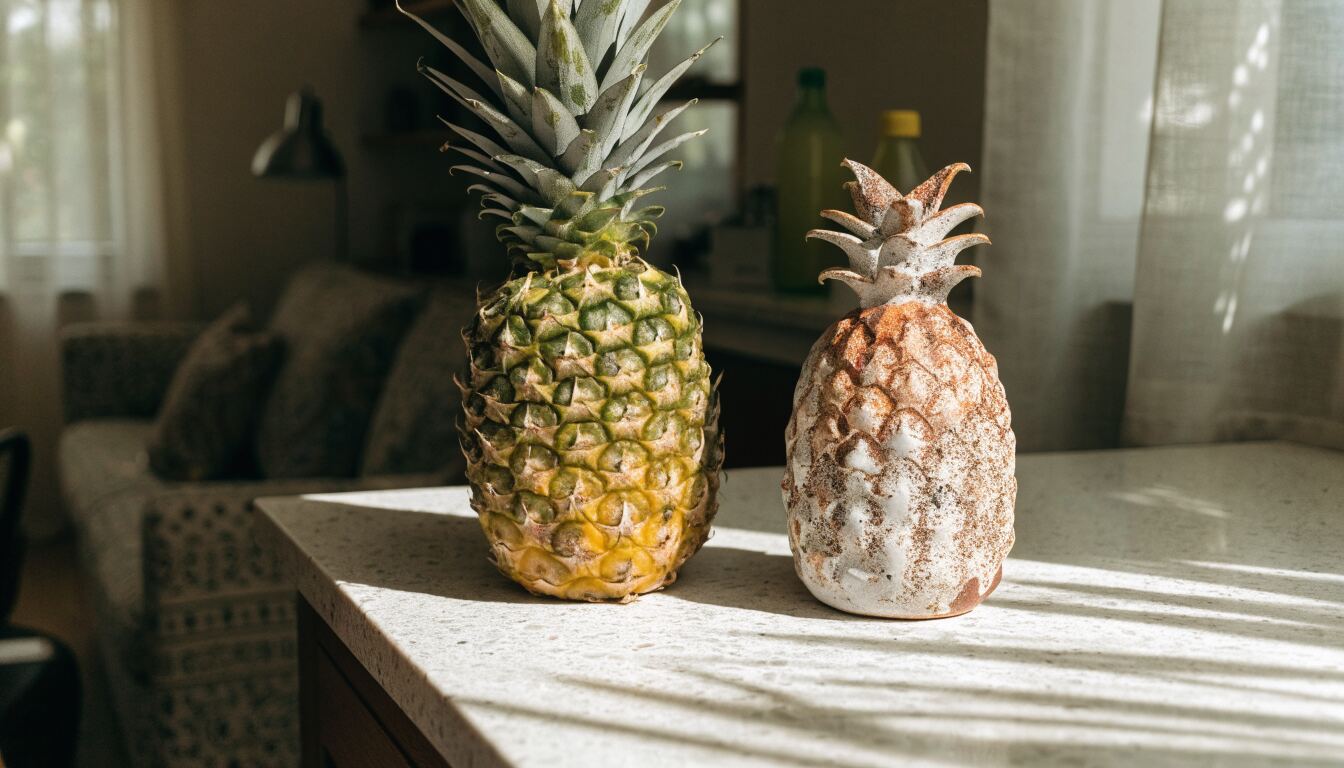
A Fruitful Secret: Tracing the Upside-Down Pineapple's Hidden Meaning
You have likely noticed the motif in unexpected places—adorning a cabin door on a cruise, peeking from a grocery cart, or woven into someone's attire. That spiky tropical fruit, often flipped on its head, operates as a quiet badge of identity for particular social circles. It offers couples a veiled method of expressing curiosity about alternative relationship dynamics. But where did this convention originate, and how does it truly function in daily life? Let’s investigate the pineapple’s remarkable transformation from a universal greeting emblem to a nuanced beacon for those in the know.
Key Insights into Lifestyle Symbolism
The inverted pineapple began its cultural journey as an icon of generosity and welcome before being adopted as a private code by swinging couples. You can encounter this motif on everyday objects like shopping carts, porch decorations, clothing, accessories, and within digital dating profiles. Employing the upside-down pineapple permits couples to quietly indicate their lifestyle preferences and locate kindred spirits. Nonetheless, it is crucial to acknowledge that a pineapple display does not automatically confirm someone's involvement in swinging; situational awareness is everything. Additional markers, such as specific garden arrangements or particular jewelry, also circulate within the community, yet straightforward dialogue and a deep respect for personal boundaries always take precedence.
The Pineapple's Voyage From Welcoming Emblem to Covert Indicator
Anchoring in Hospitality's Rich Past
The pineapple, boasting a crown-like silhouette and exotic origins, carries centuries of association with greeting and prosperity. During eras when maritime voyages were the sole bridge between continents, transporting a fresh pineapple from far-flung locales represented a genuine luxury. These fruits were scarce, commanding high prices and immense effort to obtain. Consequently, presenting a pineapple at a residence broadcasted affluence and a desire to flaunt one's blessings. It certainly signaled wealth, yet more profoundly, it embodied warmth and reception. Hosts would arrange them prominently to convey their delight in entertaining visitors, extending a heartfelt invitation to partake in their bounty. This custom endured, embedding pineapples into architectural woodwork, entryway motifs, and tableware, consistently whispering a message of friendly acceptance.
Transitioning into a Private Community Marker
Gradually, the narrative surrounding the pineapple began to diverge. While retaining its original welcoming connotations for mainstream society, a second, more secluded significance started taking shape. Whispers and soft indicators have solidified the upside-down pineapple as a muted signpost within a particular subculture. It serves as a tool for couples participating in the swinging scene to identify one another without broadcasting their interests loudly. Consider it akin to a secret handshake, substituting a hand for a fruit. The goal isn't ostentation; it's about discovering peers who resonate with similar desires while maintaining a low profile. This evolution illustrates the fluid nature of symbols, how they accumulate fresh interpretations based on the groups adopting them and the environments they inhabit.
Grasping the Subtlety: Not Every Fruit Tells a Story
Exercising caution here is vital. Do not assume every pineapple you encounter acts as a concealed message. Truly. A vast number of people simply appreciate pineapples for their aesthetic charm, their vacation-evoking vibe, or their fit within a coastal theme. They appear on welcome mats, in whimsical garden art, or printed on casual shirts, and in most instances, it is purely decorative. Rushing to conclusions can quickly breed uncomfortable misunderstandings. An inverted fruit can be a hint, yet it offers zero guarantees. The surrounding context holds all the weight, and presuming someone's lifestyle based solely on a piece of decor is a considerable stretch. It functions as a faint nod, not a glaring neon sign. So, while grasping the potential hidden lexicon is fascinating, it is wise not to scrutinize every pineapple you pass with excessive intensity.
Prime Locations for Spotting the Inverted Pineapple
Navigating Public Arenas: Carts, Doors, and Accessories
Picture yourself running errands or strolling through a vacation resort. Suddenly, there it sits—a pineapple deliberately turned upside down. This is seldom a random decorative choice; it is a purposeful broadcast. The standard upright pineapple famously signifies welcome, but rotating its orientation completely flips the message. This minor adjustment converts an ordinary fruit into a discreet beacon for those exploring non-traditional relationships. You might detect this emblem on a reusable shopping bag, decorating a stateroom entrance on a ship, or even printed on a beach tote. It provides a mechanism for individuals to recognize each other without drawing undue attention. Think of it as a silent, fruity greeting. It acknowledges a lifestyle that many prefer to keep guarded while still seeking fellowship with others on a parallel path. The significance of the upside-down pineapple often links directly to these visible cues, acting as a lighthouse for the informed observer. It is intriguing how an everyday object can carry such layered meaning among specific groups. Cruise ship doors remain a classic venue for these signs, though the practice continuously adapts with modern travel trends.
Decoding Domestic Cues and Neighborhood Whispers
Moving beyond shared public spaces, the inverted pineapple also surfaces in more intimate settings. Homeowners might weave the symbol into their exterior décor, perhaps via a porch flag, a garden sculpture, or a wind chime. This acts as a silent announcement to neighbors or guests that the residents embrace a swinging dynamic. The display can range from a tiny, almost hidden trinket to a bolder decorative statement. It conveys a quiet openness to building connections with compatible couples. The emphasis lies not on being flashy but on uncovering subtle avenues for intra-community communication. For those who interpret the sign correctly, an inverted pineapple can unlock dialogues, paving the way for new friendships and shared experiences. It represents a key that, for those fluent in its meaning, opens doors to a world of social possibilities.
Digital Displays: Profiles, Emojis, and Virtual Winks
In our hyper-connected era, the upside-down pineapple has naturally migrated into cyberspace. You can find it serving as a profile avatar, embedded in header images, or casually mentioned within the bio sections of social networks and lifestyle dating platforms. This digital footprint extends the symbol's reach exponentially, enabling people to link up irrespective of geographic distance. It is a contemporary evolution of an old-school signal, streamlining the process for individuals and couples to find each other. The potency of the upside-down pineapple translates seamlessly into the digital domain, matching its real-world impact. This adaptability highlights how symbols morph to fit new communication channels. It furnishes a rapid, visual shorthand that can smoothly transition into deeper conversations and potential real-world meetings within the swinging community.
Igniting Conversations: How Couples Leverage the Pineapple Code
Embedding Signals within Daily Objects
The inverted pineapple has emerged as a remarkably popular tool for couples aiming to express their lifestyle curiosity with a touch of finesse. It operates as a knowing wink directed at the right audience, softly stating a willingness to venture beyond conventional boundaries. You might spot it pinned to a hat, dangling as a charm on a bracelet, or, as anecdotal evidence suggests, positioned with intent in the upper basket of a shopping cart. This understated strategy lets couples test the waters and measure reciprocal interest without initiating a blunt proposition, nurturing a sense of mutual recognition within the wider community. It centers on grasping that specific pineapple meaning within the swinger lifestyle that resonates with others also seeking authentic connections.
Using the Fruit as a Gentle Icebreaker
How does this play out in real-world interactions? Envision yourself at a tropical resort, and you notice a pineapple magnet affixed to a neighboring room’s door, or perhaps you spot a pair sporting coordinated pineapple-themed tank tops. This goes beyond a mere fondness for tropical aesthetics; it frequently serves as an open invitation. For couples navigating the nuances of swinging communication, the pineapple becomes a soft entry point. Someone might approach the couple displaying the symbol, or the wearers might initiate a chat based on a glance. The exchange could kick off with a light remark about the pineapple accessory itself, gradually steering toward a more guarded discussion about mutual interests. It presents a method to initiate contact within a low-stakes environment, ensuring all parties feel at ease and secure enough to explore the connection further.
Handling the Symbolism with Care and Consent
We must stress that not every person showcasing a pineapple is inviting a discussion about swinging. The fruit boasts a deep-rooted legacy as a universal emblem of hospitality. However, when you encounter it in scenarios demanding discretion—like a themed resort event or a specialized online forum—the swinger association gains more traction. While deploying or deciphering this symbol, prioritizing respect and transparent communication cannot be overstated. If you feel intrigued, a courteous, non-invasive question can open doors. If you are not interested, a simple smile and moving along is perfectly acceptable. The overarching objective involves connecting with compatible individuals while steadfastly honoring boundaries and safeguarding everyone's privacy.
Looking Past the Fruit: A Wider Lexicon of Lifestyle Symbols
Companion Emblems and Their Hidden Definitions
Although the upside-down pineapple has achieved notable recognition, it hardly stands alone as a discreet signal for swingers. The community employs a rich assortment of other visual cues to convey openness or relationship status. Imagine it as a collection of silent codes embedded in mundane items. For instance, certain couples might don specific accessories, such as a black band on the right ring finger, or switch their existing wedding band to that hand. Others lean into subtle landscaping choices, like placing ornamental pampas grass prominently in the front yard or arranging white pebbles in a deliberate pattern. These markers typically fly under the radar of casual observers, which is precisely the point. They are designed to be clocked only by those already familiar with the visual vocabulary, assisting in the identification of potential companions or aligned individuals without broadcasting intentions to the entire neighborhood.
The Critical Role of Context and Direct Dialogue
It remains essential to remember that these symbols rarely offer a rigid, literal translation. A pineapple printed on a shirt might simply reflect a person’s love for tropical vacations, correct? This is why contextual clues are paramount. Noticing a pineapple is one data point, but observing it alongside other subtle signs, or within a specific environment like an adults-only resort or a private gathering, significantly amplifies its potential meaning. The true connection occurs when these symbols act as springboards for genuine conversation. They are not meant to serve as definitive proof but rather as a quiet invitation to connect and verify. If you perceive a potential signal, the most effective approach always involves engaging with respect and posing thoughtful questions. This illustrates how couples signal a shared lifestyle and crack the door open for authentic rapport, steering clear of awkward assumptions.
Upholding Privacy Within Alternative Dynamics
Utilizing these secret symbols for swingers revolves fundamentally around safeguarding privacy and ensuring consent. It empowers people to articulate their interests in a manner that feels secure and personally controlled. Not everyone feels prepared or willing to be publicly candid about their relationship choices, and that stance deserves complete respect. These visual cues supply a discreet avenue for locating others with parallel interests without risking unwanted exposure. It represents a method for constructing community and fostering connections on one's own terms. Upon encountering these symbols, whether a pineapple, a specific ring, or another marker, bear in mind that the individual displaying it is likely seeking a particular type of connection, and honoring their privacy in how they choose to signal remains absolutely vital.
The Shifting Landscape of Symbols in Non-Monogamous Dynamics
Why Visual Shorthand Matters for Communication
Let’s face the reality. Mainstream society is still navigating comfortable ways to discuss openly the full spectrum of relationship models and sexual identities. The path is not always clear or direct. This is precisely where symbols prove invaluable. They function like a secret club handshake, offering people a pathway to connect and hint at their interests without making a sweeping public declaration. These emblems aid in building community and facilitating connections within a world that often lags behind cultural shifts. Consider the challenge: if you are seeking a very specific type of connection, how do you locate it without some form of identifier? It’s tricky. Symbols, much like the pineapple, provide a discreet method to find others walking a similar path. It is fundamentally about locating one’s tribe.
The Pineapple's Firm Place in Contemporary Swinger Circles
The pineapple, particularly when presented upside down, has solidified its status as a widely recognized indicator within swinging culture. It has proliferated across numerous touchpoints, from front stoops and the produce section of grocery stores to the digital squares of online profiles. It’s a playful, understated nod that communicates belonging to a specific lifestyle. This isn't solely about the physical fruit; it’s about the shared knowledge that underpins it. This symbol has gained significant traction, especially as platforms like TikTok and Instagram amplify its visibility. Users are adopting tags to share their narratives and link up with others. It represents a modern refresh of an ancient concept, streamlining the process of finding community. This symbol opens doors to dialogues about ethical non-monogamy and alternative relationship frameworks.
Evolving Alongside New Connection Methods
As relationship structures and modes of self-expression continue their evolution, so too do our communication methods. Symbols play a massive role in this landscape. They are not static relics; they shift and adapt. A meaning held today could morph tomorrow. It’s vital to remember that context governs interpretation. Simply because a person owns a pineapple-print shirt does not automatically signal a search for partners. Many individuals genuinely adore the cheerful, tropical aesthetic! But for those fluent in the subtext, it’s a tool to initiate discussions about alternative arrangements. It centers on respecting boundaries and grasping that communication remains the gold standard, whether delivered via a symbol or a face-to-face chat. The ultimate goal always circles back to mutual consent and respect, regardless of the connection method.
Here is a quick breakdown of the functional roles these symbols play:
- Identification: Flagging an affinity for a specific lifestyle or community.
- Connection: Assisting individuals in locating like-minded people.
- Discretion: Permitting private signaling within public or mixed environments.
- Conversation Starter: Providing a subtle, low-pressure avenue to initiate dialogue.
An Emblem Beyond the Fruit Bowl
We have journeyed through the layered world of pineapples and the specific weight they carry in certain communities. It remains genuinely fascinating how a simple fruit can transform into a covert signal. Whether you encounter an inverted pineapple on a stateroom door, nestled in a shopping cart, or embroidered on a cap, it represents a subtle tribute to a lifestyle that prizes both discretion and meaningful connection. Yet, hold onto the key reminder: not every pineapple carries the same message for every person. Often, a pineapple is just a cheerful piece of fruit. The core lesson here revolves around communication and the unwavering respect for personal boundaries, no matter which symbols people choose to adopt. It all comes down to understanding and consent, and that’s a principle everyone can value.
Answers to Common Curiosities
What is the story behind the upside-down pineapple trend?
Pineapples, specifically when inverted, have morphed into a quiet code for individuals curious about the swinging dynamic. It functions as a concealed beacon, letting others know they are receptive to meeting couples for social or intimate adventures. Visualize it as a playful, nuanced way to sync up with people who share a similar wavelength.
Where did this association with pineapples originate?
Historically, pineapples stood as a universal emblem of welcome and generous hospitality. In past centuries, displaying a pineapple signified friendliness and status. Over time, the swinging community organically adopted this motif, layering it with a newer, more confidential meaning. It now serves as a nod to openness and a distinct philosophy on relationships.
Is it safe to assume a pineapple always signals a swinger?
Absolutely not. While the inverted pineapple is a recognized motif within swinging circles, countless people simply enjoy pineapples for their visual appeal or because they evoke fond memories of island getaways. It is critical to avoid leaping to firm conclusions. The symbol is intended to be discreet, and not every person displaying it participates in that lifestyle.
Where are these pineapple signals most commonly spotted?
You can encounter them in various settings. Some couples might place an inverted pineapple in their grocery cart while shopping. You might also find pineapple imagery on apparel, accessories like earrings or pendants, or integrated into home decorations. Additionally, people frequently use pineapple emojis or pictures on dating applications or social media bios to subtly hint at their lifestyle preferences.
Do swingers use any other common symbols besides the pineapple?
Indeed, they do. Beyond the pineapple, other objects have gained traction as soft indicators. These can include elements like ornamental pampas grass in landscaping, wearing a ring of a specific dark color on a particular hand, or certain types of body jewelry such as anklets or specific toe rings. However, situational context is incredibly important, and these symbols are not exclusively tied to swinging in every instance.
What is the primary reason for adopting these symbols?
Symbols are useful because they provide a channel for discreet communication. Within communities where members might wish to keep aspects of their private lives guarded, symbols help them locate others who share corresponding interests or lifestyles without needing to announce it to the general public. It is a mechanism for connecting with a specific group while diligently maintaining personal privacy.