Fresh Perspectives on Love and Identity
Relationships today are evolving in fascinating ways, weaving together threads that many of us never learned to discuss openly. Conversations around polyamory, queer experiences, and even newer concepts like intentional relationship cultivation are becoming more common, pushing us to rethink what commitment and family can look like. Instead of following a single script, people are crafting bonds that reflect their true selves, blending emotional care with personal authenticity. This shift invites us to examine how these ideas overlap and what they reveal about human connection beyond the usual expectations.
How Intentional Relationship Care Connects with Polyamory and Queer Life
It's remarkable to consider how various approaches to partnership align with queer identity. While polyamory often takes center stage in these discussions, a fresh perspective sometimes called 'conscious relationship tending' is emerging in modern dialogues. This isn't merely about having more than one partner; it focuses on the deliberate structure and daily experience of those connections, particularly within LGBTQ+ communities. Delving into non-monogamy alongside queer identities raises profound questions about our assumptions and how we personally define meaningful bonds.
What Does Conscious Relationship Tending Mean Today?
You might wonder what this newer term actually covers. It's still taking shape, but it generally points to a style of managing multiple connections with clear purpose and genuine enthusiasm. Think of it as the active, ongoing effort that keeps relationships vibrant—not passive drifting. It involves being fully present with each person, truly grasping their needs, and contributing to the shared life you're building together, whatever form that takes. This approach blends practical daily care with a spark of passion, treating each bond as something that deserves attention and nurturing rather than something that runs on autopilot. It's about showing up, communicating openly, and investing in the health of every connection.
Polyamory as a Natural Fit for Queer Expression
For countless individuals in the queer community, polyamory represents more than a simple alternative to exclusivity; it often feels inherently compatible. Conventional relationship blueprints, constructed around heterosexual ideals, frequently fail to accommodate queer realities. Polyamory, grounded in mutual agreement, honest dialogue, and personal freedom, offers a structure that better supports diverse identities and longings. It permits a more flexible interpretation of love, devotion, and kinship, which frequently resonates with queer viewpoints on having multiple partners. This framework creates room where different styles of giving and receiving affection aren't just tolerated but genuinely honored, allowing people to design relationships that mirror their inner truths rather than societal prescriptions.
Shared Ground Between Non-Monogamy and Queer Experiences
There's a notable intersection between the lives of those in polyamorous arrangements and the wider queer population. Both groups regularly find themselves questioning established social codes and assumptions. When you navigate non-monogamy and LGBTQ+ identities simultaneously, you're often pressing against the same conventional barriers. This mutual experience of examining and reshaping norms can forge powerful alliances and a feeling of kinship. It stems from recognizing that the desire for varied forms of closeness and connection isn't unusual, but a legitimate aspect of being human. Grasping polyamory within queer culture means accepting that these aren't isolated paths—they're frequently interwoven journeys toward self-understanding and genuine living, where people support each other in breaking free from limiting expectations.
Pushing Back Against Rigid Relationship Norms
A great deal of how we approach partnerships seems preordained, as if only one correct method exists. Society hands us an invisible roadmap, and when we stray from it, others may claim we've lost our way. Marriage and family, especially, mirror narrow, conventional concepts that exclude difference and variety. For queer individuals and those embracing non-monogamy, that roadmap can feel like attempting to fit an oddly shaped piece into a puzzle where it clearly doesn't belong. We continually challenge standards that never accounted for us in the first place.
Unpacking Standard Marriage Blueprints
The concept of marriage typically arrives bundled with a set of assumptions. Consider the familiar sequence: a ceremony, a joint household, kids, and a lifelong bond that culture expects to define your primary partnership. This template, sometimes called the relationship escalator, maps out a distinct route—you encounter someone, cohabit, wed, and age side by side. It markets this progression as the natural and nearly unavoidable way to love. But what happens when that route doesn't suit your circumstances or wishes? Questioning this traditional setup involves asking why these stages are treated as compulsory rather than simply one possibility among many. Acknowledging that the "standard contract" of marriage contains terms that may not serve everyone is liberating. You hold the power to determine what commitment signifies for you—and that's perfectly valid.
Queer Defiance of Heteronormative Pressures
Queer identity inherently resists heteronormativity—the notion that straight and cisgender existence is the baseline or sole "normal" way to live. This pushback extends far beyond attraction; it influences how individuals form bonds, construct families, and organize everyday routines. The conventional relationship model positions a heterosexual pair at the center, with every other tie orbiting around them. Queer people, in contrast, carve out their own environments and dynamics that dismiss those presuppositions. They're constructing a world where every variety of love and connection isn't just accepted but enthusiastically embraced, forging new traditions that honor authenticity over conformity.
How Polyamory Reshapes the Idea of Family
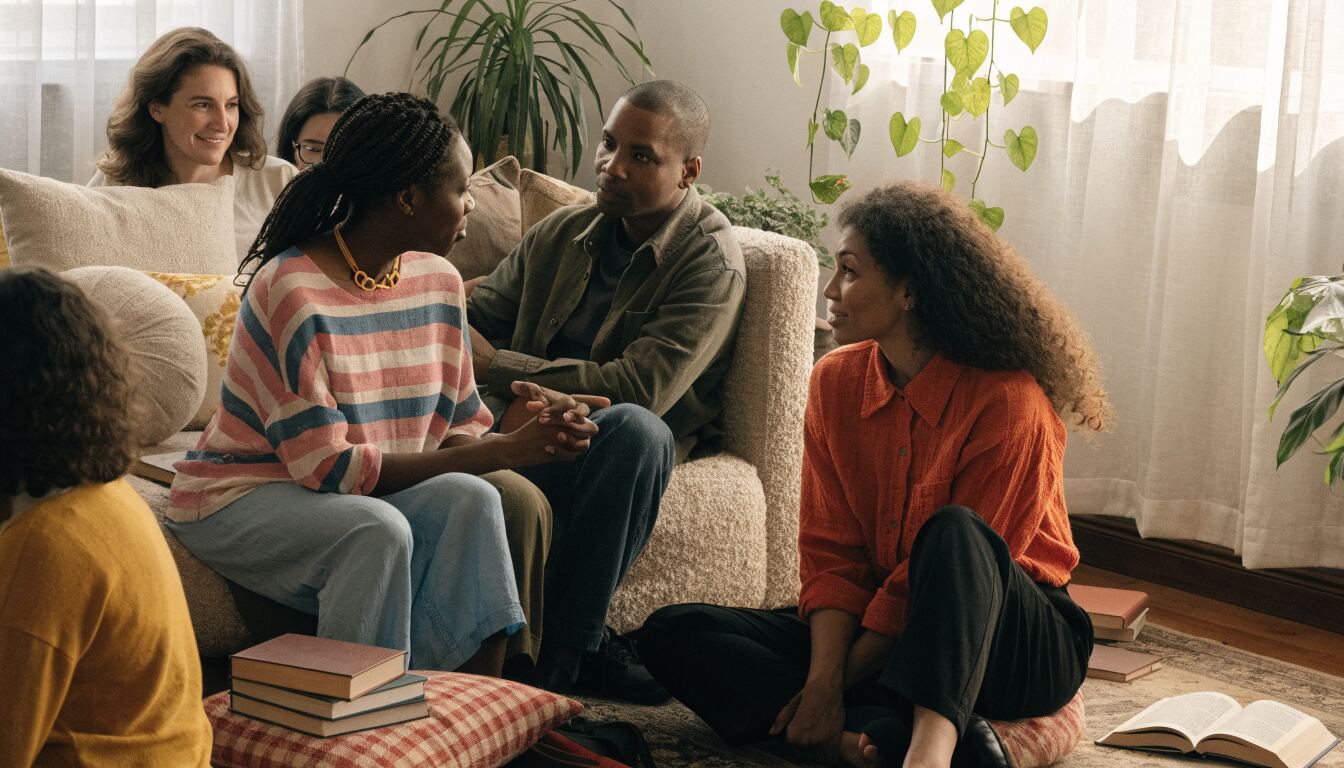
Polyamory, with its focus on multiple affectionate bonds, genuinely disrupts the classic definition of family. Rather than a single, central unit, families can evolve into webs of mutual support and care. This can appear vastly different from one person to the next. Perhaps it's a circle of friends sharing a home and dividing responsibilities, or maybe it's a network of partners and their respective loved ones, all linked in some fashion. This relational variety enables a more adaptable and broad understanding of what 'family' can signify. It shifts away from a strict, biological, or legalistic definition toward one grounded in chosen ties, reciprocal nurturing, and shared dedication, no matter the shape it assumes. Practical steps include regular family meetings to discuss needs, creating shared calendars for important events, and openly acknowledging each person's role in the support network.
Real-World Obstacles for Non-Traditional Queer Relationships
Life doesn't always flow smoothly when you're living beyond the typical two-person framework, particularly when you also belong to the queer community. A host of practical difficulties arise, complications that make daily existence far more tangled than necessary. These challenges span legal systems, social attitudes, and institutional policies that haven't caught up with relational diversity.
Housing Rules and Unrelated Adults
Finding a place to live stands as one of the largest headaches for those in nontraditional arrangements. Numerous rental contracts and neighborhood association bylaws cap the number of unrelated adults who can share a residence, which instantly generates problems for polyamorous households. When over two people share a bond without legal marriage ties, the system forces them into categories that don't accommodate their reality. It presumes everyone neatly couples off, leaving minimal space for networks of affection or shared connection. Because of these limitations, some individuals wind up selecting which partners they can cohabit with or bending the regulations entirely. It's maddening when your sole wish is to create a home with those you cherish. Strategies to cope include seeking out privately owned rentals with flexible landlords, forming housing cooperatives, or advocating for local policy changes that recognize diverse family structures.
The Marriage Equality Victory's Complicated Legacy for Polyamory
There was widespread celebration when marriage equality became law, and that achievement was monumental. Yet it also placed polyamory in a peculiar position. While the campaign for same-sex marriage cracked open certain conceptual doors, it simultaneously reinforced the notion that marriage is exclusively for two individuals. It's as though the legal framework grew slightly more at ease with one variety of non-traditional bond, but didn't truly accommodate others. Consequently, despite progress, polyamorous people remain largely excluded from legal acknowledgment. It's a mixed outcome, honestly—progress for some, but continued invisibility for many. This highlights the need for broader advocacy that includes multi-partner relationships in conversations about legal rights and protections.
Handling Social Stigma and Everyday Criticism
Beyond legal matters, there's the daily weight of judgment. People hold strong opinions about how relationships should appear, and anything deviating from that norm attracts scrutiny. You might encounter inquiries, presumptions, or even direct rejection from friends, relatives, or colleagues. This persistent requirement to clarify or justify your relationship selections can be draining. It demands significant emotional effort to manage others' discomfort or lack of comprehension. Additionally, there's the hazard of discrimination in other spheres, like employment or accessing services, because your relationship structure isn't what most individuals anticipate or accept. Building a support network of understanding friends and finding affirming communities can help buffer against these stresses.
Here are some frequent hurdles faced:
- Legal Recognition: Absence of rights for multiple partners in healthcare choices, inheritance, and child custody.
- Social Acceptance: Coping with stigma, bias, and confusion from the broader public.
- Housing Issues: Limits on cohabitation tied to the count of unrelated adults.
- Family Structures: Difficulty in forming legally acknowledged family units for kids with several parental figures.
- Healthcare Access: Obstacles in getting partners covered by insurance or making medical decisions.
Building Identity Within Polyamorous Contexts
Discovering who you are, particularly regarding relationships, can be an entire odyssey. For many, venturing into polyamory isn't solely about dating multiple people; it's a pathway to constructing a fresh sense of self. It involves examining old regulations and uncovering what genuinely works for you. This journey often includes deep self-reflection about your own sexuality, identity, and ethical non-monogamy. It resembles shedding outdated layers and evolving into something more genuine, where each connection teaches you something new about your needs and boundaries.
Moving Beyond Fixed Labels Toward Exploration
Sometimes, individuals attempt to confine polyamory into a tidy box, as though it's merely about accumulating partners. But for many queer folks, it's far more fluid than that. It's less about a static identity and more about ongoing discovery. You might find yourself questioning what love even signifies, or how you relate to others, outside of what society prescribes. This exploration can involve experimenting with different relationship formats, reflecting on what brings genuine fulfillment, and allowing your understanding of yourself to shift over time. It's a process of continuous growth rather than arriving at a final destination, embracing uncertainty as part of the journey.
Navigating the Range of Non-Monogamous Dynamics
When discussing bonds that aren't strictly one-on-one, it's tempting to group everything under a single label. Yet there's far more complexity and subtlety than simply "not being monogamous." In many respects, it's comparable to stating all cuisine is simply "not soup." There are distinct tastes, consistencies, and preparation methods for each dish—and similarly, there exist numerous unique approaches to forming romantic and sexual connections. By acknowledging these distinctions and exploring how each dynamic functions, we can better value the richness and variety present in contemporary relationships.
Clarifying the Difference Between Polyamory and Polygamy
This is a frequent source of misunderstanding, and it's worth untangling. Polyamory involves maintaining multiple consensual romantic relationships simultaneously. Picture it as holding several loving partnerships, each with its own special dynamic and bond. Polygamy, conversely, is generally a religious or cultural practice where one individual is wed to multiple spouses. The crucial distinction here is the legal and frequently religious context. Polyamory doesn't inherently include marriage, and its emphasis lies on the consensual, ethical ties between all involved parties. It's about widening love, not necessarily about legal or religious frameworks. Understanding this difference helps prevent misconceptions and honors the autonomy of all participants.
The Subtleties of Open Relationships and Swinging
Open relationships and swinging also fall under the non-monogamous umbrella, but they carry their own specific flavors. In an open relationship, a pair might consent that they can have sexual encounters with others, yet the primary romantic link remains with their main partner. It's frequently about sexual discovery outside the core partnership. Swinging is somewhat more particular; it typically involves couples who participate in sexual activities with other couples or individuals, often at arranged events or gatherings. The focus here is commonly on recreational sex, and the primary couple bond is usually preserved. The central idea across these styles is consent and communication, but the intention and framework can differ dramatically. Being clear about your own desires and boundaries is essential when exploring these options.
Relationship Anarchy as a Boundary-Dissolving Approach
Here's where concepts become truly intriguing and move past simple categories. Relationship anarchy, occasionally termed nougamy or transbinary relational modes, challenges the fundamental notion of predefined relationship structures. Instead of depending on labels like partner, friend, or lover, individuals who embrace relationship anarchy construct unique connections based on personal wishes and requirements—without presuming a hierarchy. It's about rejecting social rules that dictate how relationships should appear and forming bonds organically. This method embraces fluidity, acknowledging that relationships needn't squeeze into neat boxes. It deconstructs the binary of monogamy versus non-monogamy, creating space for personalized, authentic forms of connection. Relationship anarchy invites us to broaden how we consider intimacy and commitment, much like the diversity of human sexuality itself. Practically, this might mean customizing agreements for each relationship, regularly checking in about evolving needs, and resisting the urge to compare or rank connections.
Envisioning Tomorrow's Relationship Diversity
Contemplating where relationships are heading feels akin to forecasting the weather—only with extra sparkle and even less certainty. Individuals are drifting away from rigid, universal models and reinterpreting what connection signifies. It's no longer solely about locating a single partner; it's about constructing a network of love and backing that authentically mirrors who we are. The broader outlook reveals a world where our bonds evolve freely, released from obsolete rules and expectations, embracing complexity as a strength rather than a problem.
Insights Gained from the Marriage Equality Struggle
The battle for marriage equality taught us considerable lessons. It demonstrated that when people unite, they can advocate for recognition and rights, even against enormous challenges. This movement wasn't merely about legalizing marriage for same-sex couples; it was about asserting that love, in all its manifestations, merits respect and safeguarding. It showed us that challenging the status quo demands perseverance and that visibility is crucial. We discovered that legal recognition carries weight, but it's also just one component of a larger picture. The persistence and community organizing from that era offer a blueprint for advancing rights for multi-partner relationships today.
Moving Beyond Marriage as the Sole Benchmark for Recognition
Marriage suits some individuals wonderfully, but it's certainly not the exclusive way to organize a meaningful bond. We need to ponder how we acknowledge and support all sorts of connections—friendships, chosen kin, polyamorous webs, and beyond. This involves examining things like housing regulations, healthcare decision-making, and even routine social exchanges. How do we ensure that a close companion or a long-term partner in a nontraditional setup receives identical considerations as a legal spouse? It's about forging a society that perceives the worth in all these varied ties, perhaps through designated beneficiary laws, expanded family leave policies, and cultural shifts that honor diverse care networks.
Fostering Inclusive Models of Care and Warmth
What does this appear like in daily life? It entails constructing communities where individuals feel secure to articulate their relational needs without condemnation. It involves generating spaces where different forms of intimacy and commitment can thrive. Consider shared housing setups that aren't exclusively for married couples, or support networks that recognize the significance of multiple partners or intimate platonic relationships. It's about actively designing methods to care for each other that are adaptable and celebrate the spectrum of human connection. This might involve:
- Drafting community agreements for shared living environments that accommodate multiple adult inhabitants.
- Establishing informal networks for childcare and eldercare that depend on a broader circle of trusted individuals.
- Promoting open dialogues about relationship structures within families and social circles to normalize diversity.
As we've observed, constructing relationships—particularly when they include more than two people—rapidly grows intricate. These bonds challenge outdated notions about family and identity and frequently collide with legal frameworks that still prioritize conventional, two-person patterns. Laws don't accommodate this kind of variety, so individuals in nontraditional relationships often devise their own methods to define and safeguard what they've built together. When we examine queer identity and polyamory alongside each other, it becomes evident that countless avenues exist for living authentically and loving profoundly. The path isn't always straightforward, and that's perfectly fine. We're continuously learning how all these pieces interlock, and it's a voyage that questions what we typically assume about relationships and selfhood.
Common Questions Explored
Understanding the Concept Behind “Hot Husbandry”
While “hot husbandry” isn’t a widely recognized phrase, in discussions about relationship dynamics it captures the idea of actively and passionately tending to connections—especially within polyamorous or queer settings. Think of it like gardening: you don’t just plant seeds and walk away; you water, prune, and nurture. In practice, this means scheduling regular check-ins with partners, celebrating each other’s growth, and staying curious about evolving needs. For folks juggling multiple romantic bonds, this proactive care can transform chaotic schedules into a supportive network where everyone feels valued. It’s less about rigid rules and more about an enthusiastic commitment to making love thrive in all its forms.
The Link Between Polyamory and Queer Identity
Polyamory—having more than one romantic relationship with everyone’s full consent—often resonates with queer individuals because both reject the default script of a single, lifelong heterosexual pairing. Many queer people discover that polyamory gives them room to explore attraction and identity beyond societal norms. For example, someone who identifies as bisexual might feel that a monogamous framework doesn’t fully honor their capacity to connect with different genders. Embracing multiple relationships can feel like a natural extension of living authentically, allowing fluid expressions of love that aren’t boxed in by tradition. It’s a way to write your own story, rather than inheriting one that doesn’t fit.
Navigating Legal and Social Obstacles
Non-monogamous queer folks often bump into barriers because laws and customs were designed for a two-person, heterosexual model. Zoning regulations might prevent three unrelated adults from sharing a home, while medical decisions or inheritance rights rarely account for polyamorous families. Even after same-sex marriage victories, the legal system still struggles to recognize relationships beyond couples. On a social level, stigma persists: coming out as poly can invite judgment from employers or relatives. Building a strong support community helps—join local meetups or online forums to swap resources and strategies. Practical steps like drafting cohabitation agreements or designating healthcare proxies can offer some protection, though broader advocacy remains essential.
Challenging Essentialism in Queer Spaces
Essentialism pushes the idea that people belong in fixed boxes—like “man” or “woman,” “gay” or “straight”—with unchanging traits. Queer identity often pushes back by highlighting how gender and attraction can shift over time. Applying this to relationships, it means ditching the notion that there’s only one “correct” way to love. Instead of asking “Is this normal?” you might ask “Does this bring joy and respect?” This mindset creates space for a spectrum of arrangements, from solo polyamory to relationship anarchy. It’s about honoring individual experiences rather than forcing them into pre-made molds.
Polyamory Versus Polygamy: Key Distinctions
Though they sound similar, polyamory and polygamy are quite different. Polygamy specifically involves marriage to multiple spouses and often carries religious or cultural connotations. Polyamory, by contrast, is a broader umbrella: it encompasses any consensual multi-partner romantic dynamic, whether or not legal marriage plays a role. You could be in a committed triad without wedding rings and still be polyamorous. Understanding this difference helps clarify conversations and reduces confusion when explaining your relationship style to others.
Looking Ahead: Lessons from Marriage Equality
The marriage equality movement proved that persistent storytelling and activism can reshape laws and hearts. For polyamorous and queer communities, the next frontier involves pushing beyond the couple-centric model. This means fighting for family recognition that honors diverse care networks—like platonic co-parents or chosen kin. It also involves educating allies about the validity of non-traditional bonds. By building on past victories, we can work toward a world where all loving configurations are seen, respected, and supported. Ultimately, the goal isn’t just tolerance but a celebration of the many ways humans connect.