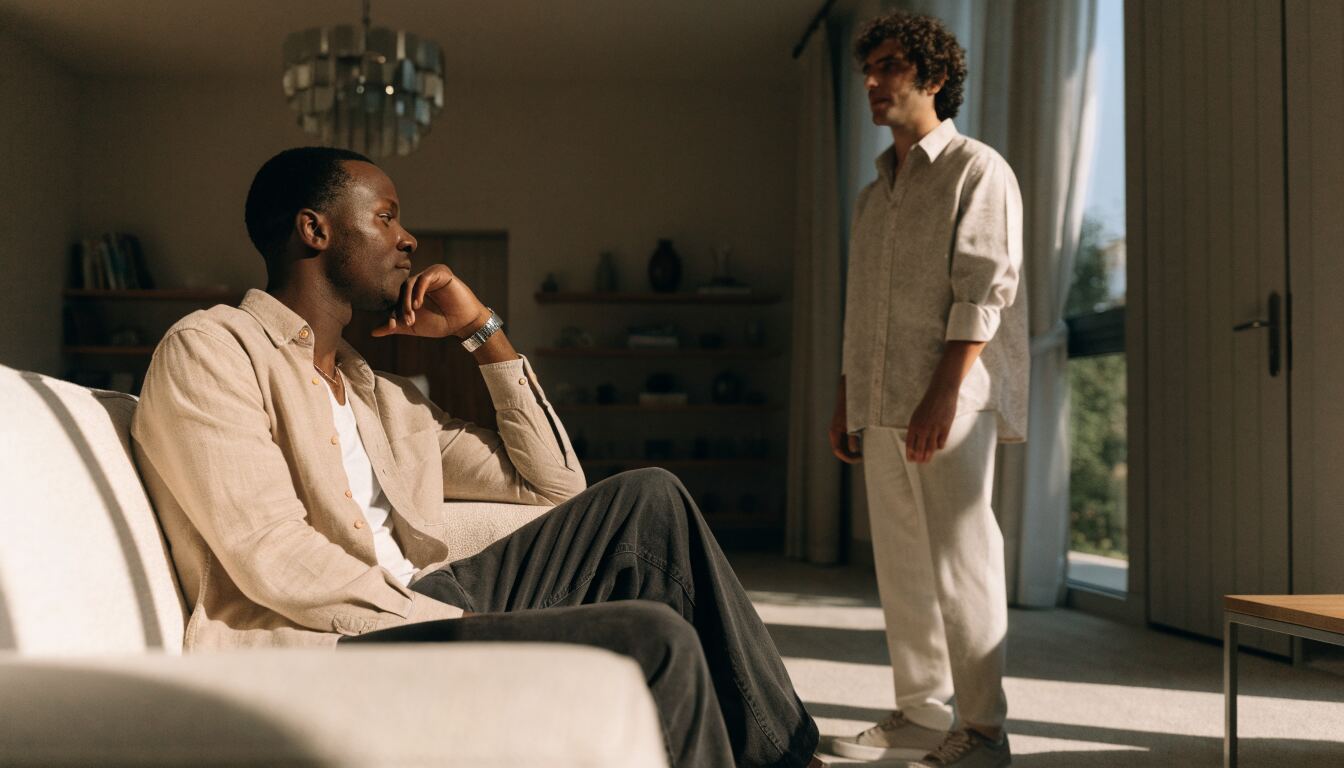
Unpacking the Draw of Masculine Energy in Gay Bonds
It's a scene many of us recognize: scrolling through a dating platform, you notice a recurring theme in profiles—guys explicitly seeking a partner who embodies a certain rugged, traditional manliness. This isn't a passing trend; it's a deeply rooted preference that shapes how many gay men approach intimacy and partnership. The attraction goes far beyond surface-level looks, tapping into a well of psychological needs and social conditioning. Let's delve into why this desire for masculine energy holds such power, how it influences self-perception, and what it means for the health of our relationships.
The Quest for a Steady, Protective Presence
For countless individuals, a partner who projects strength and capability offers more than just aesthetic appeal—it provides a profound sense of safety. Imagine the feeling of coming home to someone whose very demeanor suggests stability; it's like a psychological anchor in a chaotic world. This isn't about helplessness or needing a savior. Rather, it's the quiet comfort of knowing you're with someone who can handle life's curveballs with a level head. This dynamic becomes especially potent in non-traditional relationship structures, where external societal blueprints might be absent, making an internal sense of security all the more crucial.
This protective aura can manifest in small, everyday ways: the way a partner confidently navigates a tricky social situation, their calm problem-solving during a crisis, or simply the physical reassurance of a firm embrace. These actions communicate reliability, a trait that many find deeply attractive because it suggests a foundation upon which a lasting partnership can be built.
The Magnetic Pull of Assertiveness and Self-Recognition
Beyond safety, there's an undeniable allure to a partner who exudes a confident, even dominant, energy. This isn't necessarily about control in a negative sense, but more about a dynamic where one person naturally takes the lead, making decisions and shaping the flow of an interaction. For some, this creates an exciting, affirming tension. Being with someone so self-assured can feel like a thrilling adventure, a departure from the mundane.
On a deeper level, pairing with a conventionally masculine man can serve as a mirror, reflecting and validating one's own identity. It's a subtle yet powerful form of self-affirmation. When you see the traits you value in yourself—or aspire to have—embodied in your partner, it reinforces your own sense of worth and belonging within the broader gay community. This interplay of attraction is a complex dance between wanting to feel sheltered, enjoying a dynamic of guided energy, and seeing a cherished version of oneself in another person.
Here's a snapshot of the core drives at play:
- A Sanctuary of Strength: The deep-seated desire for an emotional and physical safe harbor.
- The Reflection Principle: Gaining a sense of personal validation through a partner's masculine presentation.
- The Chemistry of Command: An attraction to a decisive, assertive interpersonal style that creates a compelling dynamic.
How Mainstream Manhood Shapes Gay Culture
It's a fascinating paradox: a community built on the freedom to be oneself often finds itself mirroring the rigid masculine codes of the wider, heteronormative world. The societal blueprint for a "real man"—emotionally reserved, physically robust, a natural problem-solver—has quietly permeated gay spaces, creating an unofficial, yet powerful, hierarchy of desirability. This influence dictates not just who we find attractive, but often how we feel we must present ourselves to be accepted.
The Performance of "Straight-Acting"
Perhaps the most visible symptom of this pressure is the persistent preference for "straight-acting" or "straight-presenting" men. You'll encounter this phrasing constantly online, a shorthand for a man who could, by conventional standards, pass as heterosexual. It's a peculiar demand within a community defined by its non-conformity to that very standard. This phenomenon reveals a deep-seated anxiety—a performance adopted as a shield against prejudice, both from the outside world and, sadly, from within our own circles. The man who can effortlessly blend in is often seen as more valuable, leaving those with more effeminate mannerisms feeling sidelined or invisible. This creates a exhausting, hyper-vigilant state where one's walk, talk, and gestures are constantly self-policed to avoid falling short of an unspoken masculine benchmark.
Grappling with Inherited Manhood Norms
So how do men navigate this tricky terrain? Responses vary wildly. Some find genuine comfort and authenticity in traditional masculine expression; it aligns with their core self and desires. For them, it's not a performance but a natural state. For others, however, these norms are a straightjacket. The constant pressure to be stoic, competitive, and physically imposing can be deeply alienating, creating a chasm between one's true self and the persona they feel forced to project. This internal conflict can lead to a profound sense of isolation, even when surrounded by partners and friends.
Commonly associated masculine markers include:
- Physical Presentation: A muscular build, defined jawline, and a style leaning towards utilitarian or rugged (think work boots, dark colors, simple cuts).
- Behavioral Scripts: Emotional restraint, a competitive drive, a posture of unwavering confidence, and minimal public displays of affection.
- Social Camouflage: The ability to seamlessly "pass" in straight-dominated environments, keeping one's sexual orientation from becoming a focal point.
The Inner Workings of Attraction
Peeling back the layers of "what we like" often leads us to "why we like it." The psychological rewards of partnering with a masculine-presenting man are potent and multifaceted, touching on our most fundamental needs for safety, order, and a cohesive sense of self.
Anchored by a Capable Partner
The drive to feel protected is primal. In a world that still presents unique challenges for same-sex couples, a partner who radiates strength and competence can feel like an essential lifeline. This goes far beyond physical stature; it's the confidence with which he navigates the world, the sense that he is a capable and steadfast presence. This creates a relational anchor, a safe base from which both individuals can explore life with greater courage. It's the feeling of having an unshakeable ally, which is a cornerstone of deep, enduring intimacy.
The Allure of Guided Energy
For a significant number of men, the concept of dominance plays a starring role in their desire map. This dynamic is often misunderstood. It's less about a dictatorial, controlling personality and more about an energy of self-assured leadership and initiative. A partner who can confidently decide on a restaurant, plan a trip, or steer a conversation can be incredibly attractive because he provides a sense of structure and direction. This can be a deeply comforting and even erotically charged experience, offering a release from the burden of constant decision-making and creating a clear, if unspoken, polarity in the relationship.
Finding Yourself in Another
Sometimes, the attraction to a hyper-masculine partner is a form of indirect self-validation. If you identify strongly with masculine traits, or strive to embody them more fully, choosing a partner who is a paragon of those ideals can feel like a personal endorsement. It's as if his embodiment of strength, stoicism, or capability confirms your own. This mirroring effect can significantly boost self-esteem and solidify one's identity, making the relationship a powerful source of personal affirmation. It's a way of saying, "This is what I value, and by being with him, I am part of that world."
The Double-Edged Sword: Self-Perception and Relational Health
This intense focus on a specific masculine ideal has a profound and often contradictory impact on gay men. On one hand, successfully embodying these traits can unlock social and professional benefits. A man who fits the mold might find he commands more respect, navigates public life with less friction, and feels a heightened sense of personal confidence. For some, this performance becomes a useful tool, a way to move through the world more smoothly.
However, the shadow side of this pressure is immense and damaging. The constant demand to be "man enough" can morph into a cruel form of self-surveillance. Men may find themselves overcompensating, putting on an exaggerated, almost caricatured display of toughness that feels hollow and exhausting. This performance can trigger a painful cycle of self-doubt. The nagging question, "If I'm gay, am I a real man?" can erode self-esteem from the inside out, creating a persistent background noise of inadequacy.
The Crushing Weight of Conformity
The rulebook for this performance is unwritten but brutally enforced. The expectations are clear:
- Absolute Self-Reliance: You must never ask for help or admit to struggling. Vulnerability is framed as weakness.
- Emotional Fortress: Sadness, fear, and tenderness are to be suppressed. The only publicly acceptable emotion is often a muted anger.
- Hierarchy of Power: There's a silent expectation to always be in the dominant position, socially and sexually, and to avoid any perception of being submissive.
Living under this code forces many to hide their full, complex selves, creating a lonely existence behind a mask of stoicism.
The Battle with the Mirror
The physical body becomes a primary battleground for this insecurity. The gay community, alongside mainstream media, often elevates a hyper-muscular, lean physique as the ultimate marker of masculine desirability. This fuels a relentless, and often unhealthy, pursuit of bodily perfection. The consequences are tangible: obsessive gym schedules that override all other life activities, strict and punitive dietary regimes, and, in more severe cases, the use of substances like anabolic steroids to achieve an otherwise unattainable ideal. Failing to measure up to these often digitally-altered standards can lead to deep body dysmorphia and self-loathing.
The Stifled Heart
Perhaps the most insidious cost is the limitation placed on emotional expression. When the masculine script demands stoicism, it actively punishes vulnerability. This makes forming deep, emotionally intimate connections incredibly difficult. If you can't share your fears, sadness, or even profound joy without feeling like you're violating a code of manhood, you create an invisible wall between yourself and your partner. This can leave relationships feeling performative and hollow, mirroring a stereotypical, emotionally distant straight partnership rather than a vibrant, authentic connection between two people. The freedom to be fully known is sacrificed at the altar of a rigid ideal.
Broadening the Definition of Gay Masculinity
It's time to disrupt the monolithic narrative. Masculinity, particularly within the gay experience, is not a fixed destination but a vast, varied landscape. The old, dominant notions—the strong, silent, stoic archetype—are just one small, often over-emphasized, part of the picture. A richer understanding recognizes that masculinity can be soft, nurturing, flamboyant, artistic, or a fluid combination of all these things. Moving beyond the stereotype means honoring the full spectrum of male expression.
Body as Canvas and Sexual Exploration as Expression
For many, the physical form is a key site for expressing masculinity, but this goes beyond just bulking up. It can involve a carefully curated aesthetic: intricate tattoos, specific grooming choices, a distinctive style of dress that signals a particular kind of masculine identity—be it a classic, refined elegance or a rugged, utilitarian vibe. This is about crafting an external image that resonates with an internal truth.
Similarly, a sense of sexual adventurism is often woven into certain expressions of gay masculinity. This might manifest as a confident, open approach to exploring desires, a high level of interest in varied sexual experiences, or a rejection of shame around casual connections. This proactive, pleasure-positive stance is, for some, a core component of their masculine identity, a way of asserting agency and desire on their own terms. It's crucial to recognize this as a valid, and for many, empowering, form of self-expression, separate from the performance of emotional stoicism.
The Dangerous Shortcut to an Ideal
It's impossible to ignore the darker paths some individuals take to achieve the perceived masculine ideal. The pressure to attain a hyper-muscular physique can lead to dangerous decisions, with research indicating a notable use of anabolic steroids among gay men seeking to rapidly increase muscle mass. This is a stark, physical manifestation of an internal psychological pressure, highlighting just how toxic and all-consuming the pursuit of a narrow masculine standard can become. It serves as a critical warning that these ideals, when left unexamined, have severe real-world health implications.
Dismantling Limiting Stereotypes in Male-Male Dynamics
We are constantly inundated with rigid templates for how men should be, especially in relation to each other. A long-standing, harmful narrative has suggested that gay men are inherently deficient in masculinity, or that their relationships are lesser imitations of a "real" heterosexual partnership. This pressure to squeeze into a heteronormative mold, even within the gay community, is a heavy burden. The fear of being perceived as effeminate is a powerful, often weaponized, social force that keeps many men trapped in a cycle of inauthentic performance.
The Pervasive Fear of Feminine Traits
The unwritten rulebook of masculinity explicitly forbids the "feminine." This creates a deep-seated terror in many gay men of being seen as too flamboyant, too soft, or too expressive in a way that gets coded as "unmanly." This fear isn't just about external judgment; it becomes an internalized critic, shaping everything from vocal tone and physical gestures to the kinds of hobbies and partners one allows oneself to pursue. It's a form of self-policing that stifles authenticity and creates a culture where certain men are systematically devalued.
Forging a New, Expansive Model of Manhood
So, what does a reimagined masculinity look like in a gay context? It's a conscious move away from performance and towards authenticity. Strength is redefined to include emotional courage, resilience includes the ability to be tender, and connection is prioritized over posturing. This shift is happening through:
- Living Authentically: Choosing genuine self-expression over a socially-approved act to please others.
- Embracing Emotional Fluidity: Making space for the full human experience—sadness, joy, fear, and tenderness—without judgment.
- Dissolving Rigid Roles: Actively rejecting the heteronormative template that forces one partner into a "husband" and the other into a "wife" role.
- Expanding the Map of Attraction: Recognizing that desire is multi-faceted and not limited to a single, narrow, hyper-masculine archetype.
This process is a direct challenge to the restrictive gender norms men have navigated for generations. It's about co-creating a community where every individual feels a profound sense of belonging, regardless of their location on the spectrum of masculine or feminine expression. This is an active, ongoing evolution, but a deeply positive one.
Moving Toward Radical Acceptance
The ultimate goal is a culture of acceptance that transcends gender performance. It's about seeing and valuing a person for their core self—their kindness, humor, intelligence, and spirit—not for how convincingly they can play a role. This requires recognizing that attraction and love are beautifully complex and cannot be reduced to a checklist of stereotypical traits. We must collectively move past the limiting idea that there's only one valid way to be a man or one correct way for two men to build a life together. This radical acceptance is the foundation upon which true confidence and security are built, both within ourselves and within our most cherished connections. It's about forging bonds rooted in mutual respect, genuine admiration, and deep affection, leaving the hollow weight of outdated stereotypes behind for good.
Exploring Attraction to Masculine Energy
Within the vibrant landscape of adult relationships, many individuals find themselves drawn to partners who embody a strong masculine presence. This attraction often stems from a blend of emotional and psychological needs. For some, a masculine partner provides a comforting sense of security and protection, creating a safe space where they can fully relax. Others are aroused by the dynamic of being guided or taken charge of, finding pleasure in a more surrendered role. Interestingly, this connection can also serve as a mirror, reflecting and affirming one's own sense of masculine identity, making a person feel more seen and validated in their own skin.
Community Ideals and Their Impact
Like any social circle, the gay community has developed its own set of standards around what is considered attractive, often valuing a traditionally masculine or 'straight-passing' demeanor. This unspoken code can create a subtle but real pressure, encouraging men to conform to a narrow mold to gain acceptance or catch a potential partner's eye. The ripple effect on self-esteem is significant; men might wrestle with body image concerns or feel compelled to suppress parts of their personality that don't align with a rugged, stoic ideal. It's a quiet struggle where the desire to belong can overshadow authentic self-expression.
Broadening the Definition of Strength
Thankfully, the concept of masculinity is far from one-dimensional. While some cling to classic markers like physical brawn or a dominant demeanor, others embrace a more expansive view. Studies suggest that for certain men, masculinity is interwoven with a sense of adventure, a commitment to fitness that goes beyond aesthetics, or even a drive to sculpt the body through dedicated training. This varied understanding reminds us that there is no single blueprint for being a man; strength can be quiet, nurturing, or expressed through creative passion just as readily as through physical power.
Building Confidence Through Connection
For many, the pull toward masculine traits goes beyond simple attraction—it can be a profound form of self-affirmation. Pairing up with or being welcomed by a masculine individual often feels like a nod of approval to one's own identity. It can bolster inner confidence and foster a deeper sense of security, as if sharing space with that energy makes one's own presence more legitimate and valued. This dynamic highlights how our intimate connections can directly feed our personal growth and self-worth.
Moving Beyond Limiting Labels
The path to dismantling stereotypes starts with recognizing the rich spectrum of human expression. We must actively step away from the outdated notion that masculinity equals dominance or emotional restraint. Instead, we can celebrate the full tapestry of identities—men who are bold, gentle, flamboyant, reserved, or any beautiful blend of traits. By honoring these diverse ways of being without forcing them into rigid categories, we create room for everyone to feel genuinely valued. The true goal is to embrace the entire person, understanding that every expression, from the most traditionally masculine to the most fluidly feminine, carries its own unique and irreplaceable worth.