Getting Started with Soft Power Exchange
Stepping into a female-led dynamic can feel like a big leap, especially if your mind jumps to images of elaborate dungeons or theatrical performances. But the truth is far simpler: the heart of this kind of play lies in mutual agreement, open dialogue, and a bit of thoughtful structure. You don’t need a closet full of specialized gear or a perfectly scripted persona to begin. What matters most is creating a space where both of you feel safe to explore new roles and sensations.
This collection of ideas is designed to be immediately approachable, using objects you likely already have at home. Each suggestion focuses on building confidence and emotional closeness, whether you’re completely new to power dynamics or just looking for fresh inspiration. The goal isn’t to master complicated techniques but to discover what feels natural and exciting for your unique partnership. Start wherever you feel comfortable, and let curiosity lead the way.
Everyday Objects as Tools for Connection
One of the most liberating realizations for newcomers is that effective scenes don’t require a shopping spree. Look around your living space with fresh eyes: a sturdy chair, your phone’s stopwatch app, a soft scarf, even a stack of printer paper. These mundane items can become anchors for creativity when you pair them with intention and clear boundaries. The power comes not from the object itself but from the meaning you assign to it together.
Before diving into any activity, take a moment to discuss expectations. What sensations feel intriguing? What areas should be avoided? Agree on a simple word or signal that means “pause” or “stop” immediately. This groundwork isn’t just about safety—it’s about building the trust that allows both of you to relax and fully inhabit the moment. With that foundation in place, even the simplest prop can spark a memorable experience.
The Humble Chair as a Throne
A chair might seem too ordinary to deserve a spot in your scene planning, but it’s actually one of the most adaptable pieces of furniture for establishing hierarchy. Think of it as a physical marker of authority. When you settle into a chair while your partner remains standing or kneeling, you create an instant visual contrast—one person at ease, the other attentive and ready to serve.
Try positioning a chair in the center of the room and instructing your partner to kneel before it, hands resting on their thighs, eyes lowered. You don’t need to say anything right away. Let the silence stretch for a minute or two while you observe them. This quiet waiting period can build a delicious tension, as their mind races with possibilities about what comes next. Alternatively, have them sit in the chair facing away from you while you move around the room. The sound of your footsteps, the rustle of fabric, your voice close to their ear—all of these become amplified when they can’t see what you’re doing.
Another approach uses the chair as a command post. From your seated position, issue simple instructions: “Bring me a glass of water.” “Describe what you’re feeling right now.” “Tell me three things you’d like to happen tonight.” The chair becomes a symbol of your relaxed control, while their movement and responses reinforce the dynamic. Even a basic dining chair or a stool works perfectly—what counts is the attitude you bring to it.
Building Anticipation with a Timer
Few tools are as underestimated as the ordinary timer. Your smartphone’s stopwatch or a kitchen countdown clock can become a precise instrument for shaping emotional intensity. The beauty of a timer lies in its objectivity: it sets a clear boundary that neither of you can argue with, which removes guesswork and heightens the sense of external authority.
One classic application involves edging, where you bring your partner close to climax and then withdraw stimulation. Set the timer for thirty seconds of active touch, followed by a full minute of stillness. Repeat this cycle several times. The predictable rhythm, punctuated by the beep of the timer, creates a hypnotic push-and-pull that leaves them acutely aware of every sensation. You can also use timing for endurance challenges: how long can they hold a kneeling position without shifting? Can they remain perfectly still while you trace patterns on their skin for two uninterrupted minutes?
Timers work wonderfully for delayed rewards, too. Maybe they earn a massage only after waiting patiently for ten minutes, or they must endure the chill of an ice cube against their palm until the alarm sounds. The countdown transforms an ordinary moment into a test of willpower, and the sound of the final beep can trigger a rush of relief or excitement. Experiment with different durations and see how your partner’s reactions shift when they know the clock is ticking.
Heightening Senses with a Blindfold
Removing someone’s ability to see is one of the quickest routes to deeper presence. You don’t need a fancy sleep mask—a folded scarf, a soft necktie, or even a clean t-shirt wrapped gently around the eyes does the job beautifully. Once vision is gone, the other senses rush to fill the gap. Every sound becomes sharper, every touch more electric, every whispered word more intimate.
Begin with simple sensory exploration. Run a feather along their forearm, then switch to the cool edge of a metal spoon. Drip a little warm massage oil onto their collarbone, followed by a single ice cube traced down their spine. The contrast keeps their nervous system guessing, and the lack of visual cues makes each sensation feel surprising and magnified. You can also combine the blindfold with guided movement. Take their hand and lead them slowly across the room, pausing to let them touch different textures—a velvet cushion, a smooth wooden tabletop, the soft pile of a rug beneath their bare feet.
The psychological layer is just as potent as the physical one. Not knowing what’s coming next taps into a primal vulnerability that many people find deeply arousing. For the giver, it’s a chance to observe reactions closely and adjust in real time. For the receiver, it’s an exercise in trust and surrender. Always check in verbally or with a prearranged hand signal, especially when trying something new. The goal is to make the unknown feel thrilling, not frightening.
Creative Uses for Ordinary Paper
Paper rarely gets credit for its versatility in sensory and power play, but a few sheets can open up surprising possibilities. Different types of paper offer different textures and sounds: tissue paper whispers softly against skin, newspaper has a slightly rough grain, and cardstock provides a smooth, cool surface. These variations let you craft a layered experience without any specialized equipment.
For sound-focused scenes, have your partner close their eyes and simply listen. Crumple a sheet slowly near one ear, then the other. Tear it into strips, letting the ripping sound hang in the air. The anticipation of not knowing what you’ll do next can be remarkably effective. You might also try fashioning temporary restraints by folding paper into thick bands and loosely encircling wrists or ankles. These are easy to break free from, which makes them ideal for beginners who want to explore the feeling of restriction without any real confinement.
Light impact play is another option. Fold several sheets together multiple times until you have a compact, flat implement. A few practice swings against your own palm will give you a sense of the sting it produces—firm enough to be noticed, but mild enough to stay playful. Paper chains, origami shapes placed on the body as targets for kisses, or handwritten notes with instructions hidden around the room are all ways to weave this humble material into your evening. The key is to approach it with a spirit of experimentation and see what resonates.
The Pen as a Tool of Authority
A simple pen carries more weight than you might expect in a power exchange context. Writing transforms spoken commands into something tangible and lasting. There’s a particular gravity to seeing rules spelled out in ink, and the act of putting pen to paper can feel ceremonial for both parties. You don’t need elaborate contracts or formal documents—just a notebook and a willingness to play with words.
Consider drafting a short list of expectations for the evening and having your partner read it aloud before signing at the bottom. This small ritual establishes a clear framework and gives them a moment to internalize what’s being asked. Another approach borrows from old-school discipline: assign line-writing as a gentle corrective. Phrases like “I will speak respectfully” or “My pleasure comes second tonight” written out twenty times can be tedious in a way that’s more thought-provoking than painful. It occupies the hands and the mind simultaneously, reinforcing the dynamic through repetition.
Pens also work well for creative tasks. Ask your partner to compose a brief letter detailing how they intend to please you, then read it back while kneeling. Set a timer and challenge them to list as many adjectives describing you as they can before the alarm sounds. If they fall short of a target number, a lighthearted consequence follows—perhaps an extra chore or a few minutes of silent waiting. These exercises blend discipline with playfulness, and the written record becomes a keepsake you can revisit later. It’s remarkable how much presence a pen can bring to an interaction when you treat it as an extension of your authority.
Introducing Light Restraint and Impact Elements
Once you’ve explored some of the softer, more psychological approaches, you may feel ready to incorporate physical restraint or rhythmic impact. These additions can deepen the sense of surrender and intensity, but they don’t have to be extreme. Starting with beginner-friendly tools and techniques allows you to calibrate the experience to your comfort level, gradually building toward whatever intensity feels right for your relationship.
Handcuffs: Classic Control with Care
Handcuffs have earned their iconic status for good reason. The moment they click into place, the wearer’s mobility shifts, and with it, their psychological state. A standard pair of metal cuffs provides a satisfying weight and sound, while leather or padded versions offer more comfort during longer sessions. Whichever style you choose, the priority is safety: they should be snug enough to stay put but never so tight that they pinch skin or restrict circulation. You should be able to slide a finger between the cuff and the wrist.
The most straightforward application is wrist restraint, either in front of the body, behind the back, or overhead if you have a suitable anchor point. Ankle cuffs add another layer, limiting the ability to walk or shift position freely. Combining both creates a more thorough sense of immobilization, which can be thrilling when paired with teasing touches or whispered commands. Some pairs enjoy roleplay scenarios—a stern interrogation, a captive-and-captor dynamic—but even without a narrative, the physical reality of being bound tends to sharpen focus and deepen submission.
Always keep a release mechanism nearby, whether that’s a key on a cord around your neck or a quick-release lever built into the cuffs. Before locking anything, confirm that your partner is positioned comfortably and that no joints are under strain. Check in periodically: a simple squeeze of your hand can serve as a nonverbal signal if speaking feels difficult. After the cuffs come off, take a moment to rub the wrists or ankles gently, reestablishing warm physical contact. This transition back to ordinary touch is an important part of the overall experience.
Bondage Rope for Soft Restriction
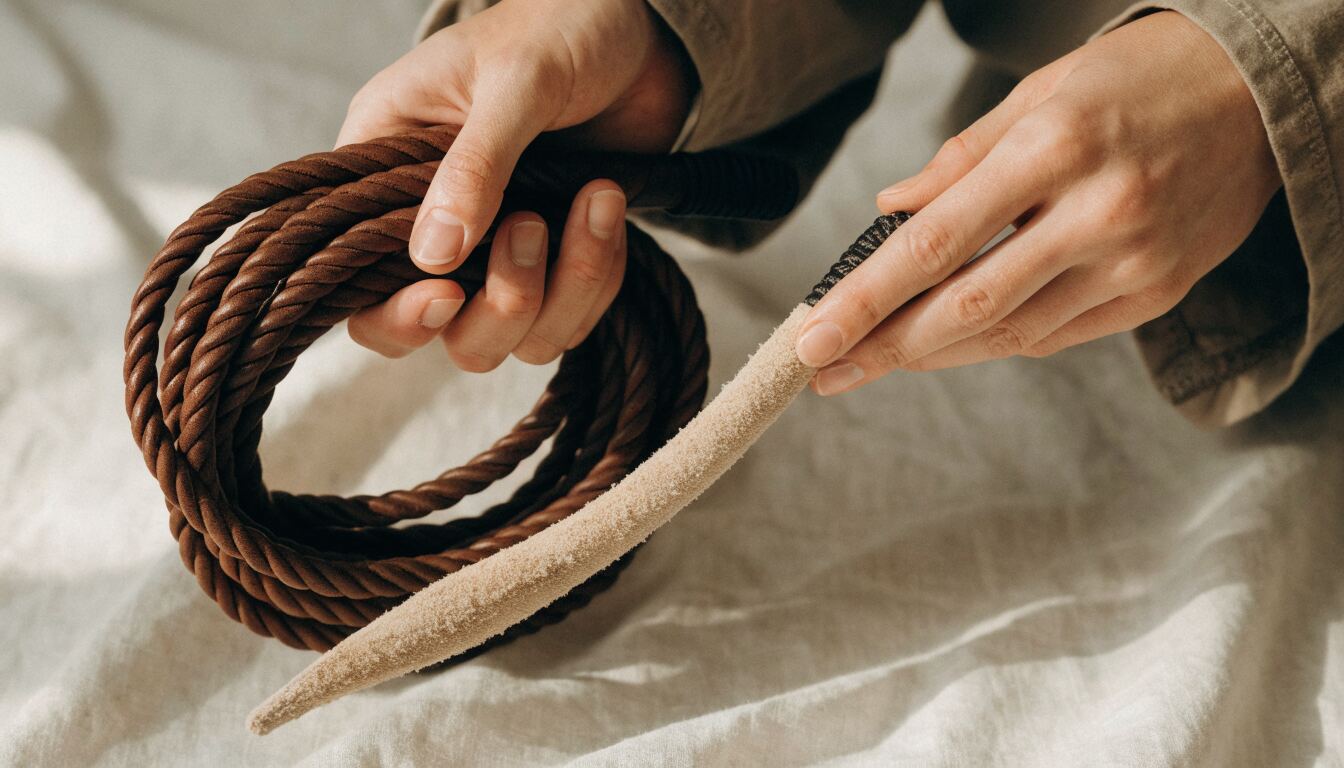
Rope offers a different texture than metal or leather, and many people find its flexibility and warmth appealing. For beginners, soft cotton or nylon rope is ideal—it’s gentle on the skin and easy to untie quickly if needed. Avoid rough materials like jute or hemp until you’ve gained more experience, as they can cause irritation. Always have safety shears within arm’s reach, and never leave a bound person unattended.
The simplest rope technique involves loose ties around the wrists or ankles, secured to bedposts, chair legs, or other sturdy furniture. The emphasis here is on the sensation of being held rather than true immobilization. Another approach uses rope to assist with positioning: a gentle wrap around the thighs to keep legs spread, or a chest harness that provides a snug, hugged feeling without restricting breathing. Some people enjoy the aesthetic of rope even without functional restraint—a neatly tied pattern across the torso can feel like wearable art and serve as a visual reminder of the dynamic.
Before you begin, discuss which body parts are off-limits and what sensations your partner is curious about. Practice your ties on your own leg or a pillow first to get comfortable with the motions. During the scene, watch for signs of numbness, tingling, or discoloration, and release immediately if any of these occur. Rope play rewards patience and communication, and even a few simple wraps can create a profound sense of connection.
The Spreader Bar: Exposure and Vulnerability
A spreader bar is a straight rod, often made of metal or wood, with attachment points at each end for cuffs or rope. Its purpose is straightforward: it holds the wearer’s legs apart at a fixed width, limiting their ability to close them or shift away from stimulation. This positioning creates a distinct feeling of exposure that many people find intensely arousing. It also grants the dominant partner easier access for teasing, touching, or light impact play.
When using a spreader bar, consider the surface your partner will be on. A bed or padded mat is gentler on the knees and hips than a hard floor. Start with a moderate width—wide enough to feel open but not so wide that it strains the inner thighs. You can attach the bar to ankle cuffs or wrap soft rope around the ankles and then to the bar’s ends. Once in place, experiment with different types of touch: featherlight strokes along the inner thighs, firmer pressure with your palms, or the rhythmic tap of a small paddle. The inability to close their legs often heightens every sensation.
Combining a spreader bar with other elements like a blindfold or timer can amplify the experience furthre. The bar itself doesn’t need to be expensive—many beginners start with a wooden dowel wrapped in foam or a commercially available adjustable model. As always, check in regularly and release the bar if your partner experiences any discomfort beyond the intended sensation. The goal is controlled vulnerability, not genuine distress.
Floggers: A Rhythmic Introduction to Impact
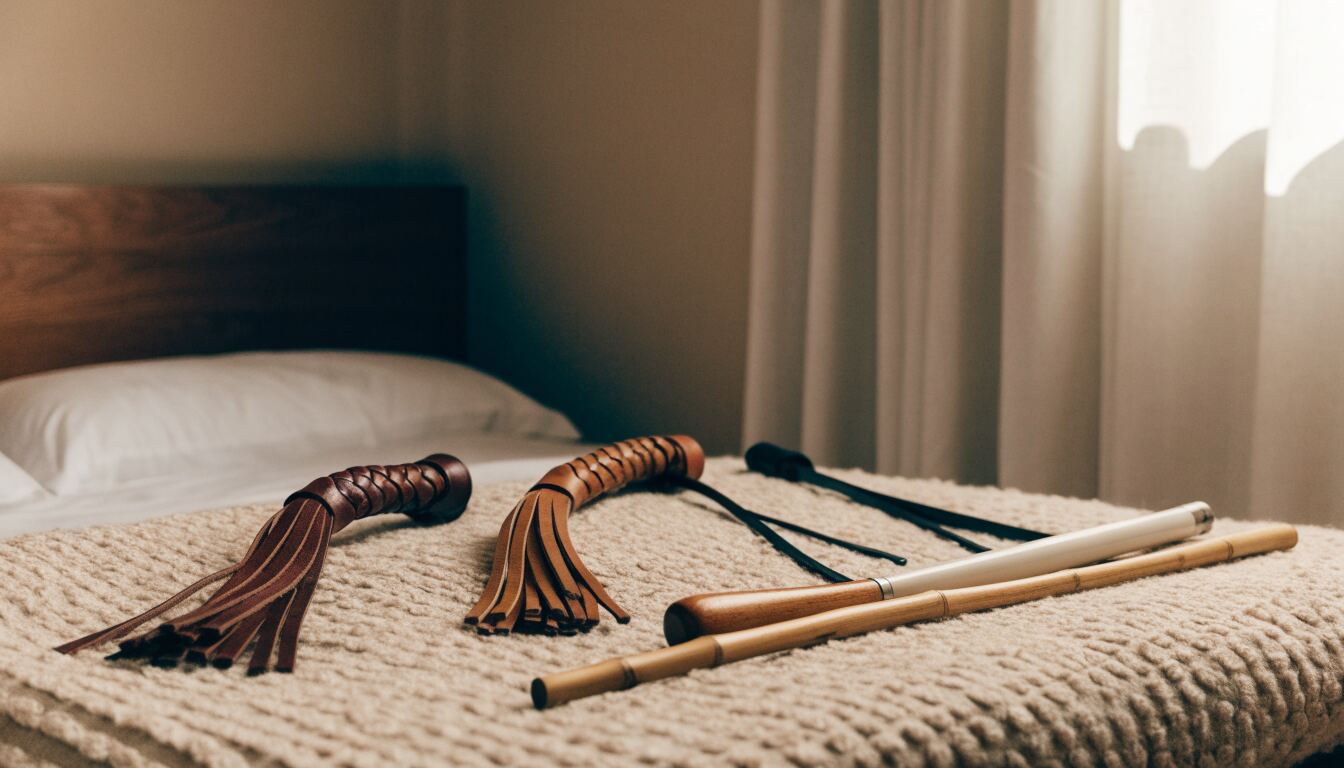
A flogger consists of a handle with multiple tails, or falls, attached to one end. When swung, the tails land across the skin with a sensation that can range from a light, tingly caress to a sharper sting, depending on the material and the force used. For those new to impact play, a flogger made of soft suede or garment leather is an excellent starting point—it tends to produce more thud than sting, making it forgiving while you learn technique.
Before using a flogger on your partner, practice your swing against a pillow or the back of a couch. You want to develop control over where the tails land and how much force you’re applying. Aim for fleshy areas like the buttocks, thighs, and upper back, steering clear of the lower back (where the kidneys sit), the neck, and any bony prominences. Begin with light, glancing strokes and gradually increase intensity based on verbal feedback or nonverbal cues like breathing and body tension.
Floggers also work beautifully for sensation play without significant impact. Dragging the tails slowly across the skin creates a shivery, ticklish feeling that can be surprisingly intense. You might alternate between soft drags and gentle flicks, keeping your partner guessing about what comes next. Some people enjoy the sound of the tails whistling through the air before they land, which adds an auditory layer to the anticipation. After a flogging session, take time for soothing aftercare—gentle hand strokes, a warm blanket, or quiet words of affirmation help the body and mind transition back to a grounded state.
Paddles: Focused Sensation and Rhythm
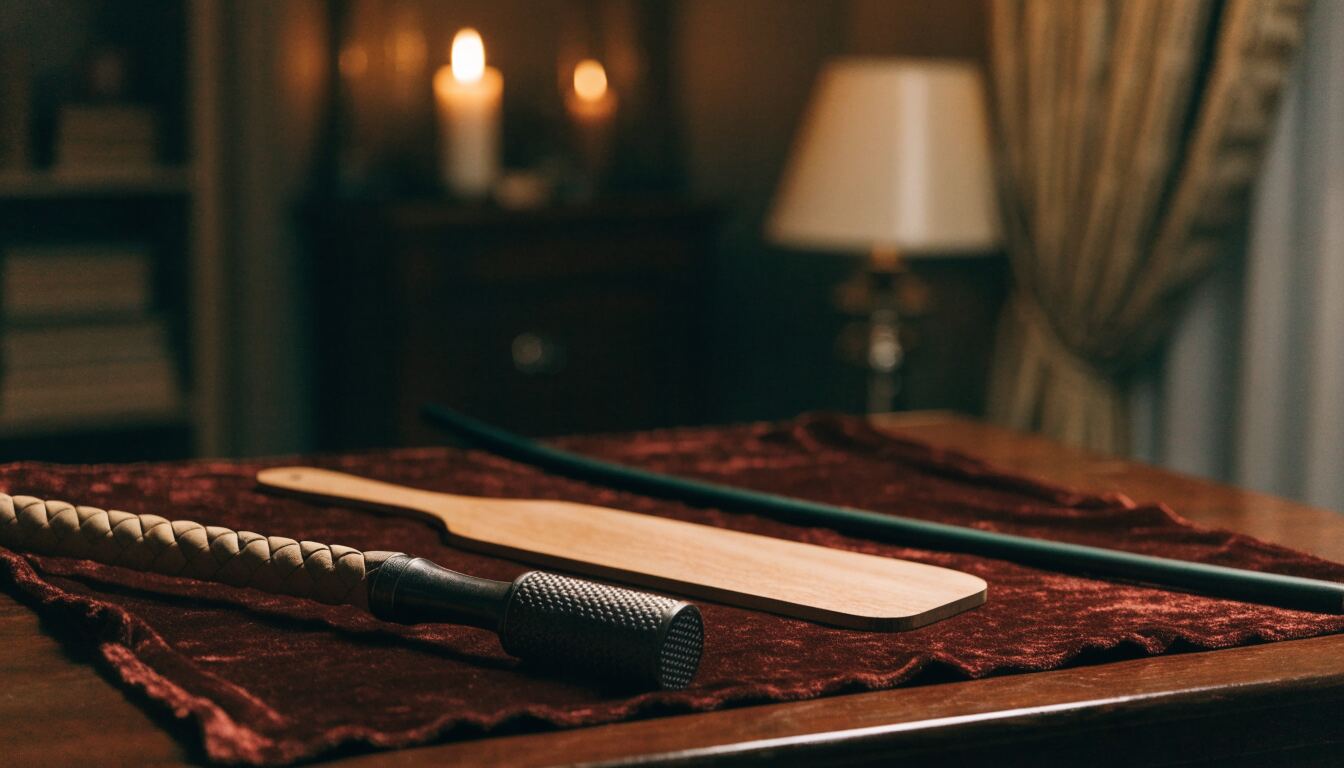
Paddles deliver a more concentated sensation than floggers, making them ideal for targeted play. A basic flat wooden paddle is a classic choice, offering a satisfying mix of thud and sting. Leather paddles tend to be quieter and thuddier, while silicone or acrylic options provide a sharper snap. Your choice of material will shape the experience, so it’s worth trying a few styles if you have the opportunity.
When starting out, position your partner comfortably—bent over a padded ottoman, across your lap, or on all fours on the bed. Begin with open-palmed pats to warm up the skin before introducing the paddle. Start lightly and establish a rhythm: maybe three quick taps followed by a pause, then two slower ones. This predictability can be hypnotic for the receiver, allowing them to sink into the sensation rather than bracing against surprises. Vary the speed and intensity to keep things interesting, and occassionally pause to run your hand over the warmed skin, mixing gentleness with the impact.
Communication during paddling is essential. Some people prefer a steady build-up, while others enjoy sudden shifts. Ask your partner to rate the intensity on a scale of one to ten, or use a simple color system (green for “more please,” yellow for “that’s enough,” red for “stop”). Pay attention to the skin’s appearance—a healthy pink flush is typical, but any signs of brusing or broken skin mean it’s time to stop or switch to a different activity. Paddling can be a deeply connecting practice when approached with attention and care, blending physical sensation with emotional trust.
Clothing and Accessories that Shift the Mood
What you wear—or what your partner wears—can profoundly influence the atmosphere of a scene. Certain items carry cultural associations with power, authority, or sensuality, and leaning into those associations can help both of you step more fully into your roles. The goal isn’t to achieve a perfect costume but to find pieces that make you feel confident and present.
High Heels as Symbols of Authority
High heels change more than your height; they alter your posture, your gait, and often your mindset. The distinctive sound of heels on a hard floor announces your presence before you enter a room, building anticipation. For many people, heels evoke images of command and elegance, making them a natural fit for power exchange scenarios.
Foot worship is a straightforward way to involve heels in a scene. Your partner kneels and focuses their attention on your shoes—admiring them, kissing the leather, perhaps carefully removing one with their teeth if you’ve agreed on that beforehand. You can guide their head with gentle pressure from your foot, reinforcing your control through small gestures. The hard sole of a heel also works for sensory play: a light tap on the palm or a slow trace down the spine creates an unusual sensation that stands apart from hand or implement touch.
Different heel styles set different tones. A stiletto suggests sharpness and precision, while a chunky block heel feels more grounded and authoritative. Boots that rise to the calf or thigh add another dimension, covering more skin and creating a striking visual. Whatever style you choose, comfort matters—if your feet hurt, it’s hard to stay present. Practice walking and standing in your chosen pair before the scene so you can move with ease. The confidence that comes from feeling good in your own body is often the most powerful accessory of all.
Weaving It All Together
The scenes described here are starting points, not rigid scripts. Feel free to mix and match: blindfold your partner and have them kneel by a chair while a timer counts down to an unknown event. Write a list of rules with a pen, then use a flogger for light sensation play as a reward for following them. The combinations are endless, and the best ones will emerge from your shared creativity.
Remember that exploration is a process, not a performance. Some evenings you might dive into multiple activities, while other times a single, well-executed idea feels complete. Pay attention to what energizes both of you and what falls flat, and adjust accordingly. The skills you build—clear communication, attunement to your partner’s responses, comfort with vulnerability—extend far beyond the bedroom. They strengthen the foundation of your relationship in everyday life, too.
Frequently Asked Questions
Do I need special equipment to start exploring femdom?
Not at all. Many satisfying scenes use items you already own: chairs, scarves, timers, pens, and paper. The most important ingredients are clear communication, mutual consent, and a willingness to experiment. Expensive gear can be fun to add later, but it’s never a requirement for meaningful play.
How do we make sure everything stays safe and comfortable?
Establish a safeword or signal before you begin—something easy to remember that means “stop immediately.” Check in frequently, especially when trying new sensations or positions. Watch for physical signs like numbness, tingling, or changes in skin color, and adjust or stop as needed. After the scene, spend time on aftercare: cuddling, talking, hydrating, or whatever helps both of you feel grounded and connected.
What if I feel awkward or unsure in the dominant role?
Feeling awkward is completely normal, especially when you’re starting out. Dominance is a skill that grows with practice. Begin with small, simple actions—giving a clear instruction, maintaining eye contact, using a firm but calm tone of voice. Over time, you’ll discover what feels authentic to you. Remember that your partner is likely just as nervous, and that vulnerability is part of the intimacy.
Can we combine multiple ideas from this guide in one evening?
Absolutely. Many of these suggestions complement each other beautifully. You might start with a blindfold and timer for anticipation building, then move to light restraint with handcuffs or rope, and finish with a flogger or paddle session. The key is to pace yourselves and stay attuned to each other’s energy levels. It’s better to do a few things with full presence than to rush through a long checklist.
How do we transition back to everyday life after a scene?
Aftercare is the bridge between the heightened space of play and ordinary reality. This can include physical comforts like a warm drink, a soft blanket, or gentle massage, as well as emotional check-ins: “How are you feeling? What did you enjoy? Is there anything you’d like to do diffrently next time?” Some couples enjoy a quiet activity together, like watching a familiar show or taking a shower. The ritual signals that the scene has ended and that you’re back in your usual dynamic, carrying the closeness you created with you.
Exploring New Dimensions of Control and Sensation
Venturing further into playful power dynamics, we uncover a range of scenes that blend visual impact, physical restraint, and sensory exploration. Each idea here builds on trust and communication, offering fresh ways to deepen your connection without needing a dungeon or elaborate setup. Let's dive into these creative approaches, which can be adapted to your comfort level and personal style.
Commanding Attention with Statement Footwear
Consider the transformative effect of tall boots that rise above the knee. Crafted from materials like polished leather or sleek synthetic finishes, they instantly alter your posture and presence. The elongated lines they create convey authority, while the subtle sounds of each step—whether a soft tap or a gentle swish—heighten the atmosphere. This isn't just about fashion; it's a tool for setting the scene.
You can invite your partner to appreciate these boots in a ritual of admiration, focusing on every contour from ankle to upper leg. This act alone reinforces the dynamic, as they kneel or lower themselves to you. Beyond static poses, use the boots to direct movement, perhaps with a light nudge from the toe or heel, guiding them where you want them. For a twist, drag the smooth surface lightly over their skin, exploring textures and temperatures to elicit unexpected reactions. The psychological boost for you is real—feeling taller and more centered feeds into the role naturally.
Physical Boundaries as Tools of Devotion
Introducing a restraint device that prevents arousal and release marks a deeper layer of control. Typically designed to encase intimate areas, this tool becomes a tangible symbol of your oversight. It channels your partner's energy and desire, making every sensation something you grant or withhold. This approach shifts the focus entirely onto your whims, whether used as a corrective measure or a game of prolonged anticipation.
Ways to weave this into your routine include setting time limits that stretch based on behavior. If they've stepped out of line, extend the duration and intersperse it with teasing remarks or actions that remind them of their state. Alternatively, frame it as a privilege: good conduct earns temporary freedom. The contrast between restriction and release can be intense, especially when you provoke desire in their presence while they remain confined. Always ensure comfort and safety, checking in regularly to maintain trust.
Subtle Insertions for Everyday Obedience
A simple insertable toy can quietly shift the balance of power, even during mundane tasks. Selecting the right size and shape is key—start modestly if you're both new to this, and progress gradually as confidence grows. Some prefer decorative options with gems or playful tails, while others opt for streamlined designs that stay discreet under clothing.
To integrate this, assign chores or simple movements while the toy is in place, turning routine actions into constant reminders of your authority. For those who enjoy a thrill, wearing it out in public spaces—discreetly and respectfully—adds an extra layer of submission. You might also build a training arc, slowly increasing the toy's size or incorporating physical activities like bending or stretching to deepen the experience. The focus remains on their awareness of you, even when you're not directly engaging.
The Art of Feather-Light Teasing
Ofen the gentlest tools yield the most potent reactions. A soft tickler made of feathers or similar wispy materials turns touch into a slow, tantalizing game. This is about mapping your partner's sensitivities—th e soles of feet, the curve of the neck, the inner thighs—and using the lightest contact to build a crescendo of sensation.
Begin with barely-there strokes, drifting over skin and watching for shivers or sharp intakes of breath. Alternate this with slightly firmer pressure, or flip the tool to use the spine for a different texture. Adding a blindfold or gentle bindings can amplify the effect, stripping away other senses and leaving them hyper-aware of your touch. Encourage them to focus on their breathing; as the teasing continues, their rhythm will likely shift, betraying their state of arousal without a word.
Wrapping Up Your Journey into New Dynamics
These scenes are just starting points—a collection of possibilities to spark your imagination. The heart of any exploration lies in clear dialogue with your partner. Discuss what excites you both, establish limits, and agree on a safe word that pauses or stops everything if needed. Fancy accessories or dedicated spaces aren't necessary; often, the most memorable moments come from a well-timed command or a quiet act of service. Embrace experimentation, laugh through the awkward bits, and let your shared adventure grow organically.
Common Questions About Starting Out
What should I prioritize when trying new power dynamics?
Open dialogue and mutual agreement are essential. Before any scene, talk through desires, boundaries, and the safe word you'll use. This foundation ensures everyone feels secure and respected throughout.
Do I need specialized equipment to begin?
Absolutely not. Everyday items—a sturdy chair, a timer, or simply your tone of voice—can create a compelling dynamic. While gear can add variety later, the core of the experience is the connection you build together.
How do I handle feeling self-conscious or uncertain during a scene?
It's natural to feel a bit out of your depth at first. Lean on your safe word if you need to stop or reset, and don't hesitate to pause and check in with your partner. A quick moment to realign can keep the experience positive and enjoyable for both of you.
How can I tell if my partner is truly engaging?
Observe their responses: Are they following cues with enthusiasm? Do they seem present and responsive? Honest feedback is your best guide, so ask them directly about their feelings during or after the scene.
What is aftercare and why does it matter?
Aftercare refers to the actions you take post-scene to soothe and reconnect. This might involve physical comfort like holding each other, verbal reassurance, or a calm discussion of what transpired. It helps both of you transition back to your usual rhythm and affirms your care for one another.
Can these dynamics focus solely on authority without physical intimacy?
Deinitely. Power exchange can revolve around obedience, acts of service, or mental control, with no sexual component at all. The scope is defined by what you and your partner decide together, making it entirely customizable.