Beginning Your Exploration of Impact Sensations
Venturing into the realm of impact play can open up a world of thrilling physical dialogue between you and a partner. The idea of introducing tools like floggers and whips might stir a mix of curiosity and hesitation, especially when faced with the sheer variety available. This piece aims to demystify those options, guiding you through the textures, weights, and techniques so you can make choices that align with your shared desires. We'll journey from the broad, enveloping strokes of a soft flogger to the precise, biting kiss of a thin whip, always keeping mutual enjoyment and well-being at the forefront.
Decoding the Core Differences Between Floggers and Whips
When first surveying the landscape of impact tools, the distinction between a flogger and a whip often blurs. Yet, they are crafted to deliver fundamentally different experiences. Grasping this contrast is the bedrock of informed selection. A flogger typically consists of a handle attached to numerous strands, spreading its energy across a wider skin surface. A whip, conversely, usually features a single, longer lash that concentrates its force into a much smaller point. This primary design element dictates everything from the sound they make to the lingering echo of the sensation.
The Adaptive Comfort of Floggers
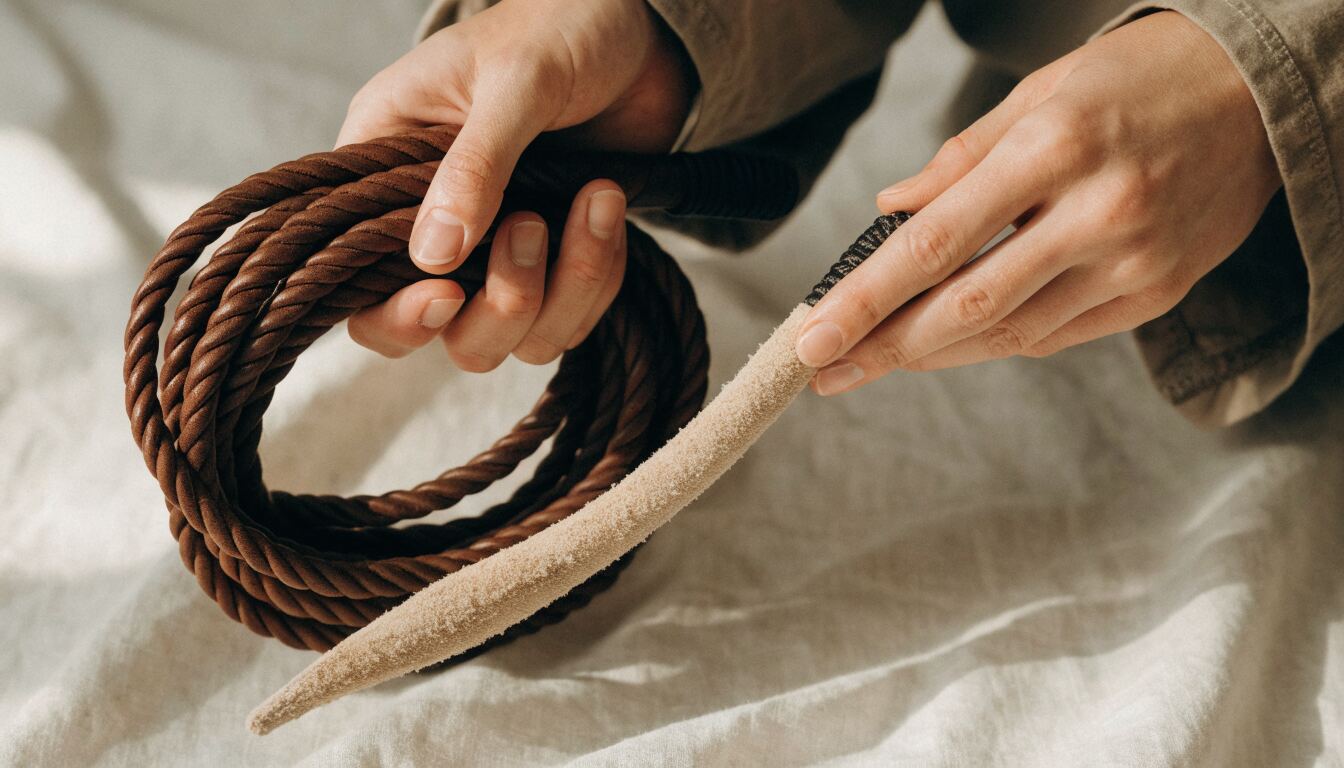
Picture a flogger as a cascade of individual tails, each one contributing to a collective impression. Because the contact is distributed, the feeling tends to be less piercing and more of a broad, enveloping presence. The experience can be tailored dramatically by the maker; a flogger built from lush, unlined suede might feel like a warm, heavy blanket being rhythmically draped across the back, while one made from finer, finished leather strips can introduce a subtle, widespread prickliness. This spectrum makes floggers exceptionally versatile instruments. You can begin a session with languid, full strokes that warm the skin and build blood flow, then gradually shift to quicker, snap-like flicks for a crescendo of sensation. For those new to this kind of play, the less targeted nature of a flogger often provides a less daunting entry point, allowing the receiver to acclimate to the rhythm and pressure without the shock of a single, intense point of contact.
The Focused Intensity of Whips
Shift your attention now to the whip, an implement defined by its economy of material and precision of effect. With a solitary tail or just a few slender lashes, the impact is funneled into a narrow zone. This creates a signature sharp, effervescent sting that can feel startlingly direct. It's a tool that speaks in exclamation points rather than flowing sentences. The allure for many lies in this very directness; it cuts through other sensations and commands immediate focus. Mastering a whip, particularly a single-tail variant, is a craft that demands patience and spatial awareness. The thrower must develop a keen sense of distance and arc to land the tip exactly where intended, avoiding any wrap-around that could bruise unintended tissue. This learning curve is part of the appeal for some, transforming the act into a meditative practice of control and connection.
Aligning Tools with Sensory Goals
So, how do you navigate this choice? The compass should be the desired sensory outcome. Are you aiming to cultivate a diffuse, all-over warmth that builds slowly, or a sharp, punctuating jolt that heightens alertness? Floggers are the maestros of the former, swathing large muscle groups in a consistent, often thuddy pressure. Whips are the virtuosos of the latter, painting acute, stinging notes on the canvas of the skin. The material composition further refines these profiles. A thick, oiled leather flogger lands with a soft, deep thump, whereas a silicone one might glide with a slicker, more vibrant sting. A whip crafted from supple kangaroo hide will have a fast, biting quality, distinct from the heavier, more solid thump of a bullhide version. The journey is one of co-discovery, finding the instruments that resonate with both the giver's style and the receiver's cravings.
To crystallize the general sensory profiles:
- Floggers: Characterized by a dispersed, often thuddy impact or a broad, all-over sting. Ideal for prolonged warm-up sequences and covering expansive areas like the back or buttocks.
- Whips: Known for a sharp, stinging, and highly localized sensation. Best deployed for precise, targeted moments of intensity.
Personalizing the Experience: Tools, Bodies, and Backgrounds
Selecting a flogger or whip is never a purely technical exercise; it's an intimate decision that should be filtered through the unique landscape of the person who will be receiving the sensation. An implement that elicits moans of pleasure from one individual might be met with indifference or genuine discomfort by another. The key lies in treating each pairing as a new conversation, tuning into physical and emotional cues to find a harmonious frequency.
Honoring Physical Diversity
Human bodies are wonderfully varied, and this variation directly influences the perception of impact. Skin sensitivity, subcutaneous fat, and muscle density all act as filters for the energy delivered by a tool. A person with a robust, muscular frame may absorb a heavy thud with ease, feeling it as a deep, satisfying pressure. That same blow on someone with less muscle mass might feel jarring against the bone. Similarly, areas with thinner skin, like the inner thighs or the underside of the arms, will register a sting with far greater intensity than the well-padded glutes. Smart players learn to map the body, using broader, softer tools on more delicate zones and reserving stingier, more focused implements for the fleshier, more resilient areas. This often means a collection of different tools is not a luxury, but a practical necessity for catering to a single partner's full range of responsive zones.
Calibrating for a Partner's Journey
A person's history with impact play is a crucial variable. Welcoming a newcomer into this world requires a gentle, patient approach. Their nervous system hasn't yet learned to interpret and contextualize these novel sensations, and an overly intense initiation can be overwhelming or aversive. Starting with a lightweight, soft leather flogger and using broad, flat strokes on safe zones allows them to acclimate. As trust and understanding deepen, you can gradually introduce new textures, weights, and sting profiles. A seasoned enthusiast, on the other hand, might arrive with a refined palette, capable of articulating specific cravings—perhaps for the deep, resonant thud of a heavy buffalo hide flogger or the electric snap of a well-thrown signal whip. They might be seeking to explore endurance, complex rhythmic patterns, or the interplay between sting and thud. Let their experience and stated desires be your guide, not assumptions based on past partners.
The Art of Articulating Sensation
Verbal exchange is the scaffolding upon which all satisfying impact play is built. It begins long before any tool is lifted and continues throughout the scene. Pre-scene discussions should move beyond simple yes-or-no questions. Explore the nuances: Does your partner crave a sensation that feels like a deep-tissue massage (thud) or a snapping rubber band (sting)? Do they want the intensity to build in a slow, linear fashion, or do they prefer unpredictable peaks and valleys? During the scene, a simple numeric scale can be invaluable. "On a scale of one to ten, where four is a warm-up and seven is intensely pleasurable, where are you right now?" This creates a clear, low-pressure feedback loop. Remember, the goal is to co-create an experience, and that requires both parties to be fluent in the language of their own and each other's pleasure.
Here’s a simple framework for matching experience levels with initial tool choices:
- Explorer (Newcomer): Soft, wide-tailed leather or faux-fur floggers. Focus on broad, rhythmic strokes over the glutes and upper back. Sensation goal: warm thud.
- Enthusiast (Some Experience): Medium-weight leather or silicone floggers with varied tail ends. Can begin exploring thinner whips and targeted sting on fleshy areas. Sensation goal: balanced thud and sting.
- Aficionado (Experienced): Heavy, dense floggers, single-tail whips, and implements with stiff or textured tails. Exploration of endurance, precise targeting, and intense sensation combinations.
A guiding principle: you can always incrementally increase force or switch to a more intense tool, but you cannot retract a blow that was too hard. Err on the side of gentleness, especially in new dynamics.
Understanding the Craft of Floggers
The world of floggers is a rich tapestry woven from diverse materials and thoughtful engineering. Far from being a simple bundle of strands, a well-made flogger is a study in balance, texture, and weight distribution. Each element, from the handle's ergonomics to the tails' finish, plays a role in shaping the final sensation.
A Deep Dive into Materials
The substance from which the tails are crafted is the single greatest determinant of a flogger's personality. Leather, in its myriad forms, remains the classic standard, offering an unparalleled range. A flogger made from soft, split cowhide can be almost cloud-like, delivering a gentle, pillowy thud perfect for warm-ups. In contrast, a flogger of tightly braided latigo leather is stiff and dense, producing a sharp, heavy impact that can feel quite intense. Moving beyond leather, silicone has gained popularity for its unique properties. It is non-porous, easy to clean, and has a characteristic slick, almost cool touch upon landing. A silicone flogger often delivers a more pronounced sting than a leather one of similar weight, as the material has less natural give. For those seeking a vegan or high-durability option, materials like Biothane offer a leather-like heft and a clean, thuddy impact, with the added benefits of being waterproof and extremely sturdy. Nylon and Kevlar floggers represent the far end of the sting spectrum, their stiff, often scratchy fibers creating a sharp, biting sensation that is not for the faint of heart.
A breakdown of common materials and their typical sensations:
- Leather (Suede, Calfskin): Soft, warm, diffused thud. Excellent for beginners and warm-ups.
- Leather (Latigo, Cowhide): Firmer, can range from a moderate thud to a sharp sting depending on thickness and edge finish.
- Silicone: Slick feel, often delivers a vibrant, stinging impact. Easy to sanitize.
- Biothane: Durable, water-resistant, provides a consistent, solid thud. Good for scenes involving liquids.
- Nylon/Kevlar: Very stiff, produces an intense, scratchy, or sharp sting. For experienced sensation seekers.
The Physics of Balance and Swing
A flogger's feel in the hand is just as critical as its feel on the skin. The length of the tails and the tool's overall balance dictate how it moves through the air and how much effort is required to control it. A good rule of thumb for tail length is that it should roughly match the distance from your shoulder to your fingertips. This proportion allows for a natural, full-arm swing without the tails dragging on the ground or becoming unwieldy. Balance is about finding the tool's center of gravity. Ideally, this point should be located near the transition from the handle to the tails. You can test this by balancing the flogger on two extended fingers; it should teeter near the base of the tails. A well-balanced flogger feels like a natural extension of the arm, making it easier to maintain rhythm and accuracy over a long session without fatiguing. A poorly balanced one feels clumsy and requires constant correction.
How Design Shapes the Impact
Beyond the basic materials and balance, subtle design choices create distinct sensations. The handle's thickness and shape affect the thrower's grip and comfort; a contoured, thicker handle can reduce hand strain during extended play. Some floggers feature a weighted butt at the end of the handle, which shifts the balance point backward and can lend a pendulum-like momentum to the swing, making it feel heavier than it is. The shape and finish of the tails are perhaps the most nuanced factor. Wide, flat tails present more surface area, dispersing the impact into a broad, thuddy sensation. Thin, round, or braided tails cut through the air more quickly and concentrate the force into a sharper, more stinging blow. Some artisans add knots, beads, or small leather poppers to the ends of the tails. These features can create a more punctuated, biting sensation, adding a layer of texture to the overall feeling. The journey of discovery involves experimenting with these variables to curate a collection that speaks to your unique dynamic.
Untangling the World of Whips
The term "whip" encompasses a broad category of implements, but they are generally united by a common thread: a longer reach and a more concentrated impact than a flogger. They are tools of precision and intensity, and navigating their varieties requires an understanding of how weight, length, and construction translate into physical sensation. It is widely acknowledged that single-tail whips, in particular, demand dedicated practice to master their safe and effective use.
The Electric Kiss of a Light Whip
Whips crafted with thin, fast tails are the purveyors of a sharp, almost electrical sting. The sensation is quick, bright, and fleeting, often leaving a warm, tingling afterglow on the skin's surface. These tools are exceptional for psychological play; the mere sound of a thin whip hissing through the air can build anticipation and elicit a powerful response. They allow for surgical precision, enabling the top to deliver a sharp reminder to a very specific spot. This makes them ideal for teasing, for creating patterns of sensation, or for partners who thrive on that intense, surface-level bite.
The Resonant Thump of a Heavy Whip
On the opposite end of the spectrum lie the heavier whips. These might be constructed from thick bullhide, have a weighted core, or simply be wider in diameter. They trade the sharp sting for a deep, percussive thud that resonates through the body. The feeling is less of a surface snap and more of a solid, pushing impact, often described as a profound "thwack." This sensation can feel grounding and powerful, engaging the deeper tissues and muscles. It's a different kind of intensity, one that builds a deeper, more somatic experience rather than a sharp, surface-level one.
Comparing Single and Multi-Tail Designs
The number of tails is a fundamental design choice that changes a whip's behavior. A single-tail whip, like a signal or snake whip, is a highly focused instrument. Its solitary lash allows for extreme accuracy, but it also requires impeccable control. The thrower must be constantly aware of the whip's plane of motion to ensure the cracker lands precisely and doesn't wrap around a curve of the body, which can cause unintended cuts or bruising. A multi-tail whip, sometimes called a cat-o'-nine-tails or a flogger-whip hybrid, is more forgiving. The multiple tails spread the energy, making the impact less precise but also less prone to wrapping. While they still carry a significant sting, the presence of several tails often introduces an element of thud, as the blows land in a cluster. For someone curious about whips but hesitant about the steep learning curve of a single tail, a well-made multi-tail whip can be a fantastic bridge.
When considering whips for a partner, the conversation should center on the quality of the sensation. Do they fantasize about a quick, dancing sting that keeps them on edge, or a deep, thudding blow that feels like a forceful massage? The material, weight, and number of tails are the levers you adjust to achieve that goal.
A quick reference for whip sensations:
- Thin, Light Tails: A fast, sharp, and precise sting. Excellent for building mental anticipation and light marking.
- Thick, Heavy Tails: A deep, resonant thud that provides a solid, percussive impact.
- Single Tail Whip: Demands advanced skill, delivers an unparalleled, highly focused sting.
- Multi-Tail Whip: More user-friendly, offers a blend of sting and thud with a lower risk of wrapping.
Starting Your Practice: A Foundation for Safe Discovery
Taking your first steps into impact play should feel like an exciting collaboration, not a daunting challenge. The sheer number of options can be dizzying, but the core principles are simple: prioritize clear communication, start with forgiving tools, and build intensity at a pace that feels good for everyone involved. Think of this initial phase as laying a foundation of trust and physical understanding upon which you can later build more elaborate scenes.
Why Floggers Are a Perfect First Choice
For those new to this form of expression, a soft flogger is often the ideal companion. Its design inherently disperses force, turning what could be a harsh, singular impact into a broad, welcoming wave of sensation. Imagine the difference between being poked with a single finger and being patted with a dozen soft tassels. This diffused quality makes it much easier to gauge a partner's tolerance and create a pleasurable experience without accidentally causing a sharp, shocking pain. The versatility of a flogger also shines here; you can use just the tips of the tails for a light, fluttering sensation, or engage the full length for a more enveloping, thuddy stroke. This allows a beginner to experiment with a wide range of feelings using a single, non-intimidating tool.
Guiding Principles for Initial Exploration
When you are both ready to begin, the "where" is just as important as the "what." Focus your attention on the body's natural padding. The glutes and the outer thighs are the most common and safest starting points. These areas have generous muscle and fat layers that absorb and diffuse impact beautifully, minimizing the risk of hitting bone or causing injury to internal organs. It is crucial to establish no-go zones from the very start: the lower back (kidney area), the neck, the head, and any joints are strictly off-limits. Begin with the lightest possible touch—strokes so gentle they might be mistaken for a playful caress. The goal is to awaken the skin and establish a rhythm. Only when your partner expresses a clear desire for more should you consider incrementally dialing up the pressure. This slow, responsive build-up is the essence of consensual and satisfying play.
A guide to safe zones for first-time scenes:
- Glutes: The premier starting zone, offering maximum cushioning and a large, forgiving canvas.
- Outer Thighs: Another well-padded area that responds well to boht thuddy and stinging sensations.
- Uppper Back (over shoulder blades): Can be safe for broad, soft floggers, but avoid the spine and lower ribs.
Elevating Your Play: Advanced Concepts to Explore
Once you and your partner have spent time building a foundation of trust and basic technique, a natural curiosity to explore more intense or nuanced sensations often emerges. This is not simply a matter of swinging harder. Advanced play is a sophisticated dance of timing, tool selection, and deep attunement to your partner's physical and emotional state. It's about orchestrating a symphony of feelings, using the full orchestra of your implement collection to create a compelx and satisfying experience.
The Landscape of Intense Sensations
Moving into deeper water means developing a refined vocabulary for the different types of intense sensation. It's about understanding that a "hard" scene isn't a monolith, but can be composed of contrasting elements. A sequeence might start with the deep, resonant thud of a heavy buffalo flogger to create a feeling of being grounded and compressed. This could be followed by the quick, electric snap of a thin braided leather flogger, which cuts through the deeper ache with a bright, attention-grabbing sting. The interplay between these two—the dull and the sharp—creates a dynamic and unpredictable landscape that can be incredibly thrilling. The key is to move beyond a single sensation and start layering them. This requires both partners to be highly communicative, with the receiver able to articulate, "That deep sensation is perfect, but the sharp one is nearing my limit."
- Sharp Sting: Best created with tools that have a small contact point, like a single-tail whip, a thin, braided flogger, or a dragon tail whip. The sensation is fast, bright, and surface-level.
- Deep Thud: Produced by heavy, dense implements with many tails, like a thick leather flogger or a weighted padded club. The sensation is felt internally, like a deep-tissue vibration.
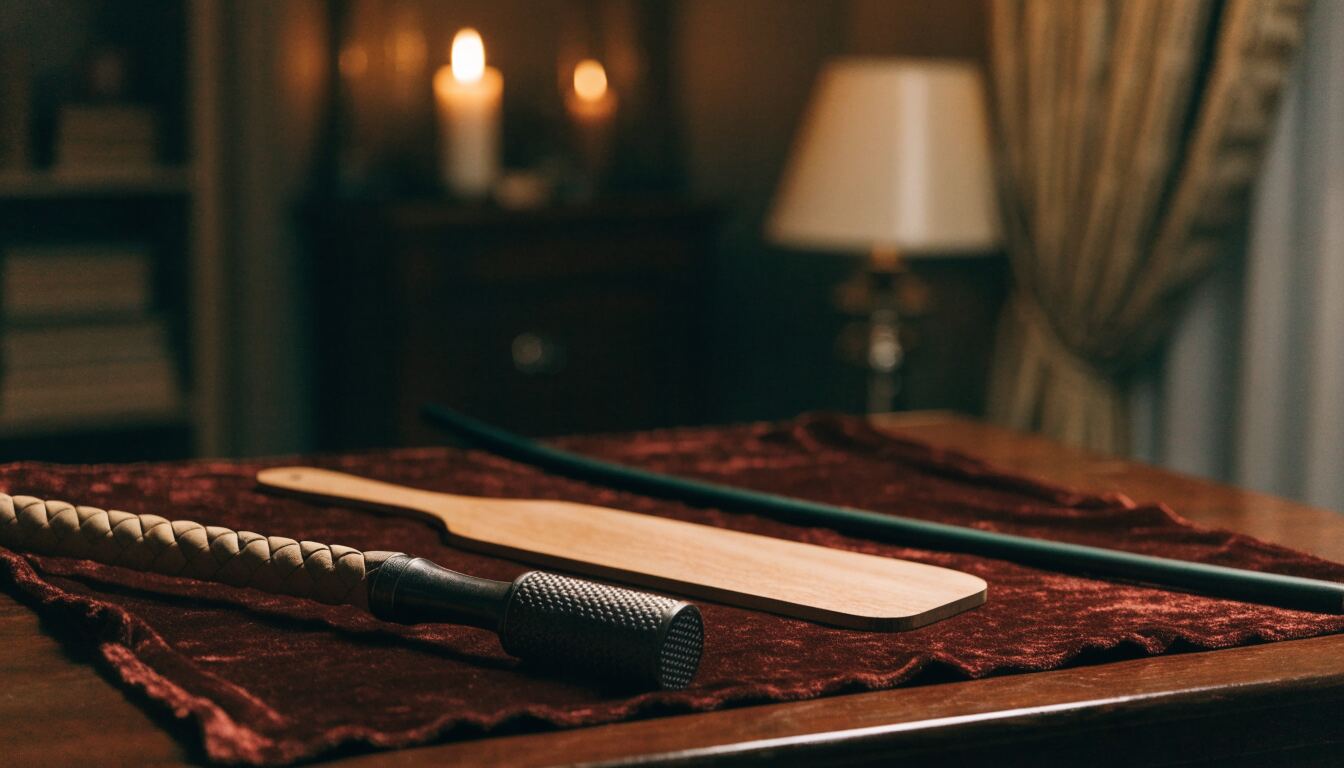
- Broad Impact: Paddles, slappers, and wide-tailed floggers create a sensation that spreads out, feeling like a solid, planar force. The material dictates whether it leans more toward sting (wood, stiff leather) or thud (paded leather, firm rubber).
Cultivating Endurance and Technique
Longer, more complex scenes require stamina from both participants. For the top, this means developing efficient body mechanics to avoid fatigue. Using a full-arm swing that originates from the shoulder, rather than just the wrist or elbow, generates power without strain. Stance and breathing are also critical; a grounded, relaxed posture allows for better control and flow. For the bottom, endurance is built over time. It's about learning to relax into the sensation, to breathe through the intensity, and to understand their own body's signals. Pacing is everything. A scene might involve waves of intensity, where periods of heavy impact are interspersed with gentler, more soothing strokes or even just the soft drag of leather across the skin. This ebb and flow allows the nervous system to process and integrate the sensations, making the peaks more sustainable and often more euphoric.
Introducing Stiffer Implements
Tools like canes, acrylic paddles, or thin, unyielding whips represent a significant step up in intensity and require a higher level of skill and awareness. Their stiffness means they have zero give upon impact, translating all the force of the swing directly into a very focused, often sharp, sensation. The margin for error is smaller. Before incorporating these, both partners should have a solid, intuitive understanding of their dynamic and limits. The conversation should be explicit: "This cane will create a very sharp, focused line of sensation. It will likely leave a temporary mark. Is that something you are open to experiencing?" When you begin, use only a fraction of the tool's potential force—a gentle tap with a cane can be surprisingly intense. The target area must be carefully chosen, sticking strictly to the meatiest part of the buttocks and thighs, well away from the tailbone, hip bones, and the back of the knees.
Making thoughtful choices about advanced impact toys is a continuous process of checking in and learning. Every new implement should be treated with respect and introduced slowly, allowing both partners to discover its unique voice and how it fits into their shared symphony of sensation.
Fostering Security and Agreement in Sensation Play
When venturing into the realm of floggers, whips, and other impact instruments, the focus should expand beyond the physical objects to the emotional and psychological landscape shared by those involved. View this as a collaborative map-making exercise, where both individuals chart the terrain of comfort, curiosity, and caution together. The goal is a journey where everyone feels anchored and affirmed.
Why Ongoing Dialogue Matters
Consider conversation the compass for any exploration. It must happen before the first touch, during the experience itself, and long after the scene concludes. Surprising a partner with an unexpected strike, even in a consensual context, can jolt the nervous system in ways that breed distress rather than delight. A steady stream of verbal and non-verbal exchange ensures that what unfolds is a shared creation, not a one-sided act.
- Clarify the desired texture: Is the goal a feathery tickle, a broad thuddy pressure, or a crisp, biting sting? Pin down the exact flavor of sensation your partner craves.
- Introduce the equipment: Before using any item, describe its material, weight, and likely effect. Agree on which tools are welcome and which are to remain unused.
- Maintain a continuous check-in rhythm: Weave questions like “How does this intensity sit with you?” or “Do you need a pause?” into the action. A simple thumbs-up or nod can also serve as a check-point.
Constructing Limits and Stop Signals
Boundaries act as the sturdy fence that keeps the exploration safe. They are firm, jointly agreed-upon borders that must never be breached. This includes off-limit body zones—the kidney area, spine, neck, and joints are particularly vulnerable to harm—as well as a ceiling on force. Safe signals function as the emergency brake. These pre-arranged words or gestures, when activated, trigger an immediate, unquestioning halt to all activity. Both people must honor this system completely.
A practical signal framework could be:
- Go signal: “All is flowing wonderfully, I’m ready for more.” This might be a word like “green” or a specific hum.
- Slow signal: “Ease back, I’m nearing a threshold or need a brief break.” A word like “amber” or a raised open hand works here.
- Halt signal: “Everything stops, right this instant.” A word like “red” or a dropped object signals a complete and final pause.
Test these signals in a low-stakes moment to ensure they are instinctively understood. The power to stop the play at any point is a cornerstone of genuine trust.
Nurturing Emotional Recovery Through Aftercare
Once the crescendo of sensation subsides, a gentle descent back to everyday equilibrium is essential. This recovery phase, often called aftercare, addresses more than just physical comfort; it tends to the spirit. The rush of chemicals and emotions stirred up during intense play needs a soft landing pad. This process might look like sharing a warm blanket, sipping water together, verbalizing what was felt, or simply existing in a quiet, affectionate space without words. It serves to metabolize the experience and reaffirm the caring bond that underlies the adventure. Think of it as the essential cooldown that transforms a peak moment into a lasting, positive memory.
Practical Steps for a Confident Beginning
Integrating impact tools into your intimate life is best approached as a gradual, curious experiment. There is no rush to master complex techniques; the initial chapters are about discovery and attunement.
Starting with a Gentle Approach
Begin your collection with a soft, forgiving flogger. Look for tails made of supple suede, soft leather, or even thick yarn. These materials disperse the impact over a wide surface, delivering a pleasant thud rather than a harsh sting. Practice your aim on a pillow or the back of a chair to build muscle memory before involving a partner. When you do engage, stick to the well-padded areas like the buttocks or upper back, avoiding bony protrusions and organs. Let the rhythm be slow and responsive to feedback.
Matching Tools to Desired Feelings
The character of a tool dictates the story it tells on the skin. A flogger with broad, heavy tails creates a deep, rumbling massage-like sensation. One with thin, knotted leather falls introduces a more focused, prickly note. Whips, which generally concentrate force into a small tip, produce a very sharp, localized sting. The material is equally influential: silicone can feel slick and snappy, while braided rope offers a scratchy texture. Spend time handling different implements in a shop or among trusted friends to sense their weight and balance before making a choice.
Bringing It All Together
The journey with floggers and whips is far richer than a simple exchange of force. It is a dialogue written in sensation, a dance where power, vulnerability, and trust intertwine. The tools themselves are merely extensions of intention. By prioritizing clear communication, unshakeable respect for boundaries, and tender aftercare, you transform a physical act into a profound connection. Begin with curiosity, proceed with kindness, and let the mutual exploration of feeling be the guiding star. The true art lies not in the swing but in the shared space of safety and discovery you create.
Common Curiosities
How do a flogger and a whip fundamentally differ?
A flogger features multiple tails branching from a single grip, designed to spread its touch across a broader patch of skin, often resulting in a muffled, thuddy impact. In contrast, a whip typically has a single strand or a few slender lashes that channel energy into a tiny spot, producing a brief, piercing sting.
Is this form of play solely centered on discomfort?
Absolutely not. While some participants relish the sharp or heavy sensations, many are drawn to the array of other elements: the rhythm of the strokes, the psychological dance of dominance and surrender, or the flood of endorphins that can follow. It’s about sampling a spectrum of tactile and emotional experiences, with pain being merely one possible note in the symphony.
What is the wisest method for newcomers to begin?
Start with the most forgiving implements. A soft, multi-tail flogger in a gentle material like suede is ideal. Aim for the meatier, less nerve-dense zones like the buttocks and thighs. Crucially, co-author every step with your partner through detailed pre-play talks and agree on a clear stop signal before anything begins.
How can I select the right implement for my tastes?
First, define the sensation you’re chasing. A widespread, rumbly feeling calls for a heavy, broad flogger. A sharp, quick bite points toward a thinner, more condensed tool. The substance—be it plush leather, smooth silicone, or nubby rubber—dramatically alters the skin’s response. Whenever possible, handle the tool beforehand to gauge its heft and flex, or seek insights from knowledgeable community members.
Which body regions are considered safer for impact?
Well-muscled, fatty areas with underlying padding and fewer superficial bones or organs are the standard safe terrain. This includes the buttocks, the backs of the thighs, and the meaty portion of the upper back. Never target the spine, kidneys, neck, face, or any joint. A personal map of each partner’s specific yes, no, and maybe zones should be drawn before any activity.
What makes communication so non-negotiable in this context?
Because the physical input can swing from a whisper-soft tease to an intense sensory flood. Pre-conversation aligns everyone’s expectations and hard limits. In-the-moment check-ins serve as a real-time gauge of comfort and enjoyment. And the safe signal provides an unbreachable escape hatch, ensuring that the experience remains a controlled collaboration, never a runaway train.