Beginning Your Journey into Impact Sensations
If you're curious about the realm of erotic impact, you might be wondering what makes it so captivating for so many people. At its heart lies a rich tapestry of physical feelings, and grasping the core distinction between a deep, resonant 'thud' and a sharp, lively 'sting' is your essential starting point. This guide unpacks these contrasting sensation styles, detailing their unique qualities, the implements that produce them, and the thoughtful practices for enjoying them safely. We'll delve into the practical details, empowering you to identify your own preferences and pursue them with confidence.
Unpacking the Core Sensations: Thud and Sting
The Soothing Weight of a Thuddy Impact
In discussions about impact play, two primary categories of feeling consistently emerge: thuddy and stingy. A thuddy sensation centers on a profound, weighted quality that seems to travel inward, reaching the muscles beneath the skin. Rather than a fleeting, piercing pain, it delivers a satisfying, almost anchoring pressure that can foster a heightened sense of being in the moment. Visualize a solid, deliberate knock instead of a swift flick. This form of impact often carries a paradoxical blend of comfort and intensity, leaving behind a lingering, pleasant soreness that endures well after the contact.
Typical experience: Comparable to a dense quilt settling over you, the firm pressure of a deep tissue massage, or the blunt force of a controlled punch.
Physical effect: The energy penetrates deep into the body, generating a reverberating, internal echo.
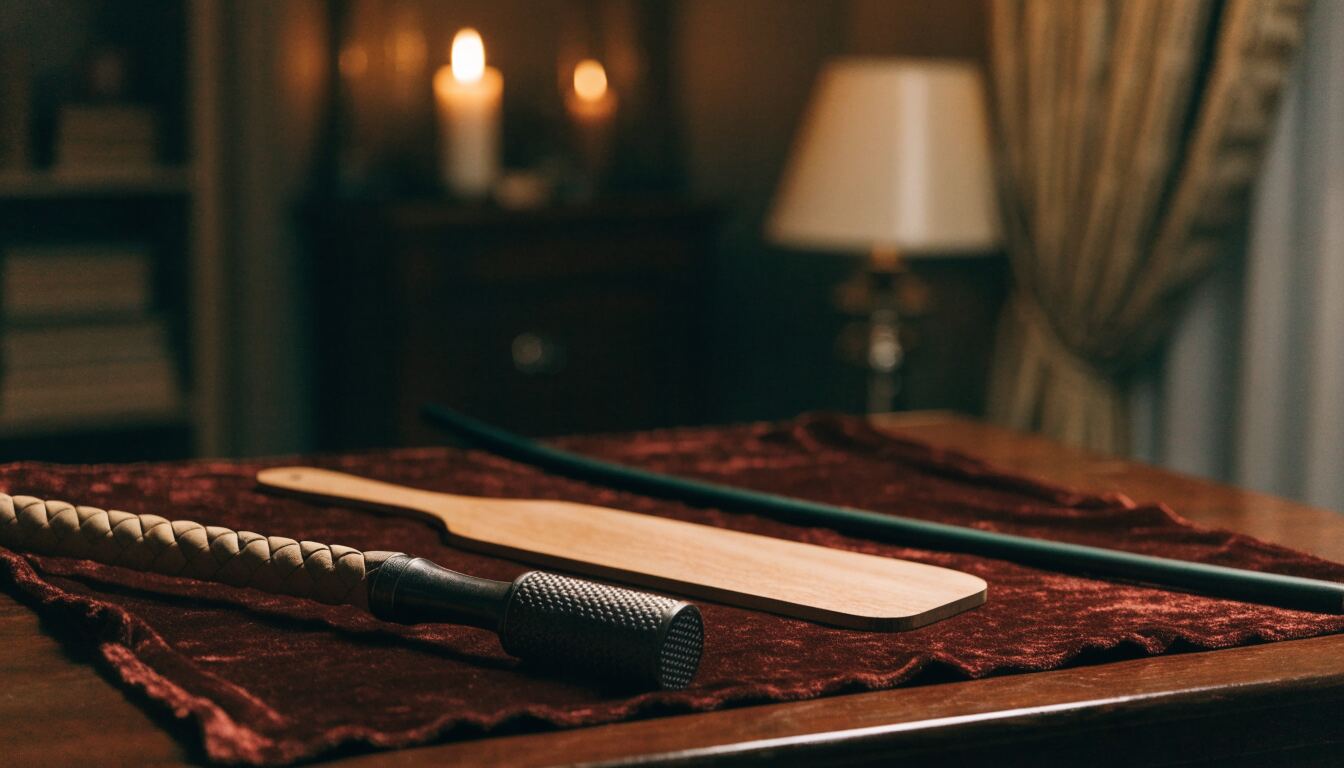
Common implements: Broad-surfaced paddles, weighty floggers with ample falls, and solid batons or sticks.
The Electrifying Zing of a Stingy Impact
Standing in direct contrast, stingy sensations are characterized by their quickness and surface-level focus. These impacts are brisk and immediate, often catching the receiver by surprise and producing a lingering, buzzy tingle that dances on the skin. It's that abrupt, nearly electrical jolt capable of eliciting a sharp inhale or an involuntary yelp. These divergent physical responses are precisely what render impact play so wonderfully dynamic and engaging. Stingy strikes excel at building suspense and can provide an incredible rush of exhilaration.
Typical experience: Reminiscent of a rubber band snapping against skin, a brisk flick, or the brief, pointed heat of an insect bite.
Physical effect: A keen, localized sensation, frequently accompanied by a residual, prickly afterglow.
Common implements: Slender canes, single-tail whips, riding crops, and floggers made with thin, light falls.
Discovering Your Personal Sensation Map
So, which category reigns supreme? The honest answer is entirely subjective and rooted in your own desires. Certain individuals crave the profound, hefty thud that fosters feelings of security and centering. Others gravitate toward the crisp, invigorating sting that heightens alertness and delivers a spark of vitality. And naturally, a vast number of enthusiasts delight in weaving both together. The journey is all about investigation and uncovering what resonates positively with both your physical form and your mental state. In the landscape of erotic flagellation, there's no universal standard; it's a deeply personal path of revelation and discovering what brings you fulfillment.
Admirers of thud: Frequently drawn to profound pressure, a sense of being anchored, and the emotional container of a heavy, rhythmic impact.
Admirers of sting: Typically relish acute, rapid bursts of heat, the thrill of an unpredictable tempo, and an overall sense of electrical activation.
Those who blend: Value the dynamic contrast and the intricate dialogue that unfolds when different sensations interact and build upon one another.
A Closer Look at Tools for Deep, Thuddy Feelings
When we examine the mechanics of impact, a "thuddy" result is defined by its substantial, comforting heft. It’s less about a superficial cut and more about a dense, grounding force that appears to resonate straight through the body's core. Picture a firm, welcoming embrace that lands with a deliberate, emphatic presence. This type of contact can feel remarkably safe and can actively support a person in settling deeper into the scene, which is why it's a cherished go-to for many practitioners.
Paddles: Delivering a Grounding Force
Paddles stand as some of the most quintessential instruments for generating a thuddy response. They are crafted in a wide array of materials—from polished wood and supple leather to clear acrylic—and come in numerous shapes and sizes. The expansive, flat striking surface is ideally suited for dispersing a solid, even impact across a broad area. Because many paddles are quite rigid, they transmit a significant amount of kinetic energy with minimal flex, which is the key to that signature deep thud. They perform wonderfully on fleshier zones, like the buttocks or the backs of the thighs, and can be wielded effectively for both intimate, close-quarters contact and strikes from a slight distance.
Floggers: A Spectrum from Soft to Heavy
Floggers are particularly fascinating because their sensation profile can shift dramatically based on their design. A flogger constructed with numerous thick, plush, and wide falls—the dangling strands—will overwhelmingly lean toward a thuddy delivery. The combined mass of many falls landing in unison creates a substantial, enveloping impact. These tools need a bit of room for a proper swing arc and are frequently applied to the upper back and buttocks. For a truly immersive full-body experience, you can even explore Florentine techniques, which involve skillfully spinning and striking with a flogger in each hand.
Batons and Dense Sticks for Serious Weight
Batons, occasionally referred to as heavy sticks, are typically robust, often encased in leather. They may feature a stiff inner core, such as one made from PVC or a similar dense material, specifically engineered to deliver a profound thud. Because they lack flexibility and carry concentrated weight, they transmit an exceptionally direct and heavy strike. Their ideal application is on the thighs and buttocks. A useful principle to remember is that the less natural padding the receiver has in a given area, the more acute and deep the thud will register, so always aim with mindful intention and maintain awareness of your target zones. These implements can feel incredibly intense and deeply grounding.
Navigating Tools for Sharp, Stingy Sensations
Having explored the world of deep, satisfying thuddy implements, it's time to shift our focus to the zesty, biting sensations that stingy toys introduce to a scene. If you find yourself drawn to that rapid, almost electric spark—the kind that prompts an audible gasp or even a wave of involuntary laughter—then this collection of tools will likely pique your interest.
Canes: Instruments of Precision and Fire
Canes are exceptional for administering an intensely focused and precise sting. Consider them the laser-guided option in your sensation toolkit. Typically long and slender, they are fashioned from materials like rattan, bamboo, hardwood, or even modern synthetics like acrylic or carbon fiber. The degree of flexibility in a cane is a critical factor; a more whippy cane will generally impart a far sharper, more biting sting than one that is completely rigid. They are superb for targeting specific, localized spots, often on the buttocks or thighs, and when used with deliberate intent, they can create the classic 'railroad track' markings. Their precision offers an advanced level of control over exactly where each wave of sensation lands.
Whips and Crops: Iconic Instruments of Sharpness
When the imagination conjures images of sharp impact, whips and crops are often the first things to appear. Riding crops, specifically, are engineered to provide a lighter, more of a surface-level sting, frequently employed on the buttocks and thighs. They are generally shorter than canes and carry a very distinct, snappy feel. A single-tail whip, however, is an entirely different category of tool. It requires significantly more space to wield safely and a much higher degree of technical skill and dedicated practice. A whip can deliver an intensely concentrated sting, but it is crucial to learn proper handling from an experienced source. In unskilled hands, it can easily break the skin or cause unintended injury, so rigorous education is a non-negotiable prerequisite here.
Dragon Tongues, Tails, and Other Stingy Hybrids
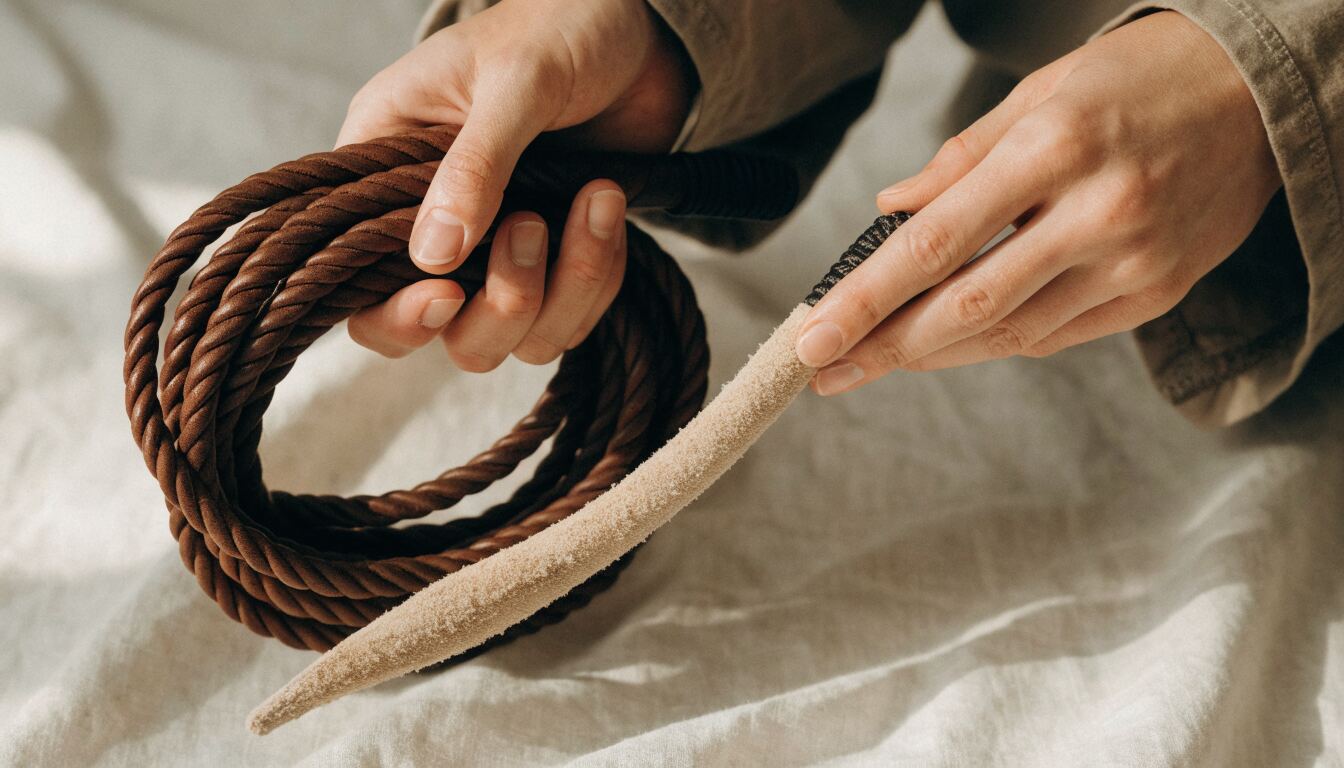
These intriguing toys blur the traditional boundaries between floggers and whips, offering a uniquely focused stingy experience. A dragon tongue is typically a single, wide, flat piece of leather, while a dragon tail might feature a round braid tapering down to a fine point, resembling its namesake. These are well-suited for the backside and thighs and can be applied to other areas with extra caution. The resulting sensation is often a highly concentrated, pinpoint sting that can be surprisingly intense. You'll need a moderate amount of clearance to swing them effectively, particularly the longer dragon tails.
Here's a quick reference for what to anticipate with these sting-focused tools:
- Canes: Long and thin, they deliver a precise, surgical sting. Excellent for targeting small areas. The material and its flexibility heavily influence the intensity.
- Crops: Shorter tools that usually offer a lighter, more playful sting. A popular choice for thigh and buttock play.
- Whips: Demand space and a high skill level. Capable of delivering an extreme, concentrated sting. High potential for harm if mishandled.
- Dragon Tongues/Tails: Merge the sensation of a flogger and whip. They produce a focused, concentrated sting and need some room for a proper swing.
Ultimately, it's about matching the correct tool to the sensation you are aiming to create. If you're seeking that crisp, 'wake-up-call' feeling, these stingy implements are absolutely worth a thorough exploration.
Masterng the Blend: Weaving Thud and Sting Together
So, you've identified your preferred thuddy implements and your go-to stingy ones. That's a fantastic foundation! But have you ever contemplated the art of weaving them into a single, cohesive scene? It's akin to composing a complex dish—often the most memorable flavors emerge from contrasting elements. You can absolutely construct a wholly new experience by interlacing that profound, satisfying thump with a crisp, zippy sting.
Orchestrating a Dynamic Sensation Flow
Visualize the sequence. You might initiate a scene with a paddle, bestowing those solid, anchoring strikes that cultivate a profound sense of presence. Then, you transition to a cane for a series of rapid, bright taps. The objective isn't solely the pain itself, but the journey the sensation guides you through. In one moment, you're immersed in that deep, heavy impact that seems to settle into your bones, and the next you are jolted by a swift, luminous sting that sets your skin tingling. It's a running, non-verbal dialogue occurring between your body and the implement.
Modulating Power and Feeling in a Scene
This is where the interplay becomes truly captivating. You don't need to unleash the full force of both types at once. You can architect a gradual ascent. Consider starting with gentler thuds, then introducing a whisper of sting, and then returning to a more commanding thud. Alternatively, you could design a deliberate sequence: a cluster of powerful thuds, followed by a flurry of stingy strikes, and then concluding with a tender thud to soothe and calm the system. The aim is to discover a cadence that resonates for both participants. The goal is to cultivate a vibrant, evolving experience, not a monotonous assault of a single feeling.
Here's a straightforward model for structuring a sequence:
- Warm-up: Initiate with lighter thuddy impacts to gently introduce the body to sensation and promote circulation.
- Build-up: Gradually incorporate stingy elements, perhaps employing shorter, snappier tools.
- Peak: Combine both thud and sting in a more intense, interwoven application.
- Cool-down: Return to softer thuddy sensations or even just nurturing touch to guide the energy back down.
Progressive Intensity and Effective Warm-Up Methods
Launching directly into a chaotic mix of heavy thuds and sharp stings can be profoundly overwhelming. It's far wiser to ease into the experience. You can utilize lighter versions of both tool categories initially. For instance, a soft, suede flogger or a padded leather paddle can provide a thuddy feel without being too intense. For a sting, you might try a riding crop with a softer leather keeper or even a firm, cupped hand slap before progressing to a thin cane. The fundamental principle is to allow the body and mind to acclimate in stages. It's comparable to stretching before a strenuous workout; you prepare the system for what's to come, making the entire journey more pleasurable and inherently safer.
Pioritizing Safety and Clear Dialogue in Impact Sessions
Now, let's address the absolutely crucial elements of any impact encounter: maintaining safety and fostering genuine, transparent communication. It may sound fundamental, but this is truly where a scene flourishes or where it can veer into dangerous territory. Understanding the nuances between thuddy and stingy sensations is a component of this, but it's merely the initial layer.
Defining Limits and Agreeing on Safe Signals
Before any physical contact begins, a thorough conversation is an absolute necessity. Consider it like mapping out a complex journey—you wouldn't just set off without a destination or route, would you? You'd plan your path, your mode of travel, and your necessary supplies. The exact same principle applies to sensation exploration. You need a clear picture of what your partner is comfortable with and what constitutes a hard boundary. This is where limits are defined. Which type of impact feels pleasurable? Which crosses into discomfort? Are certain body parts strictly off-limits? Are there emotional triggers to be aware of? These aren't casual check-box questions; they are the foundational pillars of trust.
And then there are safe words. These are non-negotiable, functioning as your emergency brake system. A widely adopted framework is 'Yellow' to signal a need to slow down or check in, and 'Red' to bring everything to an immediate, complete halt. But truly, any word that is simple to recall and unmistakably communicates a need to pause or stop is perfectly valid. It's vitally important that the person receiving the impact feels completely empowered to use their safe word without any sense of guilt or fear of disappointing their partner. It's not about disrupting a mood; it's about honoring limits and ensuring everyone remains safe and feels respected. If a safe word is spoken, you stop. No hesitation, no 'are you sure?' Just stop and check in verbally.
Comprehending Tool Dynamics and Potential Hazards
Different tools create different sensations, and those sensations come with their own unique risk profiles. A plush flogger might register as a soft, enveloping thud, while a thin acrylic cane delivers a fierce, biting sting. Understanding your implements is paramount. Have you researched how to properly use a new toy? Do you know the safe striking zones on the body? Generally, the fleshy parts of the buttocks and upper thighs are the safest starting points. You must avoid striking directly over the spine, the kidneys, the neck, or over bony joints. If you are new to an implement, always start light and observe your partner's reaction. This is where the crucial skill of interpreting physical and non-verbal feedback comes into play. Are they tensing up in a way that suggests discomfort, or are they subtly leaning into the impact?
Here's a breakdown of common risks to keep in mind:
- Bruising: Some surface redness or mild bruising is a typical physiological response, especially with heavier impact. However, if bruises persist for an unusually long time or your partner expresses concern, it's a clear sign to reduce intensity.
- Skin Irritation: Certain materials can cause rashes or friction burns, particularly with repetitive use or when combined with certain lotions or oils.
- Nerve Damage: While rare with proper technique, an impact directly on a nerve pathway or a bony joint can cause temporary or, in very rare cases, lasting damage.
- Emotional Overwhelm: Impact play can unlock a flood of emotions. Being prepared for this possibility and knowing how to provide comforting, grounded support is essential.
The Importance of a Post-Scene Debrief
Once the scene concludes and the dynamic shifts, the process isn't finished. This is the moment to reconnect and process the shared experience. This is known as a debrief, and it's profoundly important for nurturing trust and deepening mutual understanding. Pose open-ended questions like:
- How are you feeling right now, both physically and emotionally?
- Was there a moment that felt particularly wonderful or perhaps a bit off?
- Did anything catch you by surprise?
- Do you feel we honored the boundaries we established beforehand?
This conversation helps both of you understand each other better and refine your future scenes. It also creates a dedicated space to discuss any lingering emotions, whether it's euphoria, a sense of vulnerability, or even unexpected sadness. Being able to talk openly about these aftermath feelings is a huge part of the intimate connection that impact play can uniquely foster.
Creatve Alternatives: Impact Beyond Specialized Gear
Everyday Objects Employed with Care
Sometimes, a fulfilling impact session doesn't require expensive, purpose-built equipment. Numerous common household items can be adapted for sensation play if approached with caution and creativity. Consider objects like a wooden spoon, a solid ruler, or a well-worn leather belt. These items can produce a surprising spectrum of sensations, shifting from a dull, dispersed thud to a sharper, more localized sting, all depending on your technique. The critical caveat is that these items were not designed for this purpose, so they may be prone to breakage or have hidden rough edges. Always conduct a thorough inspection before use. And, as always, maintain an ongoing dialogue with your partner about what feels pleasurable versus what feels wrong. It's easy to get swept up in the moment, but a safety-first mindset is non-negotiable.
The Art of the Bare Hand
Your own two hands remain the most intuitive and accessible impact tools available. A classic open-handed slap on the buttocks can range from a light, playful sting to a more significant, resonant thud simply by cupping your palm. You can also use the flat of your hand for a wider, more grounding sensation. Experiment with different areas of your hand—the palm, the heel, or even the knuckles (with great gentleness!)—to discover the range of feelings you can generate. It's an exercise in pure control and communication. The direct, skin-on-skin contact can feel incredibly connective, allowing for subtle, real-time adjustments based on your partner's response.
Acknowledging the Limits of Improvised Items
When you venture into using things not specifically manufactured for impact play, it's super important to remain acutely aware of the heightened risks. Unlike purpose-built toys, household objects might have sharp edges, splinters, uneven surfaces, or they could simply snap under unexpected stress. A wooden spoon could splinter, or a rigid plastic ruler might crack and create a sharp edge.
This reality means you must be extra vigilant:
- Inspect meticulously: Always check for any cracks, splinters, or sharp bits before, and even periodically during, a session.
- Understand the material: Know what an item is made of and how it might behave under repetitive force.
- Start with minimal force: Begin with gentle, probing impacts to gauge the sensation and test the item's structural integrity.
- Communicate continuously: Check in with your partner frequently about their comfort level and the specific sensation they are experiencing.
Common Questions About Impact Sensations
When exploring impact play, understanding the nuances between different sensations can elevate your experience. Here we address some of the most frequent queries, offering practical insights to help you navigate this dynamic realm with confidence and care.
Decoding the Core Distinction Between Deep and Sharp Feelings
At its heart, the contrast lies in how energy transfers to the body. A deep, resonant sensation—often described as thuddy—feels like a low, rumbling wave that spreads through your muscles, providing a sense of solidity and comfort. It’s akin to a firm, enveloping pressure that can be incredibly grounding. On the other hand, a stingy sensation is all about immediate, focused intensity: a swift, piercing jolt that dances on the skin’s surface, leaving behind a lively, electric tingle. Recognizing this difference allows you to tailor a session to your mood, whether you crave a calming rhythm or an exhilarating spark.
Selecting Tools for a Deep, Resonant Impact
To achieve that satisfying, heavy thud, you’ll want to reach for items with substantial weight and broad contact areas. Wide, flat paddles dissipate force over a larger surface, creating a muffled thump that feels immersive rather than harsh. Floggers with dense, numerous tails also deliver a plush, thuddy sensation when wielded with a deliberate, sweeping motion. Even heavier implements like solid batons or padded clubs can produce a deep, rumbling effect that seems to echo through your core. The key is focusing on the mass and how it lands—slow, steady strokes enhance the grounding quality, making it feel like a rhythmic massage rather than a strike.
Choosing Implements for a Sharp, Lively Sting
For those who enjoy a crisp, zippy sensation, slender and flexible tools are your go-to options. Canes, with their thin profile, concentrate force into a narrow line, delivering a precise, snapping bite that can make you gasp. Whips and crops excel at producing that quick, flicking sting, thanks to their tapered ends that accelerate through the air. These implements are perfect for creating a staccato rhythm of sensations, where each touch feels distinct and alerting. To maximize the effect, aim for controlled, wrist-driven movements that allow the tip to connect with a lively pop, keeping the experience energetic and engaging.
Blending Sensations for a Dynamic Experience
Merging thuddy and stingy sensations can craft a beautifully layered journey. Start by establishing a warm, deep thud with a paddle or heavy flogger to relax the body and build a baseline of comfort. Then, introduce a stingy element like a cane with light, interspersed taps to create contrast—this shift can heighten awareness and add an element of surprise. Alternating between the two keeps the nervous system guessing, amplifying both pleasure and intensity. Experiment with sequences: a few thuddy strikes followed by a sharp sting can feel like a conversation between sensations, each enhancing the other for a richer, more memorable session.
Safety Considerations with Household Items
While it may be tempting to improvise with everyday objects like wooden spoons or belts, caution is essential. These items lack the design refinements of purpose-built toys, often having weak points that can splinter or snap under stress, leading to unintended injuries. Their weight distribution and edges might also create unpredictable sensations. If you do use them, inspect for cracks or rough spots beforehand, and practice on a pillow to understand their impact. However, investing in quality, body-safe toys is advisable—they’re crafted with smoother finishes, balanced weight, and durable materials, significantly reducing risks while enhancing control and consistency during play.
Prioritizing Communication and Well-Being
The backbone of any fulfilling impact session is open, ongoing dialogue. Before you begin, have a thorough discussion about desires, limits, and any physical considerations. Establish a clear safeword—a term that immediately pauses or stops all activity—and practice using it without hesitation. During the scene, check in verbally or through non-verbal cues, especially when trying new sensations or intensities. Afterward, engage in aftercare, which can involve gentle touch, hydration, or simply talking through the experience to process emotions. This continuous loop of feedback ensures that both partners feel respected, safe, and connected, turning exploration into a shared, trusting adventure.
Conclusion
Exploring the spectrum between thuddy and stingy sensations opens up a world of creative possibilities in impact play. By understanding these distinct feelings, choosing the right tools, and blending them thoughtfully, you can craft sessions that range from soothing to exhilarating. Always anchor your explorations in safety and communication, allowing you to discover what resonates most deeply with you and your partner. Embrace the journey with curiosity and care, and let each sensation tell its own story.